

How Much Does It Cost To Open a Sports Card Shop?
The sports card hobby is booming. What was once a childhood pastime has evolved into a multi-billion-dollar collectibles market — and the numbers back it up. The global sports trading card market was valued at approximately $11.5 billion in 2024 and is projected to nearly double over the next decade. Collectors aren't just buying cards for nostalgia anymore; they're treating high-grade rookies and rare parallels as legitimate alternative assets.
For entrepreneurs passionate about the hobby, opening a card shop has never been more appealing. But passion alone won't keep the lights on. Opening a sports card shop involves real costs across real estate, inventory, fixtures, technology, and licensing — and understanding those costs upfront is the difference between a well-run business and one that closes in year one.
This guide breaks down everything you need to know about what it actually costs to open a sports card shop in 2026, with realistic numbers and practical advice for keeping your expenses in check.
Licenses, Permits & Business Formation
Before you sell a single pack of cards, you need to be legally set up to operate. This step is often underestimated by first-time shop owners — but it's non-negotiable. Compared to regulated industries like tobacco or alcohol, a sports card retail business has a relatively simple licensing footprint.
At minimum, you'll need to form a legal business entity (most shop owners choose an LLC for liability protection), obtain a general business license from your city or county, and register for a state sales tax permit. If you're hiring employees, you'll also need a free Employer Identification Number (EIN) from the IRS — it takes minutes online.
Pro tip: Requirements vary significantly by state and municipality. Before signing a lease, call your local city hall or county clerk's office to confirm exactly what permits are required for your specific address and business type.
| License / Permit / Filing | Cost Range |
|---|---|
| LLC or Corporation Formation | $50 – $500 |
| General Business License | $50 – $150/yr |
| State Sales Tax / Seller's Permit | $0 – $20 |
| Zoning / Occupancy Permit | $100 – $500 |
| Employer Identification Number (EIN) | Free |
| Attorney / Legal Consultation | $200 – $1,000 |
| Estimated Total | $400 – $2,170 |
Location & Rent
Your biggest ongoing monthly expense will almost certainly be rent. Location matters in retail — but sports card shoppers are motivated. They will seek you out, which means you don't necessarily need to pay a premium for the best corner in town. A well-trafficked strip mall near complementary businesses (comic shops, game stores, barbershops) is often a smarter play than a high-rent retail corridor.
For a typical card shop, you're looking at somewhere between 500 and 1,500 square feet of retail space. Smaller shops can focus on sealed wax, singles displays, and a break table. Larger shops add gaming tables, pull-tab stations, and memorabilia walls.
Don't forget: Most commercial landlords require a security deposit of 1–3 months' rent upfront plus first month's rent. Budget for this before signing anything.
| Location Type | Monthly Rent |
|---|---|
| Small market / suburban (500–800 sq ft) | $1,000 – $2,500 |
| Mid-size city, standard retail (800–1,200 sq ft) | $2,500 – $5,000 |
| Major metro / premium location (1,200–1,500 sq ft) | $5,000 – $12,000+ |
| First-Year Rent Cost (mid-market estimate) | $30,000 – $60,000 |
Also factor in tenant improvement costs if the space needs buildout — partition walls, lighting upgrades, and flooring can add $2,000–$15,000 depending on the condition of the space.
Opening Inventory
Inventory is the heartbeat of a sports card shop and almost certainly your largest single upfront expense. A well-stocked opening day inventory needs to give customers a reason to walk in, explore, and spend — which means you need depth across sealed wax, singles, supplies, and ideally some memorabilia or graded cards to anchor your display cases.
Sealed Wax (Hobby Boxes & Retail)
Hobby boxes from Panini, Topps, and Upper Deck typically range from $80 to $400+ per box at wholesale, depending on the sport and product tier. A realistic opening wax inventory — enough variety to look like a real shop — will run a minimum of $5,000 to $15,000.
Singles Inventory
Singles are what separate a great card shop from a mediocre one. Acquiring a mix of modern hits, vintage staples, and budget cards through collection buyouts and dealer lots can cost $3,000 to $10,000+ to build a respectable initial singles section.
Supplies & Accessories
Card sleeves, toploaders, magnetic holders, binders, and storage boxes are steady sellers with solid margins. Budget $500–$2,000 to stock a baseline supply section.
| Inventory Category | Estimated Cost |
|---|---|
| Sealed Wax (Hobby Boxes, Retail, Blasters) | $5,000 – $15,000 |
| Singles (Modern + Vintage) | $3,000 – $10,000 |
| Graded / High-Value Cards for Display | $1,000 – $5,000 |
| Supplies & Accessories | $500 – $2,000 |
| Memorabilia / Misc. Collectibles (Optional) | $500 – $3,000 |
| Total Opening Inventory | $10,000 – $35,000 |
Important: Don't over-buy sealed wax on open. Hobby boxes fluctuate in price based on the secondary market. Stock enough to look credible, but preserve working capital for restocking based on what actually moves in your market.
Fixtures, Display Cases & Store Setup
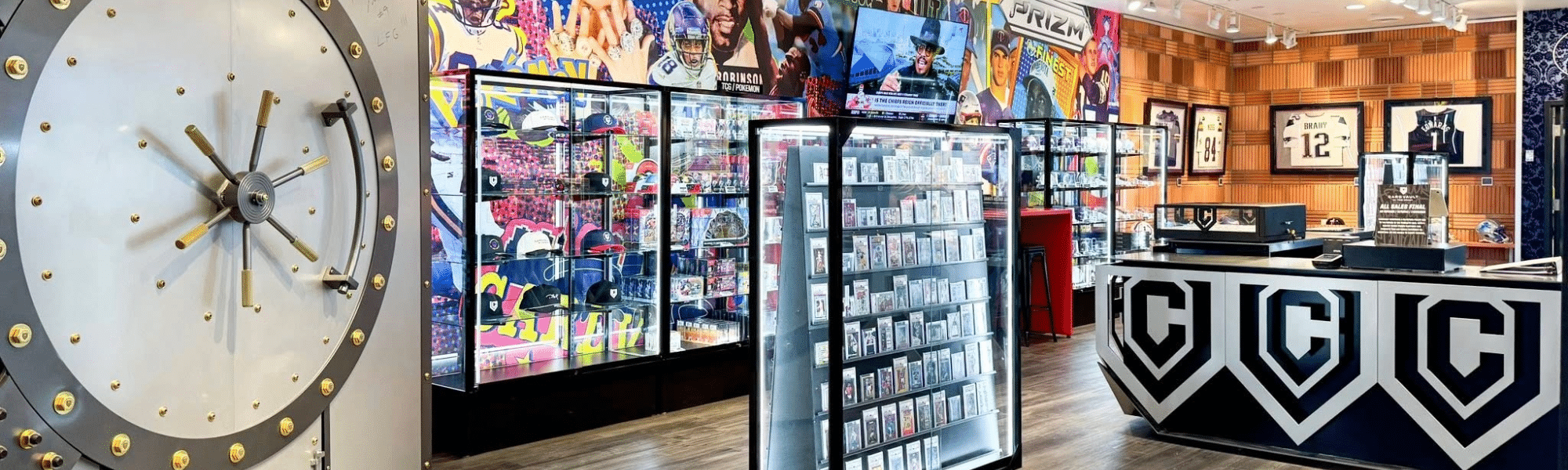
This is where a sports card shop can either look the part or fall flat. Customers buying $50 hobby boxes or $200 graded cards expect a professional environment — clean, organized, and visually compelling. The right fixtures aren't just functional; they actively drive sales by making your inventory easy to browse and your high-value cards impossible to ignore. If you want a head start on sourcing everything you need in one place, DISPLAYARAMA's Sports Card Shop fixtures page covers every display type a card shop needs.
The non-negotiables for any card shop: glass display cases for graded cards and high-value singles, wall-mounted shelving for sealed wax, a secure checkout counter, and adequate lighting. For a 500–1,000 sq ft shop, here's what to budget:
| Fixture / Component | Estimated Cost |
|---|---|
| Glass Display Cases (3–6 units) | $1,500 – $6,000 |
| Wall Shelving for Sealed Wax | $500 – $2,500 |
| Checkout Counter / Cash Wrap | $500 – $2,000 |
| Break Table & Seating | $300 – $1,500 |
| Signage (Interior + Exterior) | $500 – $3,000 |
| Lighting Upgrades | $300 – $2,000 |
| Security System / Cameras | $500 – $2,500 |
| Safe (Cash + High-Value Cards) | $200 – $800 |
| Total Fixtures & Store Setup | $4,300 – $20,300 |
Prioritize your display cases first. They house your most valuable inventory and make the biggest impression on a first-time visitor. You can upgrade shelving, signage, and décor incrementally — but walk-ins will judge your shop in the first 10 seconds based on what they see in those cases.
Slatwall panels are also a popular, cost-effective option for card shop walls. They let you hang shelves, hooks, and accessories in any configuration and can be reconfigured as your product mix evolves without new hardware.
DISPLAYARAMA has been supplying retail fixtures since 1980. We carry glass display cases, wall shelving, slatwall systems, and checkout counters — everything needed to build a store that looks professional from day one.
Our team can help you design your layout and select the right fixtures for your space and budget. Call us at 1-800-292-5227 or get your free layout plan below.
Get My Free Store Fixture Layout Plan →Technology & Operations
Running a modern sports card shop requires more than a cash register. You'll need a solid POS system capable of handling thousands of SKUs, card pricing tools to track the real-time market, a website or strong social media presence, and reliable payment processing.
One often-overlooked cost: card pricing subscriptions. The value of a sports card can change overnight based on a player's performance, an injury, or a viral post. Tools like Beckett, 130 Point, and Card Ladder give you the market data needed so you don't buy collections at the wrong price or underprice your own inventory.
On insurance: Carry at minimum general liability and property insurance covering your inventory. High-value graded cards may require a separate collectibles rider. One break-in or fire without coverage can end the business permanently — don't skip this.
| Technology / Operations | Estimated Cost |
|---|---|
| POS System (Hardware + Software) | $500 – $2,500 |
| Computer / Tablet for Pricing Research | $300 – $1,200 |
| Credit Card Processing Setup | $0 – $200 + fees |
| Website / E-Commerce Setup | $500 – $3,000 |
| Pricing Subscriptions (Beckett, 130 Point, etc.) | $200 – $600/yr |
| Business Insurance (Annual) | $1,000 – $4,000 |
| Utilities (Monthly Average) | $300 – $800/mo |
| Marketing / Grand Opening | $500 – $3,000 |
| First-Year Tech + Operations Budget | $7,500 – $25,000 |
Total Startup Cost Summary
When you add it all up, opening a sports card shop in 2025 typically requires $25,000 to $75,000 in startup capital, with a mid-range budget of around $45,000–$55,000 representing a realistic, well-stocked opening for a small-to-mid-size card shop.
| Expense Category | Estimated Range |
|---|---|
| Licenses, Permits & Business Formation | $400 – $2,170 |
| First Month's Rent + Security Deposit | $3,000 – $15,000 |
| Leasehold Improvements / Buildout | $2,000 – $15,000 |
| Opening Inventory | $10,000 – $35,000 |
| Fixtures & Store Setup | $4,300 – $20,300 |
| Technology & Operations (Year 1) | $7,500 – $25,000 |
| Working Capital Reserve (3–6 months) | $5,000 – $20,000 |
| Total Estimated Startup Investment | $32,200 – $132,470 |
Don't underestimate your working capital reserve. Many first-time shop owners undercapitalize here. You will likely not be profitable in month one. Having 3–6 months of operating expenses set aside protects you through slow months and gives you the runway to build a real customer base before the business needs to sustain itself.
How to Maximize Revenue
Opening a sports card shop is the beginning of the journey, not the destination. The most successful card shop owners treat their store as a community hub, not just a retail location. Here are the strategies that separate profitable card shops from the ones that close in year two.
Host Box Breaks
Group breaks and live breaks on social media are huge revenue drivers. Sell spots by team or player, open the product live, ship hits directly. Strong margins with no long-term inventory risk.
Buy Collections
Walk-in collection buys are often the most profitable part of a card shop. Buying collections at fair prices and reselling at retail keeps your singles inventory fresh and margins healthy.
Sell Online Too
eBay, COMC, and Whatnot dramatically extend your reach. Move slower inventory, reach collectors outside your market, and keep cash flow positive during slow in-store weeks.
Trade Nights & Events
Weekly trade nights, group breaks, and card show pop-ups build the community loyalty that keeps customers coming back. Regulars are worth far more than one-time buyers.
Stock Supplies & Accessories
Sleeves, toploaders, and binders are steady, high-margin sellers. Collectors always need supplies — if you're the only shop nearby, you become their go-to source even on days they aren't buying cards.
Offer Grading Submissions
Accepting PSA or BGS bulk submissions gives your customers a valuable convenience while earning a submission fee. It also generates repeat foot traffic as collectors drop off and pick up orders.
Why Your Fixtures Matter
In a sports card shop, your display cases are doing more than organizing product — they're setting the tone for what kind of shop you are. A locked glass case with a well-lit row of PSA 10 rookie cards tells customers you're a serious dealer. A dusty showcase with poor lighting says the opposite.
The investment you make in quality fixtures pays off directly in sales. Collectors instinctively spend more time browsing a well-organized shop, and time spent browsing converts to dollars spent. Prioritize these when setting up your store:
- Glass showcase cases for graded slabs, high-value raw singles, and signed memorabilia — these protect your most valuable product and create a centerpiece effect that draws the eye
- Wall-mounted shelving for sealed wax, organized by sport and product tier, with pricing clearly visible
- Proper LED lighting — cards look dramatically better under quality lighting versus standard overhead fixtures
- A secure, organized checkout counter — this is where trust is built during every transaction
- Clear, consistent pricing signage throughout — customers who can't find prices often don't ask, they just leave
DISPLAYARAMA has been outfitting specialty retail stores with professional-grade display fixtures since 1980. We carry glass display cases, wall shelving, slatwall systems, custom checkout counters, and more — everything you need to build a store that looks the part from day one.
Sports card shops are one of our most popular categories. Our team can help you plan your layout and select the right combination of fixtures for your budget and square footage.
1-800-292-5227 · Browse Display Cases
Get My Free Store Fixture Layout Plan →Ready to Get Fixtures In Your Card Shop?
If you're opening a card shop and looking for fixtures, a great place to start is DISPLAYARAMA's Sports Card Shop landing page — a one-stop resource with every fixture a card shop could need, all in one place. Whether you're outfitting a 500 sq ft starter shop or a full-scale retail floor, we have the displays to match your space and your budget.
Double-Sided Card Display Cases
Display up to 100 cards on each side with built-in LED lighting — purpose-built for high-volume singles presentation and maximum visibility from every angle.
Countertop Display Cases
Traditional locking glass countertop cases for graded slabs, high-value raw cards, and premium singles. The anchor of any serious card shop floor.
Wall Display Cases
Wall-mounted cases designed for sports memorabilia — signed jerseys, framed cards, helmets, and collectibles that deserve their own dedicated showcase space.
Slatwall Panels
Flexible, reconfigurable wall systems for accessories, supplies, and retail product. Rearrange shelves and hooks as your inventory mix evolves — no new hardware needed.
Checkout Counters
Professional cash wrap counters built for retail. Secure, organized, and designed to handle high transaction volume — because your checkout experience matters.
Bulk Pricing Available
Outfitting a full store? DISPLAYARAMA offers bulk pricing on display cases and fixtures. The more you order, the more you save — call us at 1-800-292-5227 to get a quote.
From double-sided LED card display cases to slatwall panels, checkout counters, and wall display cases — DISPLAYARAMA has been the go-to source for specialty retail fixtures since 1980. We offer bulk pricing for shop owners outfitting a full floor, so the more you order, the more you save.
Visit our Sports Card Shop page to browse every fixture we carry, request a bulk pricing quote, or call us directly and we'll help you put together a complete fixture package for your space.
Browse the Sports Card Shop Fixtures Page →