

How Much Does It Cost To Open a Gun Store?
Opening a gun store is one of the most regulated retail ventures you can pursue in the United States — and one of the most rewarding for those who know the industry. The firearms market, while experiencing a post-pandemic correction from historic highs, remains a multi-billion dollar retail category with a deeply loyal customer base. Concealed carry permitting has expanded across the country, the accessories and optics segment continues to grow, and demand for knowledgeable, community-based retailers remains strong.
But the regulatory landscape is unlike anything else in retail. Before you sell a single firearm, you'll need federal licensing, state permits, a compliant physical space, certified security infrastructure, specialized insurance, and a firm understanding of ATF recordkeeping requirements. The compliance overhead alone separates serious operators from those who underestimate what this business actually demands.
This guide breaks down exactly what it costs to open a gun store in 2026 — from your federal firearms license all the way to your display cases — with real numbers and no fluff so you can plan your budget with confidence.
Federal Firearms License & Permits
The Federal Firearms License (FFL) is the single most important prerequisite for any gun store. Issued by the ATF's Federal Firearms Licensing Center, it legally authorizes you to engage in the business of buying, selling, and transferring firearms. Without it, you cannot operate. The most common license for a standard retail gun shop is the Type 01 Dealer FFL, which runs $200 for the first three-year term and $90 at each renewal.
If you plan to sell NFA items — suppressors, short-barreled rifles, or machine guns — you'll also need to register as a Special Occupational Taxpayer (SOT). This is an annual fee separate from your FFL. Beyond the federal level, most states and municipalities add their own layer of permits: state dealer licenses, zoning compliance, signage permits, and in some states, specific handgun dealer permits.
Budget additional funds for an attorney who specializes in firearms compliance. An FFL specialist can help you complete your application correctly, prepare for your mandatory in-person interview with an ATF Industry Operations Investigator (IOI), and avoid delays that can push your opening date back by months.
Important: The ATF will conduct a premises inspection before issuing your FFL. Your location must comply with all local zoning laws for firearms retail. Verify zoning before signing any lease — this is a common and costly mistake for first-time applicants.
| License / Permit / Filing | Cost Range |
|---|---|
| Type 01 FFL (Dealer) — 3-Year Term | $200 |
| FFL Renewal (Every 3 Years) | $90 |
| Special Occupational Tax (SOT) — NFA Items | $500/yr |
| State Firearms Dealer License | $100 – $500 |
| General Business License | $50 – $150/yr |
| Zoning / Occupancy Permit | $100 – $500 |
| LLC or Corporation Formation | $50 – $500 |
| FFL Attorney / Compliance Consultation | $500 – $2,000 |
| Estimated Total | $1,590 – $4,440 |
Location & Rent
Location for a gun store requires more consideration than most retail businesses. You're not just looking for foot traffic — you need a space that satisfies ATF premises requirements, passes local zoning, accommodates heavy-duty security buildout, and ideally has parking for customers who may be transporting firearms. Strip malls, standalone retail buildings, and light industrial spaces near shooting ranges are common choices.
A practical gun shop operates comfortably in 1,000 to 2,500 square feet. Smaller shops focus on handguns, conceal carry gear, and accessories. Larger footprints allow for long gun walls, a gunsmithing station, ammo storage, and a potential classroom or range. Rent ranges vary significantly by market — a rural small-town shop will have dramatically different overhead than an urban metro location.
Don't forget: Most commercial landlords require 1–3 months' security deposit plus first month's rent upfront. Also budget for tenant improvements — gun stores typically require reinforced walls, security caging, and upgraded door hardware that can add $10,000–$30,000 to your buildout costs.
| Location Type | Monthly Rent |
|---|---|
| Small market / rural (1,000–1,500 sq ft) | $1,500 – $3,500 |
| Suburban / mid-size city (1,500–2,000 sq ft) | $3,500 – $7,000 |
| Major metro / high-traffic (2,000–2,500 sq ft) | $7,000 – $15,000+ |
| First-Year Rent Cost (mid-market estimate) | $42,000 – $84,000 |
Tenant improvements and security-specific buildout (reinforced walls, steel door frames, security caging) typically add $10,000–$30,000 on top of standard leasehold improvements.
Security Infrastructure
Security is not optional — it's federally mandated. The ATF requires FFL holders to store all firearms securely when the premises are not open for business. Your insurance carrier will also have minimum requirements. And practically speaking, you are holding tens of thousands of dollars in high-value, theft-targeted merchandise. Cutting corners on security is both illegal and financially catastrophic.
Vaults & Safes
At minimum, you'll need a commercial-grade gun safe or vault for overnight storage of your firearm inventory. Entry-level commercial safes start around $2,000–$5,000. Full vault rooms or bank-style vault doors — common in larger shops or those carrying NFA inventory — run $10,000–$30,000 or more installed.
Alarm & Surveillance Systems
A professionally monitored alarm system with motion sensors, glass-break detection, and door contacts is the baseline. Pair this with a camera system covering all interior and exterior angles — including coverage of the display cases. Budget $3,000–$8,000 for a quality commercial install, plus $50–$150/month for monitoring.
Physical Hardening
Reinforced entry doors, steel door frames, security film on windows, and secondary interior security caging are common in gun stores. These measures slow down smash-and-grab attempts and are often required by insurers. Budget $2,000–$10,000 depending on the existing condition of the space.
| Security Component | Estimated Cost |
|---|---|
| Commercial Gun Safe(s) | $2,000 – $10,000 |
| Vault Room / Vault Door (Optional) | $10,000 – $30,000 |
| Alarm System (Install) | $1,500 – $4,000 |
| Security Camera System (Install) | $1,500 – $4,000 |
| Monitoring Service (Annual) | $600 – $1,800 |
| Reinforced Doors / Window Security Film | $1,000 – $5,000 |
| Interior Security Caging | $1,000 – $6,000 |
| Total Security Infrastructure | $8,100 – $60,800 |
Note: If you plan to carry NFA items (suppressors, SBRs), your insurer and the ATF may require a higher-rated vault. Factor this in before choosing your safe and security setup.
Opening Inventory
Inventory will be your single largest upfront expense — and the one that requires the most strategic thinking. Firearms retail margins are notoriously thin on the guns themselves, often running just 10–20% over wholesale. The real profit in a gun store comes from accessories, ammunition, optics, and services. Your opening inventory strategy should reflect this reality.
Firearms
A credible opening-day selection for a small-to-mid-size shop typically includes 50–150 firearms covering handguns, rifles, and shotguns. At an average wholesale cost of $300–$600 per unit, expect to invest $20,000–$100,000 in firearms alone depending on your store size and positioning. Prioritize high-velocity SKUs — compact handguns, concealed carry pistols, and popular home defense platforms move fastest.
Ammunition
Ammo is a high-frequency purchase that drives repeat visits. Stock a solid selection of common centerfire calibers (9mm, .223/5.56, .308, .45 ACP) plus rimfire. Opening ammo inventory of $5,000–$15,000 is a reasonable starting point for a small shop.
Accessories & Optics
This is where your margins are. Holsters, magazines, cleaning supplies, safes, targets, optics, and slings often carry 40–100% markup. Budget $5,000–$20,000 to stock a solid accessories section, and prioritize variety over depth early on.
| Inventory Category | Estimated Cost |
|---|---|
| Firearms (Handguns, Rifles, Shotguns) | $20,000 – $100,000 |
| Ammunition (Opening Stock) | $5,000 – $15,000 |
| Accessories (Holsters, Mags, Slings, etc.) | $3,000 – $10,000 |
| Optics & Sights | $2,000 – $10,000 |
| Cleaning Supplies & Safety Products | $500 – $2,000 |
| NFA Items (Suppressors, SBRs — Optional) | $5,000 – $30,000 |
| Total Opening Inventory | $35,500 – $167,000 |
Buying strategy: Firearms are purchased through wholesalers like Sports South, Bill Hicks, or Zanders — not direct from manufacturers. Many shops join buying groups for better pricing and payment terms. Negotiate Net-30 or Net-45 terms where possible to preserve cash flow.
Fixtures, Display Cases & Store Setup
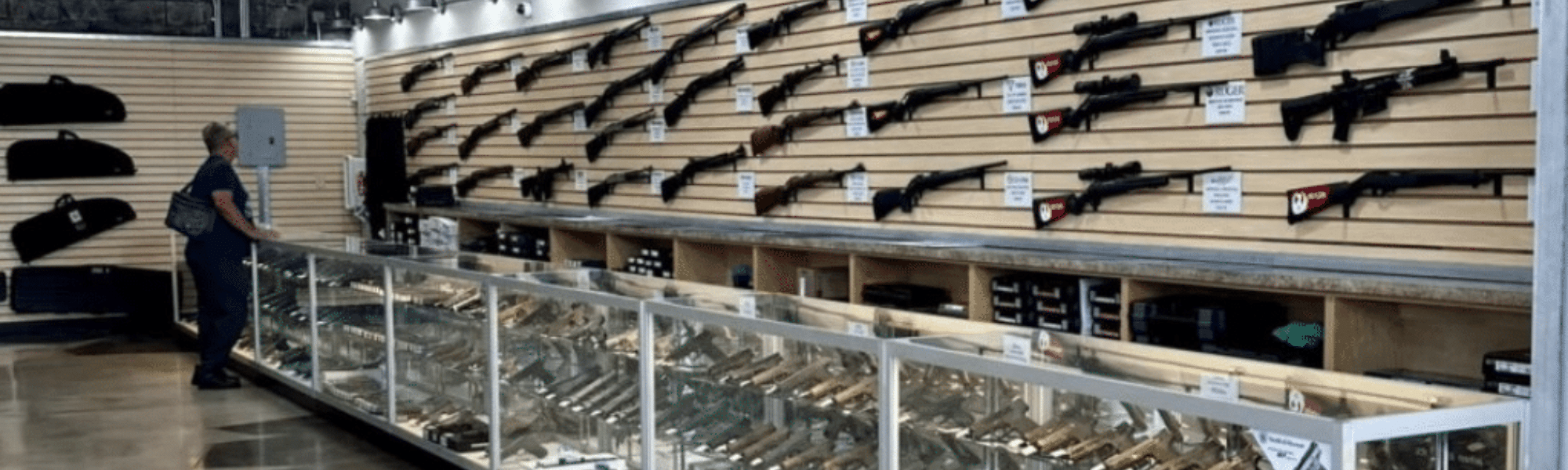
A gun store's layout and fixtures do heavy lifting — both operationally and as a sales tool. Customers browsing handguns expect to see them secured in locked glass showcases. Long guns need wall-mounted racks with proper locking mechanisms. Accessories need organized, shoppable wall displays. The right fixtures don't just hold product; they build credibility and make the shopping experience feel professional and trustworthy. If you want to see everything a gun store needs in one place, DISPLAYARAMA's Gun Store Displays page covers every fixture type from display cases to gunwall panels and checkout counters.
Glass display cases are the centerpiece of any gun store floor. They keep handguns and high-value items visible but secured, and they set the tone for the entire store. Locking wall racks and slatwall systems handle long guns and accessories efficiently. Your checkout counter needs to be secure, organized, and equipped for ATF Form 4473 completion — a federal form required for every firearm sale.
| Fixture / Component | Estimated Cost |
|---|---|
| Glass Display Cases (4–8 units) | $2,000 – $8,000 |
| Locking Long Gun Wall Racks | $1,000 – $4,000 |
| Slatwall / Accessories Display System | $500 – $3,000 |
| Checkout Counter / Cash Wrap | $800 – $2,500 |
| Ammo Storage Shelving | $300 – $1,500 |
| Signage (Interior + Exterior) | $500 – $3,000 |
| Lighting Upgrades | $500 – $2,500 |
| Total Fixtures & Store Setup | $5,600 – $24,500 |
Slatwall panels — also commonly called gunwall panels in the firearms industry — are especially practical for gun stores. They let you configure accessories, holster displays, cleaning kit hooks, and optics shelving in any combination, and rearrange as your product mix changes without new hardware.
Don't underestimate lighting. Firearms look dramatically better — and more valuable — under proper LED display lighting. Customers browsing in a well-lit, well-organized case stay longer and buy more.
DISPLAYARAMA has been supplying retail fixtures to specialty stores since 1980. We carry locking glass display cases, slatwall systems, wall shelving, and checkout counters — everything a gun store needs to look professional and operate securely from day one.
Our team can help you plan your store layout and select the right fixture combination for your space and budget. Call us at 1-800-292-5227 or get your free layout plan below.
Get My Free Store Fixture Layout Plan →Technology, Insurance & Operations
Running a compliant gun store requires purpose-built technology. A standard retail POS won't cut it — you need a firearms-specific system that handles ATF Form 4473 completion, bound book recordkeeping (the legally required log of all firearm acquisitions and dispositions), NICS background check submission, and serialized inventory tracking. Systems like Orchid, Coreware, or Rapid Gun Systems are purpose-built for this.
Insurance is another area where gun stores diverge sharply from standard retail. You need specialized firearms dealer liability coverage, property insurance that covers your firearm inventory at replacement value, and general liability. Some carriers also require umbrella policies. Expect to pay significantly more than a typical retailer — annual premiums for a small-to-mid-size gun store typically run $6,500–$17,000 per year depending on inventory value, location, and coverage limits.
Use a specialist: Work with an insurance broker who specializes in firearms retail, not a general commercial broker. Standard commercial policies often exclude or severely limit firearm inventory coverage. Getting this wrong is an expensive mistake.
| Technology / Operations | Estimated Cost |
|---|---|
| Firearms-Specific POS System | $1,500 – $5,000 |
| ATF Bound Book / Compliance Software | $300 – $1,200/yr |
| Computer / Hardware Setup | $500 – $1,500 |
| Website / Online Presence Setup | $500 – $3,000 |
| Firearms Dealer Insurance (Annual) | $6,500 – $17,000 |
| Utilities (Monthly Average) | $400 – $1,000/mo |
| Marketing / Grand Opening | $1,000 – $5,000 |
| Employee Salaries (if applicable) | $2,500 – $5,000/mo each |
| First-Year Tech + Operations Budget | $16,800 – $47,700+ |
Total Startup Cost Summary
When everything is accounted for, opening a gun store in 2025 requires a minimum of $50,000 for a very lean operation, and a realistic mid-size storefront with proper security, solid inventory, and professional fixtures will run $100,000–$200,000 before you open your doors. Shops with shooting ranges, NFA inventory, or premium metro locations can push well past that.
| Expense Category | Estimated Range |
|---|---|
| FFL, Licenses & Legal | $1,590 – $4,440 |
| First Month's Rent + Security Deposit | $5,000 – $30,000 |
| Leasehold Improvements / Security Buildout | $10,000 – $40,000 |
| Security Infrastructure (Safes, Cameras, Alarm) | $8,100 – $60,800 |
| Opening Inventory | $35,500 – $167,000 |
| Fixtures & Store Setup | $5,600 – $24,500 |
| Technology & Operations (Year 1) | $16,800 – $47,700 |
| Working Capital Reserve (3–6 months) | $15,000 – $50,000 |
| Total Estimated Startup Investment | $97,590 – $424,440 |
Plan for a long runway. Gun stores typically take 12–24 months to reach consistent profitability. The combination of thin firearms margins, high fixed costs (insurance, security monitoring, rent), and the time needed to build a loyal customer base means working capital is just as important as your opening inventory. Undercapitalized shops close — often with a full case of product and an active FFL.
How to Maximize Revenue
The gun store owners who thrive long-term understand one thing: the real money isn't in the guns. Firearm margins are tight and online competition is fierce. Building a profitable gun store means stacking multiple revenue streams around a loyal, knowledgeable customer base.
Prioritize Accessories
Holsters, magazines, optics, and cleaning gear routinely carry 40–100% markup. Build a deep, organized accessories wall and train your staff to recommend add-ons with every firearm sale.
Offer FFL Transfer Services
Charging a transfer fee ($25–$75) for processing online firearm purchases is easy, high-margin revenue that drives foot traffic into the store. Buyers who come in for transfers often leave with accessories or ammo.
Run Training Classes
Concealed carry permit courses, basic firearm safety classes, and advanced shooting instruction are high-margin services with minimal overhead. They also build trust and turn students into loyal customers.
Buy & Consign Used Guns
Used firearm sales and consignments offer better margins than new guns and build community loyalty. Buying used collections at fair market value and reselling or consigning is often more profitable than new retail.
Offer Gunsmithing Services
Even basic gunsmithing — cleanings, sight installations, trigger work, suppressor threading — commands strong hourly rates and keeps customers engaged with your store between purchases.
Add NFA / Suppressor Sales
With NFA Form 4 approval times now often under 10 days, suppressor and SBR sales have become significantly more accessible. The SOT registration fee is worth it for shops in markets with strong enthusiast demand.
Why Your Fixtures Matter
In a gun store, your display cases and fixtures are doing double duty — they're both a security requirement and your most powerful sales tool. A clean, well-lit locked showcase communicates that you're a serious, professional dealer. Walk into a shop with cluttered, poorly organized cases and dim lighting, and the message is the opposite.
Customers who are about to spend $600 on a handgun or $1,500 on a suppressor are making considered purchases. A professional store environment builds the trust that makes those transactions happen. Prioritize these when setting up your floor:
- Locking glass display cases for handguns and high-value items — proper lighting inside the case makes a significant difference in how merchandise presents
- Locking wall racks for long guns — organized by category (handguns, hunting, home defense, tactical) so customers can browse without staff assistance
- Slatwall systems (also called gunwall panels) for accessories — flexible, reconfigurable, and far more professional than wire racks or pegboard
- A well-organized, secure checkout counter — customers are completing federal paperwork here, it needs to feel professional and private
- Clear, visible pricing throughout — customers who can't find a price often assume they can't afford it and don't ask
DISPLAYARAMA has been outfitting specialty retail stores with professional-grade display fixtures since 1980. We carry locking glass display cases, slatwall systems, wall shelving, and custom checkout counters — everything you need to build a gun store that looks the part and operates securely from day one.
Our team can help you plan your store layout and select the right combination of fixtures for your square footage and budget.
1-800-292-5227 · Browse Display Cases
Get My Free Store Fixture Layout Plan →Ready to Fixture Your Gun Store?
If you're opening a gun store and need to source fixtures, a great place to start is DISPLAYARAMA's Gun Store Displays page — a one-stop resource with every fixture a gun store could need, all in one place. Whether you're building out a compact shop or a full-scale firearms retail floor, we have the displays to match your layout and budget.
Glass Display Cases
Locking glass showcases for handguns, high-value firearms, and accessories. Professional, secure, and built to make your merchandise look its best.
Gunwall / Slatwall Panels
Slatwall panels — also known as gunwall panels in the firearms industry — provide a flexible, reconfigurable wall system for long guns, holsters, cleaning kits, and accessories.
Slatwall Accessories
Hooks, shelves, bins, and display arms that mount directly onto your slatwall or gunwall panels — fully customizable to your product mix and floor plan.
Checkout Counters
Secure, professional cash wrap counters built for firearms retail — designed to handle ATF Form 4473 completion with the privacy and workspace your transactions require.
Wall Shelving
Wall-mounted shelving for ammunition, branded merchandise, and retail accessories — organized, clean, and easy to restock.
Bulk Pricing Available
Outfitting a full store? DISPLAYARAMA offers bulk pricing on display cases and fixtures. The more you order, the more you save — call 1-800-292-5227 for a quote.
From locking glass display cases to gunwall panels, slatwall accessories, and checkout counters — DISPLAYARAMA has been the go-to source for specialty retail fixtures since 1980. We offer bulk pricing for shop owners outfitting a full floor, so the more you order, the more you save.
Visit our Gun Store Displays page to browse every fixture we carry, request a bulk pricing quote, or call us directly and we'll help you put together a complete fixture package for your space.
Browse the Gun Store Displays Page →