

How Much Does It Cost To Open a Convenience Store?
Convenience stores are one of the most deeply embedded businesses in American daily life. There are nearly 152,000 of them across the United States — more than any other retail format — and the industry generated a combined $817.5 billion in total sales in 2025, according to NACS State of the Industry data. That figure includes fuel, but even excluding fuel, in-store sales topped $341 billion in 2025 — a 23rd consecutive year of growth. With the average convenience store generating roughly 1,484 customer transactions per month and in-store gross margins averaging 38.4%, the unit economics of a well-run c-store are genuinely compelling.
But the range of what it costs to open one is enormous. A lean neighborhood convenience store without fuel can open for $50,000–$100,000. A mid-size store with a full equipment package, coolers, and a proper build-out typically runs $150,000–$300,000. Add a fuel canopy, underground storage tanks, and fuel dispensers, and you're looking at a $1 million+ investment before you open. Understanding which version you're building — and budgeting accordingly — is the most important financial decision you'll make.
This guide breaks down every major cost category for opening a convenience store in 2026, with real numbers, category-by-category analysis, and the inside knowledge on where the money is actually made in this industry.
Licenses, Permits & Business Formation
A convenience store sits at the intersection of multiple regulated product categories — tobacco, alcohol, lottery, and foodservice — each with its own permitting requirements layered on top of standard retail business licensing. The exact combination you'll need depends on your specific product mix, but most convenience stores require permits across several categories before opening day.
At the base level, every convenience store needs a general business license, a sales tax permit, and a food handler certification if you're selling any prepared or packaged food items. Tobacco retail licenses are required in most states and run $50–$500 per year. If you plan to sell alcohol — beer, wine, or spirits — add a state alcohol retail license, which ranges from under $300 to over $10,000 depending on state and municipality. Lottery licenses are typically issued free or at nominal cost by the state lottery commission but require a separate application process. Each additional license requires research, application time, and in some cases a waiting period before approval.
Start permits early: Tobacco licenses, alcohol permits, and food handler certifications all have processing times ranging from two weeks to several months. Begin applications well before your target opening date to avoid being legally unable to sell your most important categories on day one.
| License / Permit / Filing | Cost Range |
|---|---|
| LLC or Corporation Formation | $50 – $500 |
| General Business License | $50 – $500/yr |
| Seller's Permit / Sales Tax License | $0 – $50 |
| Food Handler Certification (Per Employee) | $10 – $30 each |
| Food Service / Health Permit (If Selling Prepared Food) | $100 – $1,000/yr |
| Tobacco Retail License | $50 – $500/yr |
| Alcohol Retail License (Beer & Wine) | $300 – $10,000+/yr |
| Lottery Retailer License | $0 – $100 |
| Zoning / Occupancy Permit | $100 – $1,000 |
| Signage Permit | $100 – $500 |
| Estimated Total (Without Fuel Permits) | $760 – $14,680 |
Location & Rent
Location is the single most important determinant of a convenience store's success. Unlike specialty retail where customers will travel to find a specific product, convenience store customers are almost entirely proximity-driven — they stop because you're on the way, not because they sought you out. High-traffic intersections, commuter corridors, near residential density, adjacent to gas stations, schools, or office parks — these are the positions that generate the daily transaction volume a c-store needs to be profitable.
The average U.S. convenience store is approximately 2,800 square feet, according to NACS industry data. Smaller neighborhood stores operate in 1,000–1,500 sq ft. Expanded stores — those carrying a fuller grocery selection, hot food, or seating — run 2,500–3,600 sq ft or more. Retail rents in U.S. shopping centers averaged $23.98 per square foot annually in recent data, with Western states running significantly higher and the Midwest more affordable. Corner lot or end-cap positions with high visibility command a premium over inline strip spaces.
Corner and end-cap positions are worth the premium: A convenience store on a corner lot with multiple entry directions and 270-degree visibility consistently outperforms inline positions by a significant margin. The rent premium on a prime corner — often 20–40% more than a comparable inline space — typically pays for itself in transaction volume within the first year.
| Location Type | Monthly Rent |
|---|---|
| Small neighborhood store (1,000–1,500 sq ft) | $1,500 – $4,000 |
| Standard c-store (1,500–2,800 sq ft) | $3,500 – $8,000 |
| Expanded store / high-traffic (2,800–3,600 sq ft) | $6,000 – $15,000+ |
| First-Year Rent Cost (Mid-Market Estimate) | $42,000 – $96,000 |
Buildout costs — interior renovations, lighting, electrical for coolers, flooring, plumbing for a coffee or food service station — typically add $10,000–$100,000 on top of rent depending on the condition of the space and the scope of your concept.
Equipment & Refrigeration
Equipment is one of the largest capital expenditures in opening a convenience store — and one of the most operationally critical. Cold beverages are the top gross-profit-dollar generator in the c-store channel, accounting for 24% of all in-store gross margin dollars per NACS data. Your cooler configuration is not just a nice-to-have — it is your single most important revenue-producing asset. A store that opens without adequate cold beverage space is leaving money on the table from day one.
Coolers & Refrigeration
Glass-door reach-in coolers for beverages are the centerpiece of the c-store equipment investment. Commercial glass-door coolers run $1,500–$4,000 per door unit. A standard convenience store might have 6–12 cooler doors, putting beverage refrigeration alone at $9,000–$48,000. Walk-in beer coolers — the standard for stores selling significant cold beer volume — run $8,000–$30,000 installed. Frozen food and ice cream cases add to this total.
Foodservice Equipment
Foodservice is the fastest-growing and highest-margin category in c-stores, accounting for 38.9% of in-store gross profit dollars in 2025 per NACS. Coffee dispensers, hot food cases, roller grills, and self-serve beverage stations are core investments for any store with foodservice ambitions. A basic coffee and hot food setup runs $5,000–$20,000; a more developed foodservice program with branded equipment runs higher.
Shelving, Checkout & Security
Gondola shelving for dry goods, snacks, and packaged merchandise, a secure checkout counter, and a security camera and alarm system round out the equipment list. Budget $10,000–$25,000 for shelving, $800–$3,000 for a checkout counter, and $1,500–$8,000 for a security system.
| Equipment Category | Estimated Cost |
|---|---|
| Glass-Door Reach-In Coolers (6–12 Doors) | $9,000 – $48,000 |
| Walk-In Cooler (Beer / Cold Storage) | $8,000 – $30,000 |
| Coffee Dispensers & Hot Beverage Equipment | $2,000 – $10,000 |
| Hot Food Case / Roller Grill / Grab-and-Go | $2,000 – $10,000 |
| Frozen Food / Ice Cream Cases | $1,500 – $6,000 |
| Gondola Shelving (Full Store) | $10,000 – $25,000 |
| Checkout Counter / Cash Wrap | $800 – $3,000 |
| Security Camera & Alarm System | $1,500 – $8,000 |
| Ice Merchandiser (Exterior) | $1,000 – $3,000 |
| Total Equipment Budget | $35,800 – $143,000 |
Fuel infrastructure is a separate category: Adding fuel pumps, underground storage tanks (USTs), and a fuel canopy adds $350,000–$600,000+ to your startup costs and requires environmental permits, specialized contractors, and ongoing compliance obligations. This guide covers the indoor store — fuel is a separate project entirely.
Opening Inventory
Convenience store inventory needs to strike a specific balance on opening day — full-looking shelves that signal a thriving store, without over-buying slow-moving categories before you understand your specific customer base. The categories that drive c-store sales are well-established nationally, but the mix that performs in your location depends on your neighborhood's demographics, commute patterns, and competitive landscape. Lead with the high-turn, high-margin categories and build depth selectively from there.
Packaged Beverages
The top gross-profit-dollar category in the entire c-store industry. Cold beverages — energy drinks, sodas, water, sports drinks, RTDs — turn fast, carry strong margins, and drive repeat traffic. Budget $5,000–$15,000 for opening cold beverage inventory across your cooler doors.
Tobacco & Nicotine Products
Tobacco represents about 22% of in-store sales but only 10% of gross profit, meaning it drives traffic more than margin. Cigarettes, cigars, vapes, and other nicotine products are still essential traffic drivers for most c-stores. Budget $5,000–$15,000 for opening tobacco stock depending on your planned SKU depth.
Snacks, Candy & General Merchandise
Salty snacks generated $12.5 billion in U.S. c-store sales in 2023 alone. Candy, chips, jerky, and packaged snacks are impulse-heavy, fast-turning categories. Budget $3,000–$8,000 for opening snack and candy inventory, plus $2,000–$5,000 for general merchandise (OTC medications, personal care, auto supplies).
| Inventory Category | Estimated Cost |
|---|---|
| Packaged Beverages (Cold + Ambient) | $5,000 – $15,000 |
| Tobacco & Nicotine Products | $5,000 – $15,000 |
| Beer & Malt Beverages (If Licensed) | $3,000 – $10,000 |
| Salty Snacks, Candy & Confections | $3,000 – $8,000 |
| Foodservice Supplies (Coffee, Hot Food) | $1,000 – $4,000 |
| General Merchandise (OTC, Auto, Personal Care) | $2,000 – $5,000 |
| Frozen Foods & Ice Cream | $1,000 – $3,000 |
| Total Opening Inventory | $20,000 – $60,000 |
Enroll in tobacco scan data programs: Major tobacco manufacturers like Altria and Reynolds pay meaningful rebates to c-store retailers who submit cigarette scan data. These programs are free to join and can generate thousands of dollars per month in passive income from products you're already selling. Apply before you open so you're enrolled from day one.
Fixtures, Shelving & Store Setup
In convenience retail, store layout is a revenue tool. C-store layout science is well-established: high-impulse items (candy, snacks, beverages) belong at the front and near the checkout; tobacco goes behind the counter; foodservice equipment is best positioned near the entrance to catch incoming customers with the smell of fresh coffee. The right fixture configuration gets customers past your highest-margin categories on every path to the coolers at the back. DISPLAYARAMA's free 2D store layout service can help you plan your fixture configuration before you spend a dollar on shelving.
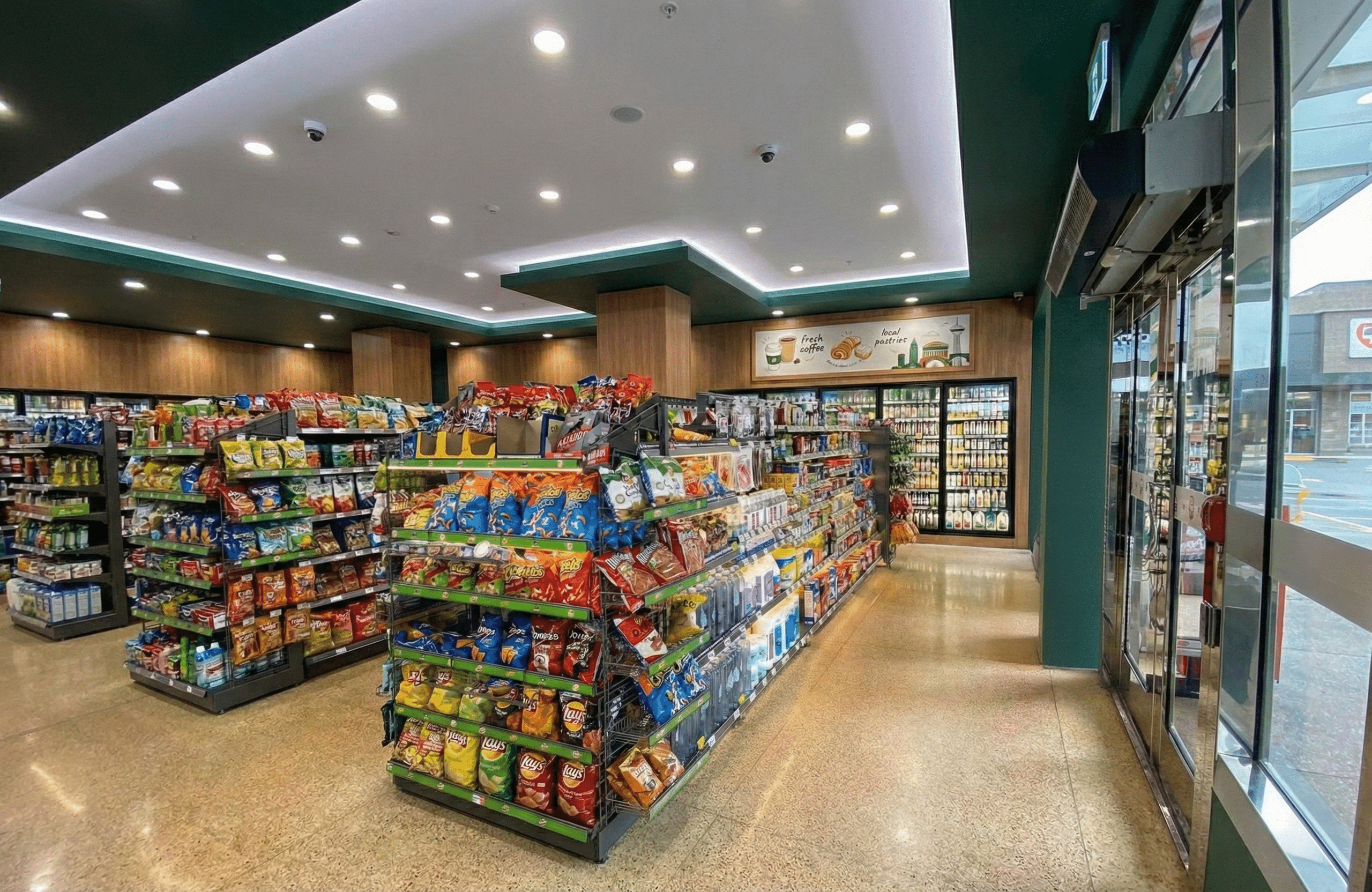
Gondola shelving forms the backbone of any c-store interior. The standard configuration uses 2–4 aisle runs of back-to-back gondolas down the middle of the store, with wall shelving around the perimeter and coolers across the back wall. End caps at the head of each aisle are your premium promotional real estate — impulse-heavy items placed here consistently outsell the same products mid-aisle. Your checkout counter configuration matters enormously in a high-transaction-volume format: it needs to handle fast, efficient throughput while also displaying impulse items that add to the basket at the last moment.
| Fixture / Component | Estimated Cost |
|---|---|
| Gondola Shelving (Aisle Runs + End Caps) | $8,000 – $25,000 |
| Wall Shelving (Perimeter) | $2,000 – $6,000 |
| Checkout Counter / Cash Wrap | $800 – $3,000 |
| Tobacco / Age-Restricted Product Cabinet | $500 – $2,000 |
| Interior Signage & Category Labels | $500 – $3,000 |
| Exterior Signage | $1,000 – $5,000 |
| Lighting Upgrades | $1,000 – $5,000 |
| Total Fixtures & Store Setup | $13,800 – $49,000 |
A dedicated tobacco storage cabinet behind the counter is both a compliance requirement in many states (tobacco products must not be self-service) and a practical theft prevention measure. This is not an optional fixture — it's operationally necessary from day one.
Exterior signage is disproportionately important in convenience retail. C-store customers often make their decision to stop within seconds of seeing the store from the road. Bright, readable exterior signage visible from the street is one of the highest-ROI investments you can make in a high-traffic location.
DISPLAYARAMA has been supplying retail fixtures to specialty stores since 1980. We carry gondola shelving, wall shelving, checkout counters, slatwall systems, and more — everything needed to build a c-store that's organized, shoppable, and optimized for high transaction volume from day one.
Our team can help you plan your layout and select the right fixture combination for your space and budget. Call us at 1-800-292-5227 or get your free layout plan below.
Get My Free Store Fixture Layout Plan →Technology, Staffing & Operations
A convenience store requires a POS system purpose-built for the c-store environment. Age verification is mandatory for tobacco, alcohol, and lottery — every transaction involving these categories requires an ID scan or manual verification, and your POS must handle this compliance step reliably. The system also needs to manage tobacco scan data reporting for manufacturer rebate programs, integrated lottery terminal connectivity, inventory management across hundreds of SKUs, and ideally fuel pump integration if you add that later. Platforms like Verifone, Gilbarco, and dedicated c-store software providers are built for this environment.
Convenience stores contribute an average of 19.9 jobs at the store level according to NACS data, with hourly wages averaging $15.04 for store-level associates. For a smaller single-location store, payroll will likely be the largest monthly operating expense after rent, running $10,000–$25,000 per month depending on hours, staffing level, and your market's labor costs. Most c-stores run 16–24 hours per day and require multiple shift employees — solo operation for any significant period is not practical or safe.
Insurance matters more than most owners realize: C-stores face higher insurance premiums than general retail due to tobacco, alcohol, and lottery sales, plus higher-than-average theft exposure. Total annual insurance costs (general liability, property, workers' comp) typically run $4,500–$15,000. Budget this from day one — being underinsured when a theft or premises incident occurs is a business-ending scenario.
| Technology / Staffing / Operations | Estimated Cost |
|---|---|
| C-Store POS System (Hardware + Setup) | $2,000 – $8,000 |
| POS Monthly Software Fee | $79 – $300/mo |
| Lottery Terminal (Usually Provided Free by State) | $0 – $500 |
| Staff Wages (Monthly — Small Store) | $10,000 – $25,000/mo |
| Business Insurance (Annual) | $4,500 – $15,000 |
| Utilities (Monthly — Refrigeration-Heavy) | $1,000 – $4,000/mo |
| Website / Social Media Setup | $500 – $2,000 |
| Marketing / Grand Opening | $1,000 – $5,000 |
| First-Year Operations Budget | $148,579 – $402,600+ |
Total Startup Cost Summary
When all categories are totaled, opening a convenience store in 2026 without fuel requires $50,000–$100,000 for a lean neighborhood store in a lower-cost market, and $150,000–$300,000 for a properly equipped mid-size store with full refrigeration, adequate inventory, and working capital. Larger stores, high-cost markets, or stores adding fuel infrastructure push significantly higher.
| Expense Category | Estimated Range |
|---|---|
| Licenses, Permits & Business Formation | $760 – $14,680 |
| First Month's Rent + Security Deposit | $3,500 – $18,000 |
| Leasehold Improvements / Buildout | $10,000 – $100,000 |
| Equipment & Refrigeration | $35,800 – $143,000 |
| Opening Inventory | $20,000 – $60,000 |
| Fixtures & Store Setup | $13,800 – $49,000 |
| Technology & POS | $2,500 – $8,500 |
| Working Capital Reserve (3–6 months) | $15,000 – $60,000 |
| Total Estimated Startup Investment (No Fuel) | $101,360 – $453,180 |
Most c-stores reach breakeven in 12–24 months. High transaction volume and consistent repeat traffic mean that a well-located store with controlled operating costs can reach profitability relatively quickly compared to other retail formats. The key risk is undercapitalization in the early months before your customer base establishes — maintain a reserve that covers at least 3–6 months of fixed costs before you open.
How to Maximize Revenue
The c-stores generating strong profits in 2026 aren't just selling cigarettes and lottery tickets — they're stacking multiple high-margin revenue streams, leveraging manufacturer programs most operators ignore, and building loyal customer relationships in a format the industry traditionally treated as transactional. Here's how the best operators are building durable, profitable businesses.
Build Out Foodservice
Foodservice accounted for 38.9% of all c-store in-store gross profit dollars in 2025 — by far the highest-margin in-store category. Even a basic coffee program with fresh-brewed drip coffee, cappuccino dispensers, and a roller grill can add thousands of dollars per month in high-margin revenue on minimal product cost.
Enroll in Scan Data Programs
Tobacco manufacturers pay per-carton rebates to retailers who submit cigarette scan data, plus promotional support for in-store displays. These programs are free to join and can generate meaningful monthly income just from products you're already selling. Apply before opening — most programs activate within 30 days.
Maximize Cold Beverage Real Estate
Packaged beverages are the top gross-profit-dollar category in c-stores at 24% of total in-store margin. Every additional cooler door you can profitably operate increases your highest-margin revenue. Energy drinks, RTDs, and functional beverages carry dramatically better margins than soda — allocate cooler space accordingly.
Launch a Loyalty Program
C-store customers are creatures of habit. A simple app-based or card-based loyalty program that rewards repeat purchases on coffee, fuel, and in-store items builds retention and gives you customer data you can use to drive targeted promotions during slow periods.
Sell Local & Private Label
Local bakery items, regional snack brands, and private-label products carry margins that national CPG brands can't match. A local pastry or sandwich program — even just bought-in from a nearby bakery — adds high-margin fresh items that chains can't easily replicate and that customers remember.
Optimize Checkout Placement
The checkout counter is the highest-impulse real estate in the store. Products placed here — candy, single-serve beverages, gum, phone chargers — consistently outperform their same products mid-aisle by a factor of 2–4x. Rotate your checkout displays seasonally and track what converts best in your specific location.
Why Your Fixtures Matter
In a convenience store, the average customer makes a purchase decision in under 60 seconds. The layout and fixture configuration of your store either guides that decision toward high-margin products or lets it happen at random. Clean, well-organized shelving with clear category labels, properly loaded end caps, and a checkout counter ringed with impulse items creates a shopping environment that earns more per customer visit — without any change in foot traffic.
Poorly organized shelving, overstocked or empty gondola runs, and a cluttered checkout counter signal a store that's struggling to manage itself — and customers read those signals even if they're not consciously aware of them. The best-run c-stores treat their fixtures as revenue tools that are actively managed. Prioritize these when planning your layout:
- Gondola shelving in consistent heights with clear category signage — organized by product type so customers can navigate quickly without asking for help
- End caps stocked with impulse-heavy, high-margin items — these positions generate disproportionate sales relative to their floor space and should always be active
- Cold beverage coolers spanning the full back wall — getting customers to the back of the store means they pass your entire selection on the way
- A checkout counter loaded with impulse items in easy reach — the last 10 seconds of the transaction are your highest-margin sales opportunity
- A secured tobacco cabinet behind the counter — compliance-required in many states and a practical theft deterrent in every market
DISPLAYARAMA has been outfitting specialty retail stores with professional-grade display fixtures since 1980. We carry gondola shelving, wall shelving, checkout counters, slatwall systems, and more — everything you need to build a convenience store that runs efficiently and earns more per customer visit from day one.
Our team can help you plan your store layout and select the right combination of fixtures for your square footage and budget. Bulk pricing available for full store buildouts.
Get My Free Store Fixture Layout Plan →Ready to Fixture Your Convenience Store?
If you're opening a convenience store and need to source shelving and fixtures, start with DISPLAYARAMA's free 2D store layout service — a no-cost resource where our team creates a professional floor plan with specific fixture recommendations for your space. It saves hours of guesswork and gives you a clear picture of your fixture investment before you commit to anything. Request your free layout plan here.
Gondola Shelving
Double-sided freestanding gondola units for your store's interior aisles — the backbone of any c-store floor, configurable by category for fast customer navigation and efficient daily restocking.
Wall Shelving
Perimeter wall shelving for beverages, snacks, and packaged goods — maximizing your store's vertical display capacity along every wall for a full, professional presentation.
Checkout Counters
Professional cash wrap counters built for high-volume c-store transactions — organized for fast checkout, designed to hold impulse items, and built to accommodate your POS hardware and age verification equipment.
Slatwall Systems
Flexible slatwall panels for specialty sections, seasonal promotions, and accessory displays — fully reconfigurable without new hardware as your product mix and layout evolve.
Display Cases
Locking glass display cases for premium merchandise, electronics accessories, or any product category requiring secure display — professional, visible, and built to protect high-value inventory.
Bulk Pricing Available
Outfitting a full c-store floor? DISPLAYARAMA offers bulk pricing on shelving and fixtures. The more you order, the more you save. Call 1-800-292-5227 for a custom quote.
DISPLAYARAMA's free 2D store layout service gives you a professional floor plan with specific fixture recommendations for your convenience store — at no cost. It's designed to save you hours of guesswork and give you a clear picture of your fixture investment before you commit. We've been helping specialty retailers design their stores since 1980, and we offer bulk pricing for owners outfitting a full floor.
Submit your space dimensions and store type and we'll put together a custom layout plan with exactly the fixtures that will work for your convenience store.
Get My Free Store Fixture Layout Plan →