

How Much Does It Cost To Open a Video Game Store?
Americans spent $60.7 billion on video games in 2025, the second-highest total on record according to the Entertainment Software Association and Circana. At the same time, GameStop has closed hundreds of U.S. stores in each of the last two fiscal years, leaving plenty of towns without a place to trade in a console, find a used copy of a classic or buy a controller the day they need it. That gap is the opportunity for an independent video game store.
It is not the same business it was fifteen years ago. Spending on new physical games fell to about $1.5 billion in 2025, a record low, as more players download new releases. The independents that thrive today lean into what downloads cannot replace: pre-owned and retro games, consoles you can hold before you buy, trade-ins, collectibles and a place for gamers to hang out. Back Market reported that retro console sales in 2025 were already 32% higher than all of 2024, and Nintendo's Switch 2 became the fastest-selling console in U.S. history.
This guide breaks down what it really costs to open a video game store in 2026, from secondhand dealer licenses and rent to trade-in cash, display cases and the pricing tools that keep your buy offers profitable. Every range comes from current industry sources.
What Kind of Video Game Store Are You Opening?
The core decision is how much of your business is new product versus pre-owned. New games carry thin margins and depend on distributor access, while used and retro games earn roughly double. GameStop's last published breakdown showed new software at a 21.5% gross margin compared with 43.4% for pre-owned. Adding a play lounge or esports space changes the budget again because it adds equipment, seating and sometimes amusement licensing.
| Store Concept | Estimated Startup Range |
|---|---|
| Retro & pre-owned specialist | $50K – $150K |
| New-and-used mainstream store | $74K – $153K |
| Used-game franchise (e.g. Game Xchange) | $69K – $244K |
| Gaming lounge / esports hybrid (e.g. Contender Esports) | $150K – $237K |
A retro and pre-owned specialist is the most common independent path, with inventory built largely from trade-ins and collections. A new-and-used store adds the latest releases and consoles to drive traffic. Franchises trade a fee and royalties for a proven playbook, and lounge hybrids earn hourly play and party revenue but need the most capital. Some owners also add console and controller repair, which uses the same bench and testing equipment as refurbishing trade-ins.
Independent advantage: A store built around pre-owned, retro and Nintendo titles plays to the parts of the market where physical still wins. Nintendo players remain far more likely to buy physical copies than PlayStation or Xbox players.
Licenses, Permits & Business Formation
Forming an LLC costs $35 to $500 depending on the state, a seller's permit is free to about $100, and local business registration typically runs $50 to $300. The license that matters most for a video game store is the secondhand dealer license, because buying games and consoles from the public is regulated in many states and cities. Florida covers computer games in its secondhand dealer rules and charges $6 per location. California's Department of Justice license costs $300 plus fingerprinting and requires reporting purchases through a state system. New York City charges $85 to $340, and Peoria, Illinois specifically names gaming systems and video games, requires a $1,000 bond, and expects purchases to be reported within 12 hours.
If you add arcade cabinets or pay-to-play stations, check whether your city licenses amusement devices. Fees range from about $35 per machine in Passaic, New Jersey to $153 per device in Portland, Maine, and lounges may also need a fire inspection, zoning approval or a food permit.
| License / Permit | Cost Range |
|---|---|
| LLC formation (state filing fee) | $35 – $500 |
| Sales tax / seller's permit | $0 – $100 |
| Local business registration | $50 – $300 |
| Secondhand dealer license | $6 – $340 |
| Amusement device license (lounges, per machine) | $35 – $153 |
| Typical Total (before bonds or device licenses) | ~$90 – $1,250 |
Trade-in compliance: Many secondhand laws require you to record the seller's ID and item details, and some impose holding periods before resale. Build these steps into your trade-in counter process from day one so compliance never slows a sale.
Location & Rent
GameStop built its store network around strip centers anchored by supermarkets and mass merchants, with stores averaging roughly 1,400 to 1,700 square feet. That model still works for independents: convenient parking makes trade-ins easy, and an anchor brings steady traffic. Retro specialists can also do well in walkable downtown districts where collectors browse.
CBRE reported an average U.S. retail asking rent of $24.79 per square foot per year in the second quarter of 2026. Lower-cost markets run in the mid-teens, while lifestyle centers and malls in strong metros can reach $35 or more. Here is what that looks like for a 1,500-square-foot store.
| Location Type | Est. Monthly Base Rent (1,500 sq ft) |
|---|---|
| Lower-cost market (~$16/sq ft/yr) | ~$2,000 |
| National average (~$24.79/sq ft/yr) | ~$3,100 |
| Lifestyle center / mall in a strong metro (~$35/sq ft/yr) | ~$4,400 |
Cushman & Wakefield data puts the average retail fit-out near $147 to $155 per square foot, with the Southeast closer to $117, and landlords typically offer improvement allowances of $15 to $60 per square foot. Those figures assume real construction. A second-generation retail space that only needs fixtures, lighting and paint costs far less to open.
Location insight: Look at where the nearest GameStop used to be. A center that recently lost one still has shoppers who are used to trading in games there.
Opening Inventory
Startup guides put opening inventory for a video game store anywhere from about $25,000 for a small niche shop to more than $100,000, and many owners set aside a separate pool of cash for trade-ins. Combined estimates for opening stock plus trade-in cash commonly land between $35,000 and $90,000.
Pre-Owned & Retro Games
This is the heart of an independent store. Retro stock commonly requires $20,000 to $50,000 or more, sourced from collections, estate sales and trade-ins. Some independents have stocked their stores almost entirely through community trade-ins.
Consoles & Accessories
Tested, cleaned consoles sell at strong margins, and controllers and accessories sell with almost every system. The Switch 2 Pro Controller hit a 24% attach rate in 2025, a reminder that every console sale is an accessory sale too.
New Releases
New games bring traffic on launch days but earn the thinnest margins. Carry a focused selection, especially Nintendo titles, rather than trying to match big-box depth.
Collectibles
Figures, trading cards and pop-culture merchandise have become GameStop's growth engine, topping $1 billion in its 2025 fiscal year. A small collectibles section adds margin and gives non-gamers a reason to visit.
| Inventory Category | Estimated Cost |
|---|---|
| Pre-owned & retro games and consoles | $20K – $50K+ |
| New releases, accessories & collectibles | Varies by distributor access |
| Trade-in cash reserve | Included in total below |
| Opening Stock + Trade-In Cash | $35K – $90K |
Inventory discipline: Price every trade-in from current market data, offer more in store credit than in cash, and set a firm buy margin. Overpaying on trade-ins is the fastest way to tie up cash in games that will not sell at a profit.
Fixtures & Store Design
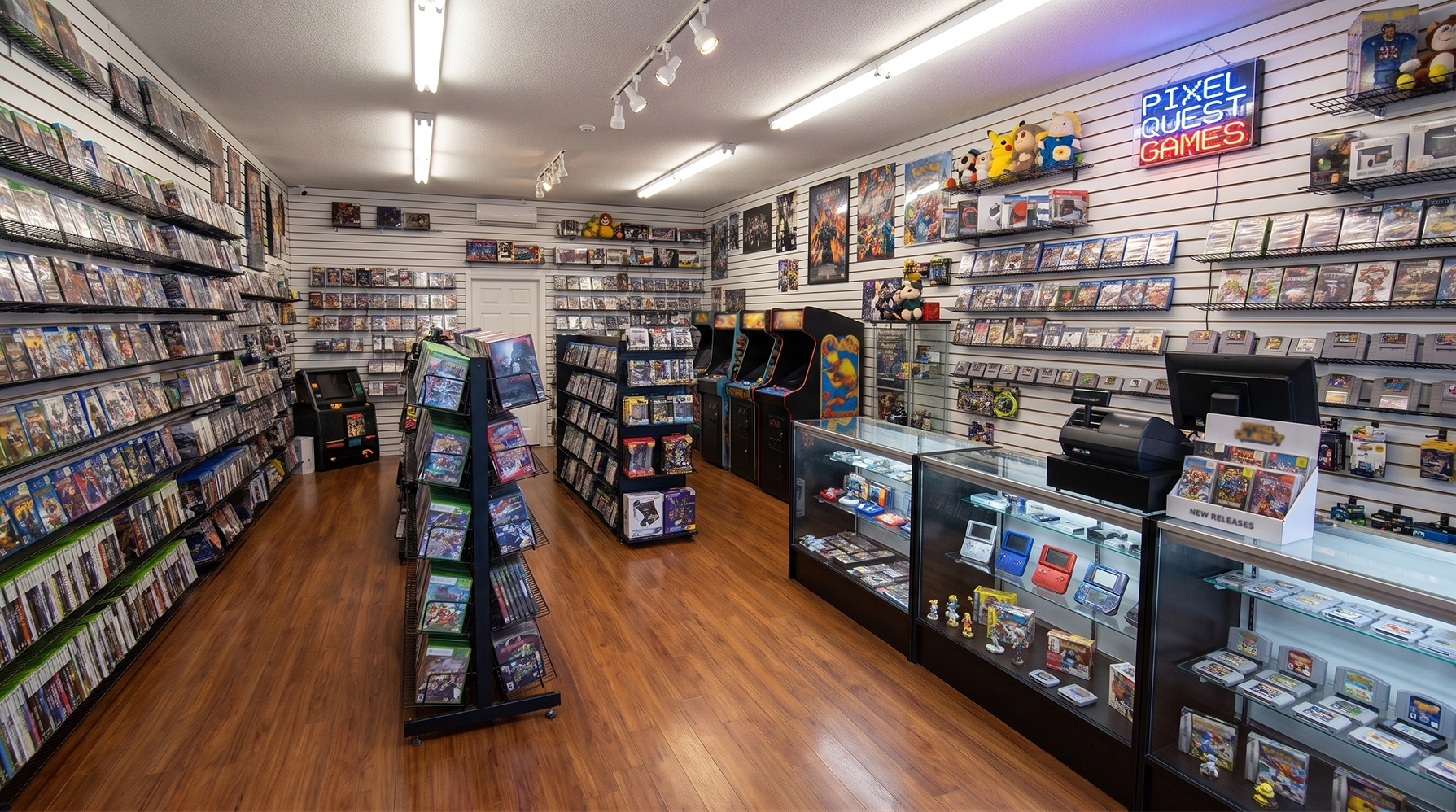
A video game store needs locked glass for consoles, rare retro titles and collectibles, plus open shelving where customers can flip through hundreds of cases. Lit display cases set the tone for a gaming store, and an Extra Vision display case with an RGB base brings the same color lighting gamers have in their own setups. For browsing, gondola shelving holds long runs of game cases, and slatwall handles controllers, cables and headsets on hooks.
Using current DISPLAYARAMA pricing, a 1,500-square-foot store can cover its core fixtures for roughly $5,000 to $8,500. A free layout plan shows how many cases and shelving runs actually fit your space before you order.
| Fixture | Estimated Cost |
|---|---|
| 2–3 48" RGB Extra Vision cases | $1,075 – $2,440 |
| 1 70" RGB Extra Vision case | $777 – $1,152 |
| 72" wall display case with RGB strip | ~$1,042 |
| 1–2 double-sided gondola units | $1,290 – $2,580 |
| 6–10 slatwall panels + hooks | $575 – $1,045 |
| 48" checkout counter | ~$247 |
| Estimated Fixture Package | $5,000 – $8,500 |
DISPLAYARAMA has supplied retail fixtures since 1980, including RGB-lit display cases, wall cases, gondola shelving and Grade A slatwall. Send us your floor dimensions and we will map out where cases, game shelving and your trade-in counter fit best.
Prefer to talk through your space? Call us at 1-800-292-5227.
Get My Free Store Fixture Layout Plan →Technology, Staffing & Operations
Accurate pricing is what makes a pre-owned store profitable. PriceCharting's market data starts at $6 per month, and its $49 Legendary plan adds suggested buy and sell prices and collection-buying alerts. Grindless, a POS built around PriceCharting data, costs $149.99 per month for one store and supports separate cash and credit trade-in offers with ID scanning. General retail POS software such as Square for Retail Plus runs about $49 per month, and basic POS hardware can cost as little as $0 to $500.
Security deserves real budget because consoles are high-value and easy to resell. A commercial system with four to six cameras typically costs $1,500 to $10,000 installed. Insureon reports median retail insurance costs of about $42 per month for general liability and $95 per month for a business owner's policy. Retail salespeople earn a median of $17.03 per hour according to the Bureau of Labor Statistics, and plan to spend about 7% to 12% of first-year expenses on marketing.
| Technology / Operations | Estimated Cost |
|---|---|
| POS hardware | $0 – $500 |
| POS software (Square to Grindless) | $49 – $150 / month |
| Pricing data (PriceCharting) | $6 – $49 / month |
| Security camera system (installed) | $1,500 – $10,000 |
| Insurance (first year) | $500 – $1,140 |
| Upfront Total (excl. monthly software) | $2,000 – $11,640 |
Total Cost To Open a Video Game Store
Adding up each category, an independent video game store typically needs about $71,000 to $194,000 before buildout. Working capital is the largest swing factor. A two-person staff at the BLS median wage costs about $5,900 per month, and with rent and $500 to $2,000 in monthly utilities, three to six months of operating cash comes to roughly $25,000 to $74,000.
| Cost Category | Estimated Range |
|---|---|
| Licenses, permits & formation | $90 – $1,250 |
| Lease deposit + first month (1,500 sq ft) | $4,000 – $8,800 |
| Opening stock + trade-in cash | $35,000 – $90,000 |
| Fixtures & display cases | $5,000 – $8,500 |
| Technology, security & insurance | $2,000 – $11,640 |
| Working capital (3–6 months) | $25,000 – $74,000 |
| Buildout (if needed) | $117 – $155 per sq ft |
| Total Before Buildout | ~$71K – $194K |
Timeline to profitability: ZenBusiness estimates two to four years to break even for a gaming lounge, and video game retail financial models commonly project break-even in the third year. Retail overall holds up better than most industries, with 58.3% of new retail establishments still open after five years according to the Bureau of Labor Statistics.
How Video Game Stores Grow Revenue
Independent game stores win by doing what a download cannot: putting a real copy in someone's hands, giving them a fair trade-in and building a community around the counter.
Make Pre-Owned the Core
Pre-owned games historically earned about 43.4% gross margin versus 21.5% for new. Offer higher store credit than cash so trade-in value turns into the next sale.
Lean Into Retro
Consumer Reports found 14% of U.S. gamers regularly play games made before 2000, and Back Market's 2025 retro console sales passed all of 2024 by 32%.
Add Collectibles & Cards
GameStop's collectibles business topped $1 billion in its 2025 fiscal year, about 29% of revenue. Figures and trading cards add margin and draw new customers.
Win With Nintendo
The Switch 2 sold 4.4 million U.S. units in 2025, and its Pro Controller reached a 24% attach rate. Nintendo players still buy physical far more often than other platforms.
Host Tournaments & Parties
Play stations, tournaments and birthday packages turn floor space into hourly revenue. Campus lounges charge about $5 to $6 per hour, and party packages bring in hundreds per booking.
Sell Online & Live
Listing rare finds on eBay, your own webstore or live-selling platforms like Whatnot reaches collectors far beyond your zip code and moves high-value inventory faster.
Why Your Fixtures Matter
Gamers can buy almost anything online, so the store itself has to be the reason they come in. Bright, color-lit cases full of retro consoles and sealed classics create the kind of shelf people photograph and share, and clean, organized game walls make it easy to dig for the one title they have been hunting.
Good fixtures also protect your margins. Consoles and rare games belong in locked glass within view of the counter, while lower-value titles can live on open shelving where customers can browse freely. A layout that separates high-value cases, browsing aisles and the trade-in counter keeps the store secure even on a busy Saturday.
- Locking, RGB-lit display cases for consoles, rare games and collectibles
- Gondola shelving for long runs of game cases sorted by platform
- Slatwall with hooks for controllers, cables, headsets and accessories
- Wall display cases to feature sealed collectibles and limited editions
- A checkout counter with space for a dedicated trade-in station
From RGB Extra Vision display cases to gondola shelving, wall cases and Grade A slatwall, DISPLAYARAMA carries the fixtures video game retailers need, with bulk pricing for full store openings.
See fixtures selected for video game stores, or call 1-800-292-5227 to talk with our team.
Shop Video Game Store Fixtures →Opening a Video Game Store: Common Questions
How much does it cost to open a video game store?
An independent video game store typically costs about $71,000 to $194,000 to open before buildout, including inventory, trade-in cash, fixtures, technology and three to six months of working capital. Retro and pre-owned specialists can open for less, while gaming lounge hybrids often run $150,000 or more.
Do I need a special license to sell used video games?
Often, yes. Many states and cities require a secondhand dealer license to buy games and consoles from the public. Florida charges $6 per location, California's license costs $300 plus fingerprinting, New York City charges $85 to $340, and some cities require a bond and purchase reporting.
Is a video game store profitable?
It can be when the store focuses on pre-owned and retro games. Pre-owned games historically earned about 43% gross margin compared with roughly 21.5% for new games, and collectibles, trade-ins and events add higher-margin revenue. Most estimates put break-even at two to four years.
How much inventory do I need to open a video game store?
Plan for roughly $35,000 to $90,000 in opening stock plus trade-in cash. Retro inventory alone commonly runs $20,000 to $50,000 or more, and much of it can be sourced from collections and customer trade-ins.
How big should a video game store be?
GameStop's stores have averaged roughly 1,400 to 1,700 square feet, which is a good benchmark for an independent shop. Add more space if you plan to include play stations or a tournament area.
Is physical game retail dying?
New physical game sales have declined, falling to about $1.5 billion in the U.S. in 2025. But pre-owned and retro demand is growing, Nintendo players still buy physical copies at high rates, and store closures have left many communities without a local game store.
How do I price trade-ins?
Most stores price trade-ins from current market data. PriceCharting plans start at $6 per month, and point-of-sale systems like Grindless pull that data in automatically and support separate cash and store credit offers.
What fixtures does a video game store need?
Most video game stores use locking glass display cases for consoles and rare games, gondola shelving for game cases, slatwall for accessories, wall cases for collectibles and a checkout counter. A starter fixture package for a 1,500-square-foot store can run about $5,000 to $8,500.
Should I add a gaming lounge to my store?
A lounge adds hourly play, tournament and party revenue, but it also adds equipment, seating and in some cities amusement device licensing. Franchise lounge concepts such as Contender Esports report total investments of about $150,000 to $237,000.
Outfit Your Video Game Store
With your budget in place, the next step is laying out cases, shelving and your trade-in counter. These are the fixtures most video game stores open with, and our team will fit them to your space with a free layout plan.
RGB Display Cases
Extra Vision cases with RGB lighting give consoles and rare titles the gaming-setup glow, locked and visible from every angle.
Wall Display Cases
Tall lit wall cases turn sealed collectibles and limited editions into a feature wall.
Gondola Shelving
Double-sided gondola runs hold hundreds of game cases sorted by platform and keep aisles easy to browse.
Slatwall Panels
Grade A slatwall with hooks and shelves organizes controllers, cables and headsets and resets in minutes.
Checkout Counters
Counters starting under $250 anchor your register and trade-in station.
Bulk Pricing Available
Outfitting a full store? DISPLAYARAMA offers bulk pricing on fixtures. Call 1-800-292-5227 for a custom quote.
DISPLAYARAMA's free 2D store layout service gives you a professional floor plan with specific fixture recommendations for your video game store at no cost, so you know exactly what fits before you order. We have been helping retailers design their stores since 1980, and we offer bulk pricing for owners outfitting a full floor.
Send us your space dimensions and store type, and we will put together a custom layout plan with the fixtures that fit your video game store.
Get My Free Store Fixture Layout Plan →