

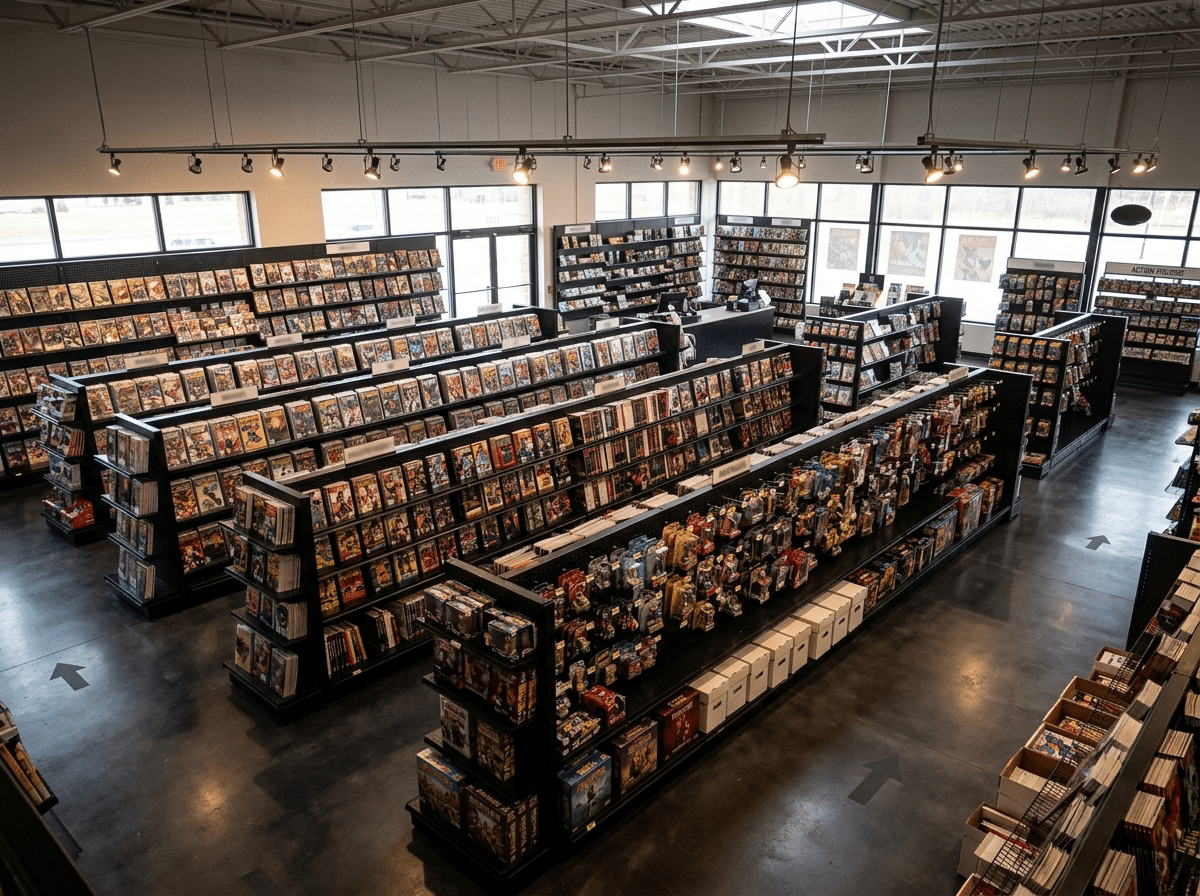
How Much Does It Cost To Open a Comic Shop?
Comic shops have always been more than retail stores — they're community hubs, collector destinations, and cultural touchstones. And right now, the timing to open one has never looked better. The global comic book market was valued at over $18 billion in 2025 and is projected to grow at nearly 9% annually through 2033, driven by blockbuster film adaptations, a resurgent manga boom, and an entire generation of collectors who grew up reading Marvel and DC. Physical print comics still command roughly two-thirds of market revenue, proving the brick-and-mortar comic shop is far from obsolete.
That said, opening a comic shop is a real business investment with real financial complexity. Startup costs vary widely depending on whether you're opening a small pull-list and back-issue shop, a full-service pop culture destination with gaming nights and merchandise, or something in between. Across industry models and financial data, realistic startup budgets range from $50,000 on the lean end to $175,000 or more for a fully stocked, well-outfitted retail experience. Getting the number wrong — too low and you run out of runway, too high and you've overextended — can determine whether you survive your first two years.
This guide breaks down every major cost category you'll encounter on the path to opening day: store concept decisions, licenses, location, inventory, fixtures, technology, and ongoing operations. Every figure here is grounded in current industry research and real-world store data. Whether you're planning a lean neighborhood shop or a destination store, use this as your financial roadmap.
What Kind of Comic Shop Are You Opening?
Before you spend a dollar, you need to answer one question: what kind of store are you building? The comic shop landscape spans several distinct business models, and each carries a dramatically different cost structure, margin profile, and customer base. Mixing up the models — or trying to be all of them at once — is one of the fastest ways to burn through startup capital without building a coherent brand.
The Pull-List & Back-Issue Shop
This is the most stripped-down version: a focused inventory of new weekly releases, curated back issues, and a subscriber pull list. Rent is typically modest, the footprint is small (600–1,200 sq. ft.), and the operational overhead is lean. Customers come in weekly on new-release day and browse back issues between visits. Startup costs sit at the lower end of the spectrum, but so does average transaction value — success depends on building a loyal subscriber base quickly and managing distributor orders carefully to avoid overstock.
The Full-Service Pop Culture Store
Comics are the anchor, but merchandise, collectibles, Funko Pops, action figures, manga, board games, and tabletop gaming products fill out the floor. These stores operate in 1,500–3,000+ sq. ft. spaces and command a higher average transaction value — supplementary categories like collectibles can carry gross margins of 50–70%, significantly healthier than new-issue margins. The tradeoff is a substantially larger opening inventory investment and more complex display requirements.
The Gaming & Events Destination
Some of the most successful modern comic shops have built their business model around community events: weekly Magic: The Gathering tournaments, tabletop RPG nights, creator signings, and release parties. Stores that host regular events report sales increases of up to 30% on event days. This model requires dedicated floor space (often 10–15% of the store), furniture, and the operational bandwidth to run programming — which raises startup costs but also drives repeat foot traffic and community loyalty that sustains the business long-term.
The Collector Specialty Shop
Some shops focus heavily on graded and high-value vintage comics, with investment-grade inventory selling for hundreds to thousands of dollars per issue. Margins on collectibles can exceed 100% or more, but this model requires deep product knowledge, secure display infrastructure (locked glass cases are essential), and a customer base of serious collectors rather than casual readers. Startup costs are highly variable based on the opening collection you assemble.
| Store Concept | Typical Footprint | Estimated Startup Range |
|---|---|---|
| Pull-List & Back-Issue Shop | 600–1,200 sq. ft. | $30,000 – $60,000 |
| Full-Service Pop Culture Store | 1,500–2,500 sq. ft. | $75,000 – $140,000 |
| Gaming & Events Destination | 2,000–3,500 sq. ft. | $100,000 – $175,000+ |
| Collector Specialty Shop | 800–1,800 sq. ft. | $50,000 – $120,000 |
For independent operators: The full-service model with a moderate events component tends to offer the best balance of foot traffic, margin diversification, and community stickiness. Stores that rely solely on new-release sales face the most margin pressure — diversifying into merchandise and collectibles is the proven path to a sustainable business.
Licenses, Permits & Business Formation
Getting your legal foundation in place is the first operational task before you sign a lease or place an inventory order. Comic shops don't carry the heavy regulatory burden of food service or firearms retail, but there are still several formation and compliance costs to budget for. Across all states, total formation and licensing costs for a new comic shop typically fall between $1,000 and $4,000.
Business Entity Formation
Most independent comic shop owners form an LLC to separate personal liability from business risk — a critical protection when you're carrying thousands of dollars in collectible inventory. LLC formation fees vary by state, ranging from $50 in Kentucky to $500 in Massachusetts. Most states fall between $50 and $200. In addition to the state filing fee, many owners work with a registered agent service, which runs $100–$300 annually. Operating as a sole proprietor is cheaper upfront but leaves personal assets exposed.
Retail Operating Licenses
Your city or county will require a general business operating license before you open. Annual fees typically range from $50 to $400 depending on municipality. You'll also need a Certificate of Occupancy confirming your retail space meets local zoning and building codes — essential before you can legally invite customers in. If you plan to sell used or vintage comics, some jurisdictions require a secondhand dealer permit as well; costs range from $0 to $50 depending on location.
Sales Tax / Resale Permit
A seller's permit (also called a resale certificate or sales tax permit) allows you to purchase inventory from distributors without paying sales tax on the wholesale transaction — you collect it from your customers at the point of sale. This permit is free to obtain in most states and is a mandatory prerequisite for setting up a distributor account with services like Lunar Distribution or Penguin Random House Publisher Services.
Insurance
General liability insurance for a small comic shop typically costs between $400 and $1,500 per year. Given the high-value nature of collectible inventory, property insurance is equally critical and adds another $500 to $2,000 annually. Many shop owners bundle these into a Business Owner's Policy (BOP) for a combined rate between $800 and $2,500 per year.
| License / Permit / Expense | Estimated Cost Range |
|---|---|
| LLC Formation (state filing fee) | $50 – $500 |
| Registered Agent Service (annual) | $100 – $300 |
| Local Business Operating License (annual) | $50 – $400 |
| Certificate of Occupancy | $0 – $200 |
| Seller's Permit / Resale Certificate | Free (most states) |
| Secondhand Dealer Permit (if applicable) | $0 – $50 |
| General Liability Insurance (annual) | $400 – $1,500 |
| Property / Inventory Insurance (annual) | $500 – $2,000 |
| Legal / Accounting Setup Fees | $500 – $1,500 |
| Total Formation & Licensing (Year 1) | $1,600 – $6,450 |
No comic-specific license required: Unlike gun shops or food service, comic retail doesn't require a specialized federal or state license tied to the product category. However, if you plan to serve food or beverages at events, that changes the permitting picture significantly — factor in a food handler's permit and potential health inspections.
Location, Rent & Build-Out Costs
Location strategy for a comic shop is more nuanced than it is for most retail categories. Unlike grocery or convenience, a comic shop doesn't need to be in the highest-foot-traffic corridor — the customer base is passionate and will seek you out. What matters more is proximity to complementary communities: college towns, dense residential neighborhoods, gaming stores, or areas with an established pop culture scene. Many thriving shops operate in secondary retail corridors where rent is significantly more affordable than prime storefronts.
Typical Store Size Ranges
A lean pull-list shop can function in 600 to 1,000 square feet. A full-service store with events space typically needs 1,500 to 2,500 square feet, and a large destination shop with gaming tables and deep merchandise can run 3,000 square feet or more. Most independent operators land in the 1,000–1,800 sq. ft. range as a practical balance of inventory capacity and overhead control.
Monthly Rent by Location Type
Retail rent varies dramatically by market. Secondary retail corridors and strip mall spaces in mid-size markets are where most independent comic shops find their best value, running from $1,500 to $3,500 per month for a 1,000–1,500 sq. ft. space. Urban locations and prime retail zones push that number significantly higher.
| Location Type | Typical Size | Monthly Rent Range |
|---|---|---|
| Rural / Small Town Strip Mall | 600–1,200 sq. ft. | $800 – $1,800/mo |
| Mid-Market Secondary Corridor | 1,000–1,800 sq. ft. | $1,500 – $3,500/mo |
| Suburban Shopping Center | 1,200–2,500 sq. ft. | $2,500 – $5,000/mo |
| Urban / High-Foot-Traffic Zone | 800–2,000 sq. ft. | $3,500 – $8,000+/mo |
Build-Out & Leasehold Improvements
Most retail spaces will need some degree of preparation before opening day. At minimum, this includes painting, flooring, lighting installation, and any electrical work needed to support your displays and POS system. A basic cosmetic build-out runs $5,000 to $15,000. A more substantial renovation — custom walls, dedicated gaming area construction, countertop build-out — can reach $25,000 to $40,000. Leasing a space that already has a functional retail footprint is one of the best ways to control this cost.
Negotiate tenant improvement allowances: In many markets, landlords offer TI (tenant improvement) allowances as part of lease negotiations — contributions toward build-out costs in exchange for a longer lease commitment. Always negotiate this before signing. A $5,000–$15,000 TI allowance can meaningfully reduce your day-one capital requirement.
Opening Inventory Costs
Inventory is the largest and most complex cost in a comic shop startup. Unlike many retail categories, comics carry their own unique distribution structure, ordering discipline, and margin profile that new owners must understand before placing their first order. The core challenge: the traditional direct market is largely non-returnable, meaning what you order, you own. Overbuy on the wrong titles and capital is locked up in slow-moving stock. The standard industry Cost of Goods is benchmarked at approximately 50–60% of retail for new issues — meaning a $5.99 comic costs you roughly $3.00 from the distributor.
New Weekly Release Comics
New issues from Marvel, DC, Image, Dark Horse, and independent publishers form the backbone of most shops' weekly revenue. Distributors — primarily Lunar Distribution and Penguin Random House Publisher Services following Diamond's bankruptcy proceedings — supply these titles at roughly 50% off cover price. A well-curated opening order focused on top-performing titles and confirmed pull-list subscribers typically costs between $5,000 and $15,000 for the initial weeks of stock. New comics should represent about 30–40% of your opening inventory allocation.
Graphic Novels & Trade Paperbacks
Trades and graphic novels offer an important advantage over single issues: they don't go "stale" the way weekly releases do, making them a more forgiving inventory category for a new shop. Margin on graphic novels typically runs 40–45% from publishers. A solid opening library covering classic arcs, currently popular series, and gateway titles for new readers requires an investment of $5,000 to $12,000 — and it will be one of your highest-velocity categories once foot traffic builds.
Manga
Manga deserves its own budget line. The format currently commands more than 45% of the global comic book market by genre, and demand among younger readers is exceptionally strong. Manga is sold through standard book distributors and carries similar margins to graphic novels. A competitive opening selection covering popular ongoing series (One Piece, Jujutsu Kaisen, Chainsaw Man, etc.) alongside classic standbys runs $3,000 to $8,000 for a mid-size store.
Back Issues & Collectibles
Back issues and collectible comics are the highest-margin inventory in the business — margins on individual back issues can range from 100% to well over 1,000% depending on scarcity and condition. Opening with a quality back-issue selection signals to collectors that your shop is serious. Budget $3,000 to $10,000 to establish a meaningful back-issue bin presence, sourced through estate sales, collection purchases, and wholesalers. For graded and investment-grade comics, budget separately based on specific acquisitions.
Merchandise & Accessories
For full-service shops, supplementary merchandise — Funko Pops, action figures, card sleeves, bags and boards, apparel, and gaming supplies — can account for 30–50% of total revenue and carries gross margins of 50–60%. This category adds significant opening inventory cost but also meaningfully raises your average transaction value. A mid-size opening merchandise assortment typically runs $5,000 to $15,000.
| Inventory Category | Estimated Opening Cost |
|---|---|
| New Weekly Comics (opening weeks) | $5,000 – $15,000 |
| Graphic Novels & Trade Paperbacks | $5,000 – $12,000 |
| Manga | $3,000 – $8,000 |
| Back Issues & Collectibles | $3,000 – $10,000 |
| Merchandise & Accessories | $3,000 – $15,000 |
| Total Opening Inventory (mid-size store) | $19,000 – $60,000 |
Don't overbuy at launch: New shop owners consistently make the mistake of over-ordering to fill the shelves. Start lean on new issues — order only what pull-list subscribers have confirmed, plus a conservative overage. You can always reorder fast movers. Slow-moving inventory on a non-returnable product is capital that can't be redeployed anywhere else.
Fixtures & Store Design
Your fixture setup is what separates a professional comic shop from a storage room with a cash register. Comics, graphic novels, back issues, collectibles, and merchandise all require different display solutions — and how those displays are organized directly affects browsability, impulse purchases, and how long customers linger. DISPLAYARAMA's free 2D store layout service can help you map the right fixture mix for your specific square footage before you spend a dollar.
Slatwall Panels
Slatwall is the foundation of most comic shop wall systems. Horizontal slat channels accept a wide range of accessories — shelves, literature bins, hooks, and face-out brackets — making it ideal for displaying new issues, manga volumes, and accessories along perimeter walls. It's reconfigurable as your inventory evolves without replacing the entire wall system. Slatwall panels run $64.50 to $339 per panel depending on grade and color; outfitting a 1,500 sq. ft. store's perimeter walls typically requires 20 to 40 panels.
Glass Display Cases
Locking glass cases are non-negotiable for any shop carrying graded comics, key issues, or premium collectibles. They provide visibility while protecting high-value inventory. Full-vision display cases are standard along front counters; wall-mounted cases work well for showcase walls of graded slabs. Budget $300 to $800 per case depending on size and configuration; a typical comic shop counter run of 4 to 6 cases costs $1,500 to $5,000.
Gondola Shelving & Freestanding Units
Double-sided gondola units work well for center-floor merchandise runs — bagged back issues, manga, board games, and accessories. For comic shops with significant merchandise depth, a 4-to-6 unit gondola run creates natural browsing aisles and maximizes floor space productivity. Gondola units typically run $500 to $700 each.
Checkout Counter
Your checkout counter is the hub of every transaction and the most visited square footage in the store. It should house your POS terminal, impulse merchandise, and prominent display of recent releases and promotions. A purpose-built checkout counter with integrated display case runs $500 to $2,000 depending on length and configuration.
| Fixture Category | Estimated Cost Range |
|---|---|
| Slatwall Panels (perimeter walls) | $2,400 – $6,800 |
| Slatwall Accessories (shelves, bins, brackets) | $300 – $800 |
| Glass Display Cases (4–6 units) | $1,500 – $5,000 |
| Gondola Shelving Units (4–6 units) | $2,500 – $4,000 |
| Comic Spinner Racks / Literature Bins | $300 – $1,200 |
| Checkout Counter | $500 – $2,000 |
| Lighting (accent + general) | $1,000 – $5,000 |
| Signage & Branding | $500 – $2,500 |
| Total Fixture Investment | $9,000 – $27,300 |
DISPLAYARAMA has been supplying retail fixtures to specialty retailers — including comic, hobby, gaming, and trading card shops — since 1980. Our Grade A slatwall panels, glass display cases, and gondola systems are built for years of daily commercial use, not the lighter-duty panels you'll find at big-box stores.
For a comic shop, we recommend pairing slatwall panels along perimeter walls for new issues and accessories, full-vision display cases for graded and collectible inventory, and gondola units for center-floor merchandise runs. We keep hundreds of display cases ready to ship and maintain up to 7,000 slatwall panels in-warehouse to support full store rollouts.
Our team can help you plan your fixture layout before you commit to anything. Call us at 1-800-292-5227 or request your free layout plan below — it includes a professional floor plan with specific fixture recommendations at no cost.
Get My Free Store Fixture Layout Plan →Technology, Staffing & Operating Costs
Beyond inventory and fixtures, a comic shop carries a set of technology and operational startup costs that new owners frequently underestimate. Getting these right from day one — particularly your POS and inventory system — directly impacts how efficiently you manage one of the most complex inventory situations in specialty retail: weekly new releases, back-issue bins, subscription pull lists, graded collectibles, and merchandise, all with different pricing structures and reorder logic.
Point of Sale (POS) System
A purpose-built comic shop POS system — such as ComicHub, Lightspeed Retail, or similar specialized platforms — handles pull-list subscription management, new release tracking, and inventory across multiple categories. Hardware (terminal, barcode scanner, receipt printer) runs $1,000 to $3,000. Software subscriptions typically cost $70 to $200 per month. A capable POS setup improves inventory efficiency and has been shown to improve overall store profitability by 5–10% through better restocking decisions and customer subscription management.
Security System
With potentially thousands of dollars in collectible inventory, a security system is essential from day one. A basic camera system with motion detection and door sensors runs $500 to $2,000 installed. Monthly monitoring typically adds $30 to $60. High-value inventory should always be stored in lockable glass cases when the store is unattended.
Staffing
Many new comic shop owners operate solo or with one part-time employee in the early months to keep overhead lean. A solo operator can realistically run a small-footprint shop, though hours will be long. When it's time to hire, expect to pay roughly $15 to $18 per hour for retail staff in most markets. A part-time employee working 20 hours per week adds approximately $1,300 to $1,600 per month in direct labor costs before benefits and payroll taxes. Budget staffing realistically — understaffing on busy new-release days costs you sales and customer goodwill.
Marketing & Grand Opening
A grand opening budget of $2,000 to $5,000 covers initial website build, local advertising, social media setup, and the cost of hosting a launch event. Ongoing marketing — email newsletters, social content, event promotion, and local advertising — should be budgeted at roughly 8–12% of projected monthly revenue. Email marketing in particular delivers one of the highest ROI ratios in retail, making a well-maintained subscriber list one of the most valuable assets a comic shop can build.
| Technology / Operations Category | Estimated Cost Range |
|---|---|
| POS Hardware | $1,000 – $3,000 |
| POS Software (annual) | $840 – $2,400/yr |
| Security System (installed) | $500 – $2,000 |
| Security Monitoring (annual) | $360 – $720/yr |
| Website Design & Setup | $500 – $3,000 |
| Grand Opening Marketing | $2,000 – $5,000 |
| Initial Signage & Store Branding | $500 – $2,500 |
| Supplies & Misc. Startup Costs | $500 – $1,500 |
| Total Technology & Operations (startup) | $5,500 – $17,500 |
Total Startup Cost Summary
Pulling all the cost categories together, the total startup investment to open a comic shop in 2026 ranges from roughly $50,000 for a lean, small-footprint pull-list operation to $175,000 or more for a fully stocked, well-merchandised destination store with a dedicated events component. The single most important variable is your initial inventory commitment — it's the largest line item and the one most subject to new-owner over-spending. Keep your fixture and technology investments lean in the early months, focus on building your subscriber base, and you'll have more runway to grow into a bigger store as revenue stabilizes.
| Cost Category | Estimated Range |
|---|---|
| Licenses, Permits & Business Formation | $1,600 – $6,450 |
| First Month's Rent + Security Deposit | $3,000 – $16,000 |
| Build-Out & Leasehold Improvements | $5,000 – $40,000 |
| Opening Inventory (all categories) | $19,000 – $60,000 |
| Store Fixtures & Display Equipment | $5,300 – $20,400 |
| Technology, Staffing & Operations (startup) | $5,500 – $17,500 |
| Working Capital Reserve (3–6 months) | $15,000 – $30,000 |
| Total Estimated Startup Investment | $54,400 – $190,350 |
Timeline to profitability: Industry financial models project a typical comic shop reaches operational break-even between 24 and 36 months from opening. This requires consistent subscriber growth, disciplined inventory management, and a diversified revenue mix. Build a working capital reserve that can carry you through at least six months of negative cash flow — most shops that close do so in the first two years due to undercapitalization, not lack of customers.
6 Ways to Build a Profitable Comic Shop
The comic shops that survive their first five years don't just sell comics — they build communities, diversify their revenue streams, and manage their inventory with discipline. New issue margin is real but thin after overhead. The shops that win are the ones who use the weekly pull-list as a foundation and build every other revenue source on top of it.
Build Your Pull List Before You Open
A subscriber pull list is the closest thing a comic shop has to recurring revenue. Before opening day, take pre-registrations for pull lists at local events, on social media, and through your website. Even 30–50 confirmed subscribers at launch gives you baseline revenue projections and helps you order intelligently from distributors on day one.
Diversify Into High-Margin Merchandise
New weekly comics carry roughly 40–50% gross margin. Funko Pops, collectible figures, apparel, and gaming accessories carry 50–70%. Stores where supplementary merchandise represents 30–50% of revenue consistently outperform single-category shops on net profit. Allocate meaningful display space and opening inventory budget to merchandise from day one.
Host Weekly Events to Drive Foot Traffic
Shops that run regular events — Magic: The Gathering FNM, tabletop RPG nights, creator signings — report sales increases of up to 30% on event days and significantly higher customer retention rates. Events don't require expensive programming; a dedicated table space and consistent scheduling build the habit of coming in regularly.
Buy Collections Aggressively
Back issues sourced from personal collections, estate sales, and walk-in trades can be repriced at retail for margins exceeding 100–1,000%. Many successful shops actively market their collection-buying services to the community. Each purchase becomes both a margin opportunity and a way to add unique inventory that no distributor catalogue can replicate.
Manage New-Issue Orders With Data
Overstock on non-returnable single issues is one of the most common ways new shop owners destroy their working capital. Use your POS data after the first 60–90 days to identify which titles sell through versus which are sitting in bins. Cut orders on slow movers ruthlessly and reallocate that buying power to fast movers, back issues, and merchandise.
Leverage Your Store as a Content Platform
Some of the best marketing a comic shop owner can do costs almost nothing: a YouTube channel covering new releases, an Instagram feed documenting the shop culture, or a TikTok account showcasing key-issue finds. Collector content drives both online visibility and in-person foot traffic, and it distinguishes your shop as a destination rather than just a transaction point.
Why Your Fixtures Directly Affect Sales
In a comic shop, the display environment isn't just aesthetics — it's a selling system. Comics are a discovery product. Customers who came in for one title will buy two or three if the store is organized in a way that invites browsing. A disorganized, poorly displayed shop trains customers to come in, grab their pull list, and leave. A well-merchandised store with face-out new arrivals, organized genre sections, and inviting collector display cases trains customers to stay, explore, and spend more per visit.
The specific fixture mix matters as much as the budget you spend on it. Slatwall along perimeter walls keeps new issues and accessories organized and reconfigurable as your inventory evolves. Locking glass cases communicate that your collectibles are worth protecting — and that level of professionalism signals to collectors that your shop is a serious destination. Center-floor gondola runs create browsing aisles for manga, trades, and merchandise. Every fixture decision is a merchandising decision.
- Slatwall panels — perimeter walls for new issues, manga, and accessories; reconfigurable as your product mix evolves
- Locking glass display cases — essential for graded comics, key issues, and premium collectibles at checkout and on showcase walls
- Gondola shelving — center-floor runs for graphic novels, manga, board games, and merchandise
- Comic literature bins & spinner racks — dedicated browsing furniture for back issues and new release browsing
- Checkout counter with integrated display — impulse placement for accessories, recent arrivals, and variant covers
DISPLAYARAMA has been outfitting specialty retailers with professional-grade fixtures since 1980 — including comic shops, trading card stores, hobby shops, and collectible boutiques. Our slatwall panels are Grade A MDF, built for 10–15 years of heavy commercial use. Our glass display cases ship with tempered glass, built-in locks, and two keys as standard.
We keep up to 7,000 slatwall panels in our Hollywood, FL warehouse across 12+ colors and finishes, and hundreds of display cases ready to ship nationwide. Whether you're outfitting a 600 sq. ft. pull-list shop or a 3,000 sq. ft. destination store, our team can help you build the right fixture plan for your space.
Call us at 1-800-292-5227 for a same-day conversation about your store, or use our free layout plan service to get a professional floor plan with specific fixture recommendations at no cost.
Get My Free Store Fixture Layout Plan →DISPLAYARAMA Fixtures for Your Comic Shop
When you're ready to outfit your space, DISPLAYARAMA has everything a comic shop needs — from perimeter slatwall systems and back-issue display bins to locking glass cases for your most valuable inventory. Our free 2D store layout service gives you a professional floor plan with specific fixture recommendations tailored to your square footage and store concept, at zero cost.
Slatwall Panels
Grade A MDF panels in 12+ colors for perimeter walls. Accepts shelves, literature bins, hooks, and face-out brackets — perfect for organizing new issues, manga, and accessories by title or genre.
Glass Display Cases
Full-vision and extra-vision display cases with tempered glass and built-in locks. Ideal for graded comics, key issues, variant covers, and premium collectibles at the checkout counter and showcase walls.
Gondola Shelving
Double-sided gondola units for center-floor aisles. Use for graphic novels, manga volumes, board games, merchandise, and accessories — organized, sturdy, and built for daily commercial traffic.
Countertop Displays
Countertop showcases and literature holders for checkout counter impulse placement. Keep recent releases, variant covers, accessories, and promotional items front-and-center where every customer sees them.
Wall Display Cases
Wall-mounted locking cases for high-value collectibles and graded slabs displayed behind the counter. Adds security and visual impact without taking up floor space in smaller footprint stores.
Bulk Pricing Available
Outfitting a full store? DISPLAYARAMA offers bulk pricing on fixtures. Call 1-800-292-5227 for a custom quote on your complete comic shop fixture package.
DISPLAYARAMA's free 2D store layout service gives you a professional floor plan with specific fixture recommendations for your comic shop — at no cost. It saves you hours of guessing and helps you avoid buying the wrong fixtures before your store opens. We've been helping specialty retailers design their stores since 1980, and we offer bulk pricing for owners outfitting a full floor.
Submit your space dimensions and store concept and we'll put together a custom layout plan with exactly the fixtures that will work for your comic shop — slatwall panels, glass cases, gondola units, and checkout counters all mapped to your specific square footage.
Get My Free Store Fixture Layout Plan →