

How Much Does It Cost To Open a Jewelry Store?
Few retail categories carry the emotional weight — and the financial complexity — of jewelry. An engagement ring, an anniversary gift, a piece passed down through generations — jewelry occupies a unique space where personal meaning and serious money intersect. It's also one of the most capital-intensive retail categories you can enter, requiring high-value inventory, specialized security, purpose-built insurance, and store design that makes every piece look as valuable as it truly is.
The global jewelry market is on track to exceed $480 billion in value, driven by sustained demand for fine jewelry, the growing custom and bridal market, and a younger generation of consumers who treat jewelry as both personal expression and long-term investment. For entrepreneurs with an eye for quality and a feel for the customer experience, opening a jewelry store remains one of the more rewarding paths in specialty retail.
But the range of what it costs to open a jewelry store is enormous — from $20,000 for a small fashion jewelry boutique to well over $500,000 for a full-scale fine jewelry store in a premium location with a deep diamond inventory. This guide breaks down every major cost category so you can build a realistic budget before you spend a dollar.
Licenses, Permits & Business Formation
Compared to categories like firearms or tobacco, the licensing footprint for a jewelry store is relatively straightforward. There's no federal license required specifically for jewelry retail — your primary obligations are forming a legal business entity, obtaining a general business license from your city or county, registering for a state sales tax permit, and complying with local zoning and signage requirements.
That said, if you plan to offer jewelry repair, gemstone appraisal, or custom design services, some states require additional professional certifications or permits. If you source gold, silver, or gemstones as a secondary dealer or plan to buy and resell estate jewelry, you may need a secondhand dealer or precious metals dealer license in certain states — requirements vary significantly by jurisdiction.
For any store carrying significant inventory value, budget for an attorney to review your business structure, vendor agreements, and consignment contracts. Consignment is common in the jewelry industry — understanding the legal liability for pieces that don't belong to you is critical before your first day of business.
Pro tip: If you plan to buy and resell estate or secondhand jewelry, check your state's secondhand dealer laws carefully. Many states require a separate license, mandatory hold periods before resale, and detailed record-keeping of seller information — similar to pawnshop regulations.
| License / Permit / Filing | Cost Range |
|---|---|
| LLC or Corporation Formation | $50 – $500 |
| General Business License | $50 – $500/yr |
| Seller's Permit / Sales Tax License | $0 – $50 |
| Zoning / Occupancy Permit | $100 – $1,000 |
| Signage Permit | $100 – $500 |
| Secondhand / Precious Metals Dealer License | $100 – $1,000/yr |
| Attorney / Legal Consultation | $500 – $2,000 |
| Estimated Total | $900 – $5,550 |
Location & Rent
Location is arguably more important in jewelry retail than in almost any other specialty category. Jewelry is a considered, high-value purchase — customers actively seek out quality retailers, but the store environment must justify the price points you're charging. The surrounding retail context shapes customer perception before they even walk through the door.
Optimal locations for jewelry stores include upscale strip malls, lifestyle centers, downtown retail corridors, and proximity to other luxury or specialty retailers. A typical jewelry store runs 600 to 1,500 square feet — enough room for a full display case floor, a safe and vault area, a workbench for repairs, and a private consultation space for engagement ring shopping.
Location premium is real: Jewelry stores in premium retail locations report average transaction values 30–50% higher than those in less prominent spots. The higher rent at a quality location often pays for itself through higher average ticket sizes and stronger brand perception.
| Location Type | Monthly Rent |
|---|---|
| Small market / suburban strip mall (600–900 sq ft) | $1,500 – $4,000 |
| Lifestyle center / mid-size city (900–1,200 sq ft) | $3,500 – $8,000 |
| Mall inline / upscale corridor (1,000–1,500 sq ft) | $6,000 – $15,000+ |
| Luxury district / major metro (1,000–1,500 sq ft) | $12,000 – $30,000+ |
| First-Year Rent Cost (mid-market estimate) | $42,000 – $96,000 |
Store buildout for a jewelry store typically runs $20,000–$100,000+. Fine jewelry stores need premium flooring, accent lighting, private consultation areas, and architectural details that communicate quality — a raw or budget buildout undermines the brand experience entirely.
Security Infrastructure
Security is where jewelry retail diverges most sharply from other specialty categories. You are holding some of the highest-value-per-square-foot inventory in all of retail — a single display case can contain more value than an entire competing store's stock in another category. According to the Jewelers Security Alliance, crimes against U.S. jewelry businesses resulted in $142.5 million in losses in 2024 alone. This is not a category where you cut corners on security, and your insurance carrier won't let you even if you tried.
Safes & Vaults
Every jewelry store must have a UL-rated commercial safe for storing inventory overnight. Most jewelers block insurance policies require it — and specify the minimum rating. Entry-level TL-15 rated commercial safes start around $3,000–$8,000. Higher-rated TL-30 or TRTL-30 safes run $8,000–$25,000. Full vault rooms, common in high-volume stores, can cost significantly more.
Alarm & Surveillance
A professionally monitored alarm system with motion, glass-break, and door contact sensors is the baseline — and a requirement of most jewelers block policies. Full-coverage cameras including inside display cases are standard. Budget $3,000–$8,000 for a quality commercial install plus ongoing monitoring fees.
Physical Hardening
Reinforced entry doors, showcase anchoring, smash-and-grab resistant case glass, and interior security gates are standard practice in the industry. Budget $2,000–$10,000 depending on the space and existing construction.
| Security Component | Estimated Cost |
|---|---|
| Commercial Safe (UL-Rated, TL-15 or TL-30) | $3,000 – $25,000 |
| Vault Room (Optional, High-Volume Stores) | $15,000 – $50,000 |
| Alarm System (Install) | $1,500 – $4,000 |
| Security Camera System (Install) | $1,500 – $4,000 |
| Monitoring Service (Annual) | $600 – $2,400 |
| Reinforced Entry / Smash-and-Grab Glass | $2,000 – $10,000 |
| Interior Security Gate / Showcase Anchoring | $500 – $3,000 |
| Total Security Infrastructure | $9,100 – $98,400 |
Insurance requires it: Most jewelers block insurance policies impose minimum security conditions — alarmed premises, UL-rated safes, specific lock grades. Failing to meet these conditions can invalidate a claim entirely. Set up your security before you take delivery of any significant inventory.
Opening Inventory
Inventory is the defining cost variable in jewelry retail — and the one with the widest range. A fashion jewelry boutique focused on sterling silver and semi-precious stones might open with $15,000 in stock. A fine jewelry store carrying diamonds, colored stones, and 18K gold needs $100,000–$300,000+ just to have a credible selection. The category you choose defines your entire capital requirement.
Fine Jewelry (Gold, Diamonds, Precious Stones)
Fine jewelry carries excellent margins — markups of 100–300% are common on quality pieces — but the upfront cost to build even a modest inventory is substantial. A competitive bridal case alone can require $50,000–$150,000 in inventory. Many fine jewelers supplement owned inventory with memo goods from vendors, which reduces cash outlay while providing adequate display depth.
Fashion & Bridge Jewelry
Fashion jewelry using gold-filled, sterling silver, and semi-precious materials offers much lower per-unit costs and strong margins. A well-stocked fashion and bridge jewelry inventory can be built for $10,000–$30,000 and offers faster turnover than fine jewelry.
Estate & Vintage Jewelry
Estate jewelry offers some of the best margins in the category — pieces acquired through buyouts and estate sales can be marked up significantly. However, building inventory requires active sourcing through auctions, estate buyers, and walk-in customers.
| Inventory Category | Estimated Cost |
|---|---|
| Fine Jewelry (Gold, Diamonds, Precious Stones) | $50,000 – $300,000+ |
| Bridal / Engagement Ring Collection | $25,000 – $150,000 |
| Fashion / Bridge / Sterling Silver | $10,000 – $30,000 |
| Estate / Vintage Pieces (if applicable) | $5,000 – $30,000 |
| Watches (if applicable) | $5,000 – $50,000+ |
| Memo / Consignment Goods (Vendor-Owned) | $0 (no cash outlay) |
| Total Opening Inventory (Fine Jewelry Store) | $75,000 – $300,000+ |
Use memo goods strategically: Memo arrangements let you display vendor-owned inventory without purchasing it outright. Many established diamond vendors offer memo terms to new stores with solid credentials. This can significantly reduce your initial cash requirement while giving your cases adequate depth to look like a real store.
Fixtures, Display Cases & Store Setup
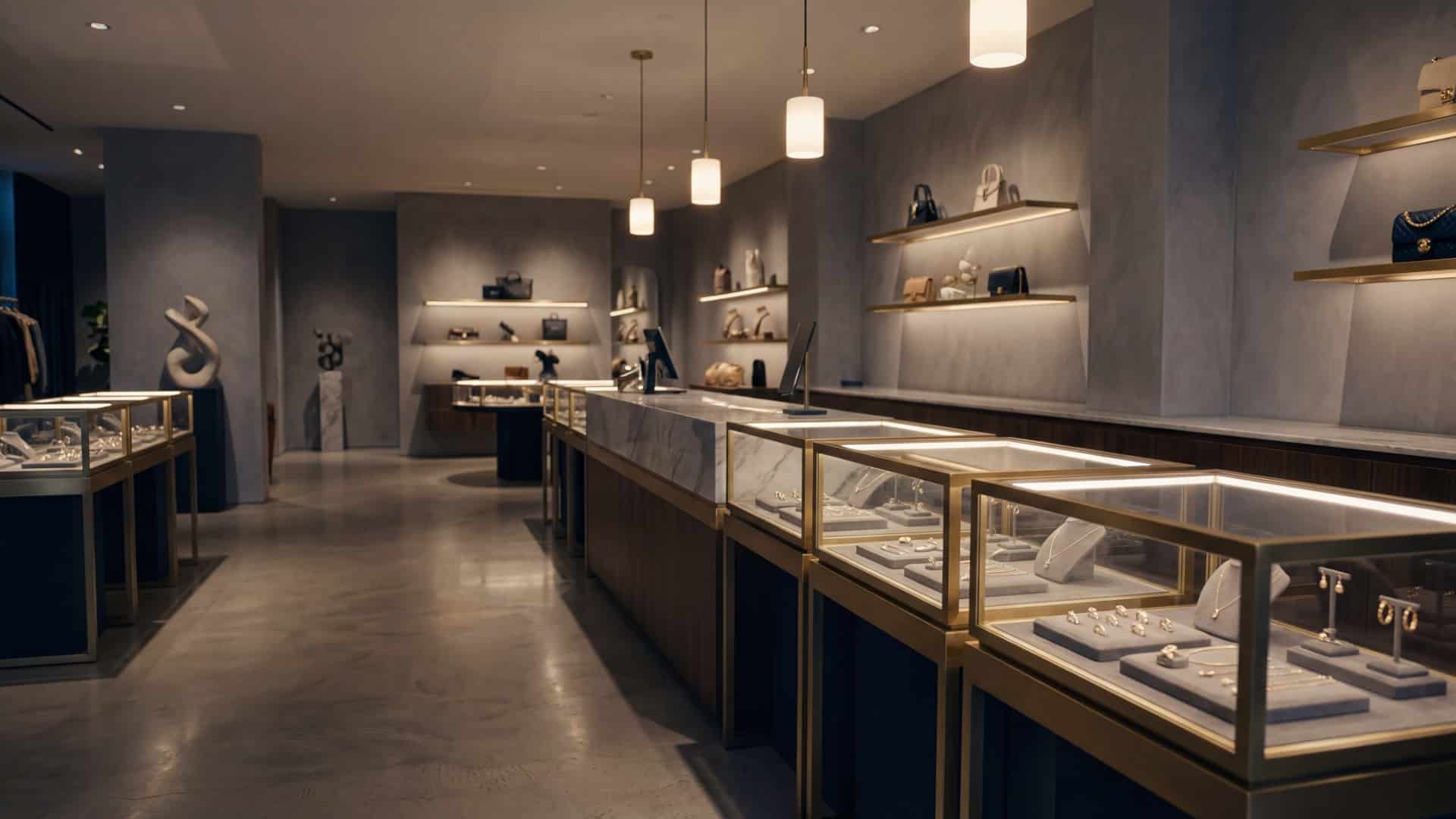
In jewelry retail, your fixtures are a direct extension of your brand. They are the first thing a customer sees and they set price expectations before anyone speaks a word. A poorly lit, cheaply built showcase communicates that the jewelry inside isn't worth much. A beautifully crafted, well-lit glass case says the opposite. The investment you make in fixtures directly affects what customers are willing to spend — and DISPLAYARAMA's free 2D store layout service can help you plan exactly what you need before you spend a dollar on fixtures.
A jewelry store's fixture layout typically centers on a U-shaped or perimeter arrangement of showcases, with island cases in the middle of the floor for featured collections. Showcase lighting — both ambient store lighting and LED accent lighting inside cases — is critical. Diamonds and gemstones look dramatically different under quality lighting versus poor overhead fixtures.
| Fixture / Component | Estimated Cost |
|---|---|
| Glass Showcase Display Cases (6–12 units) | $3,000 – $20,000 |
| Island / Freestanding Display Cases | $1,000 – $6,000 |
| Wall-Mounted Display Cases / Cabinets | $1,000 – $5,000 |
| Showcase LED Lighting (Interior) | $500 – $3,000 |
| Checkout / Sales Counter | $800 – $3,500 |
| Signage (Interior + Exterior) | $500 – $4,000 |
| Store Lighting Upgrades (Ambient) | $500 – $3,000 |
| Display Trays, Busts & Risers | $500 – $3,000 |
| Total Fixtures & Store Setup | $7,800 – $47,500 |
Don't underestimate display presentation accessories — trays, velvet busts, ring rolls, and risers inside the cases are what make individual pieces stand out. A bare case with no presentation accessories looks unfinished even when full of quality jewelry.
If you're carrying significant fine jewelry inventory, your display cases may also need to meet insurer specifications. Certain policies require cases to be anchored to the floor or wall, and some require construction standards that resist smash-and-grab attempts. Confirm requirements before purchasing cases.
DISPLAYARAMA has been supplying retail fixtures to specialty stores since 1980. We carry glass showcase display cases, wall display cases, island cases, checkout counters, and more — everything needed to build a jewelry store that presents your inventory at its best.
Our team can help you plan your layout and select the right fixtures for your space and budget. Call us at 1-800-292-5227 or get your free layout plan below.
Get My Free Store Fixture Layout Plan →Insurance, Technology & Operations
Insurance is where jewelry retail diverges most dramatically from standard retail. A standard business owner's policy typically caps jewelry coverage at $2,500–$5,000 — virtually useless for a store carrying hundreds of thousands in inventory. Every jewelry retailer needs a Jewelers Block insurance policy, a specialized all-risk policy designed specifically for the jewelry trade. It covers inventory on-premises, in transit, at trade shows, and goods left by customers for repair or service. Premiums are calculated based on your total inventory value, location, security measures, and claims history.
On the technology side, jewelry retail has unique POS requirements. You need a system that tracks individual serialized pieces by SKU, manages consignment and memo inventory separately from owned goods, supports layaway and custom order workflows, and integrates with jewelry-specific pricing tools. Platforms like Jewel360, Lightspeed Retail, and ARMS are built for this environment.
Use a specialist broker: Work with an insurance broker who specializes in the jewelry trade, not a general commercial broker. Standard commercial policies routinely exclude or severely limit jewelry inventory coverage. Jewelers Mutual Group is one of the most well-known specialists in this space and is purpose-built for the industry.
| Insurance / Technology / Operations | Estimated Cost |
|---|---|
| Jewelers Block Insurance (Annual) | $3,000 – $20,000+ |
| General Liability Insurance (Annual) | $1,000 – $3,000 |
| Jewelry-Specific POS System | $1,500 – $5,000 |
| POS Monthly Software Fee | $50 – $200/mo |
| Jewelry Appraisal Software / Pricing Tools | $200 – $1,000/yr |
| Website / E-Commerce Setup | $1,000 – $5,000 |
| Utilities (Monthly Average) | $300 – $1,000/mo |
| Marketing / Grand Opening | $2,000 – $10,000 |
| First-Year Insurance + Tech Budget | $14,750 – $59,400+ |
Total Startup Cost Summary
The total cost to open a jewelry store varies more than almost any other retail category — the range runs from $20,000 for a small fashion jewelry boutique to well over $500,000 for a full-scale fine jewelry store in a premium location with a deep diamond inventory. Here's how a mid-range fine jewelry storefront stacks up:
| Expense Category | Estimated Range |
|---|---|
| Licenses, Permits & Business Formation | $900 – $5,550 |
| First Month's Rent + Security Deposit | $5,000 – $30,000 |
| Leasehold Improvements / Store Buildout | $20,000 – $100,000 |
| Security Infrastructure (Safe, Alarm, Cameras) | $9,100 – $98,400 |
| Opening Inventory | $20,000 – $300,000+ |
| Fixtures & Store Setup | $7,800 – $47,500 |
| Insurance, Technology & Operations (Year 1) | $14,750 – $59,400 |
| Working Capital Reserve (6–12 months) | $20,000 – $80,000 |
| Total Estimated Startup Investment | $97,550 – $720,850+ |
Budget 6–12 months of working capital. Jewelry retail has longer average sales cycles than most retail categories — particularly for fine jewelry and custom orders. A customer may visit multiple times before making a purchase. Build your capital reserve to cover at least 6 months of fixed expenses before you open, and don't count on consistently profitable months until you've established your reputation and built a clientele.
How to Maximize Revenue
The most profitable jewelry stores aren't just selling products — they're building relationships, earning trust, and creating experiences that keep customers coming back for every milestone in their lives. Here's how the best operators build sustainable, high-margin businesses.
Lead With Custom Design
Custom and made-to-order pieces carry the highest margins in jewelry retail — often 200–300% — and create deep emotional connections that drive referrals for years. Invest in a skilled bench jeweler and market your custom capabilities prominently from day one.
Offer Repair & Restoration Services
Jewelry repair is a steady, high-margin revenue stream that brings customers into the store regularly — even when they're not buying. Sizing, stone replacement, chain soldering, and refinishing drive consistent cash flow year-round.
Build a Bridal Program
Engagement rings and wedding bands are the highest-value transactions in jewelry retail and lead to lifetime customer relationships. A dedicated bridal program with private consultations is one of the highest-ROI investments a jewelry store can make.
Buy Estate & Pre-Owned Jewelry
Walk-in estate purchases and buyouts are a powerful source of high-margin inventory. Building a reputation as a fair buyer brings in a steady stream of estate jewelry that can be marked up 150–400% at retail.
Offer Jewelry Appraisal Services
Insurance and estate appraisals are fee-based services with virtually no overhead cost. Certified appraisals build authority in your market and drive traffic from customers who then trust you with future purchases and repairs.
Leverage Holiday & Milestone Marketing
Valentine's Day, Mother's Day, and the holiday season can account for 40–60% of a jewelry store's annual revenue. Build targeted campaigns well in advance of each peak period and invest in professional product photography.
Why Your Fixtures Matter
In jewelry retail, your display cases are not just storage — they are your primary selling environment. The moment a customer walks in and scans your cases, they're forming a price expectation based entirely on what they see. Jewelry in a beautifully crafted, well-lit case commands premium pricing. Jewelry in a cheap, poorly lit case gets compared to what's available online. Your fixtures set the ceiling for what customers believe your inventory is worth.
Every element of your store's visual environment contributes to the buying experience — and in a category where customers need to feel completely confident before spending thousands, that environment is a genuine sales driver. Prioritize these when planning your layout:
- Glass showcase cases that anchor each section of your floor — engagement rings, fashion pieces, and fine jewelry should each have dedicated, well-organized display areas
- Interior LED lighting inside every case — diamonds and gemstones show dramatically better under proper lighting; this is one of the highest-ROI investments in your store
- Island or freestanding cases for featured collections, seasonal promotions, and new arrivals — these create movement and visual interest on the floor
- A private consultation area or dedicated seating space — engagement ring customers need a private, unhurried environment to make confident decisions
- A secure, organized checkout counter — the final touchpoint of every transaction should feel premium and professional
DISPLAYARAMA has been outfitting specialty retail stores with professional-grade display fixtures since 1980. We carry glass showcase cases, wall display cases, island cases, checkout counters, and more — everything you need to build a jewelry store that communicates quality from the moment a customer walks in.
Our team can help you plan your store layout and select the right combination of fixtures for your square footage and budget. Bulk pricing is available for full store buildouts.
Get My Free Store Fixture Layout Plan →Ready to Outfit Your Jewelry Store?
If you're opening a jewelry store and need to source display cases and fixtures, start with DISPLAYARAMA's free 2D store layout service — a no-cost resource where our team creates a professional store layout plan with exact fixture recommendations for your space. It saves hours of guesswork and gives you a clear picture of your fixture investment before you commit to anything. Request your free layout plan here.
Glass Showcase Display Cases
Locking glass showcases for rings, necklaces, bracelets, and high-value pieces. Professional, secure, and built to make your jewelry look its absolute best under any lighting condition.
Wall Display Cases & Cabinets
Wall-mounted display cases for larger pieces, collections on rotation, and featured lines. Creates perimeter visual depth that draws customers around your entire floor.
Custom Island & Freestanding Cases
Freestanding island cases for featured collections, bridal displays, and seasonal promotions — the visual centerpiece of any well-designed jewelry floor.
Checkout Counters
Professional sales counters built for jewelry retail — organized, secure, and designed to handle high-value transactions with the privacy and professionalism your customers expect.
Custom Display Solutions
Need something specific to your layout or brand aesthetic? DISPLAYARAMA offers custom display solutions tailored to your store's exact dimensions, design vision, and product mix.
Bulk Pricing Available
Outfitting a full store? DISPLAYARAMA offers bulk pricing on display cases and fixtures — the more you order, the more you save. Call 1-800-292-5227 for a custom quote.
DISPLAYARAMA's free 2D store layout service gives you a professional floor plan with specific fixture recommendations for your space — at no cost. It's designed to save you hours of guesswork and give you a clear picture of your fixture investment before you commit. We've been helping specialty retailers design their stores since 1980, and we offer bulk pricing for shop owners outfitting a full floor.
Submit your space dimensions and store type and we'll put together a custom layout plan with the exact displays that will work for your jewelry store.
Get My Free Store Fixture Layout Plan →