

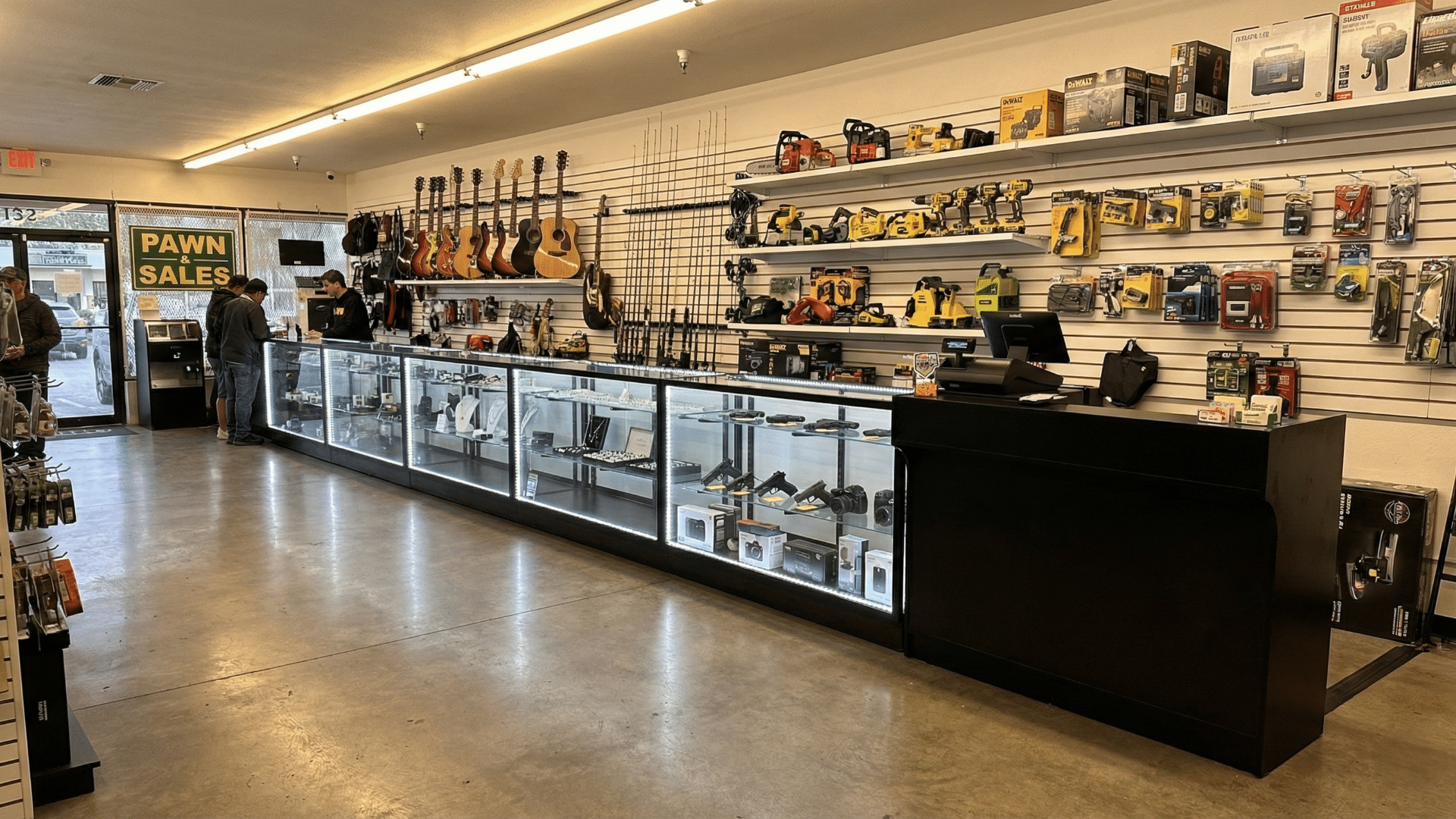
How Much Does It Cost To Open a Pawn Shop?
The pawn shop is one of the oldest retail formats in existence — and one of the most resilient. The U.S. pawn industry generated $4.5 billion in revenue in 2025 and serves approximately 30 million Americans per year, according to the National Pawnbrokers Association. These customers aren't defined by demographics — they're defined by a need for fast, no-credit-check liquidity, and pawn shops are one of the only businesses in the country that can provide it within minutes. When banks tighten lending and economic pressure rises, pawn shop traffic increases. It is, by design, a counter-cyclical business.
A pawn shop generates revenue through three distinct channels: interest income from collateral-based pawn loans, retail sales of merchandise acquired from forfeited collateral and direct purchases, and service fees from buy/sell/trade transactions. Jewelry represents approximately 67% of all pawn collateral in the U.S., and gold's 18.2% year-over-year price increase in 2024–2025 has meaningfully expanded loan capacity and margins for jewelry-focused pawn operators.
But a pawn shop is also one of the most heavily regulated small businesses in the country. Federal compliance obligations, state pawnbroker licensing, mandatory police reporting of every transaction, surety bond requirements, and strict recordkeeping laws create a compliance infrastructure unlike anything in standard retail. This guide gives you a complete, honest breakdown of what it actually costs to open a pawn shop in 2026 — every major expense, every regulatory obligation, and the capital planning reality that separates the shops that succeed from those that close undercapitalized.
Licensing, Compliance & Federal Regulations
No other retail category in this series carries the regulatory complexity of a pawn shop. Before you open, you must comply with a layered stack of federal, state, and local requirements — and failure to comply with any of them can result in fines, license suspension, or criminal liability. The licensing process typically takes 60–120 days in most states, so start applications well before your target opening date.
At the federal level, pawn shops are bound by the USA PATRIOT Act (anti-money laundering compliance and customer ID requirements), the Bank Secrecy Act (transaction recordkeeping and reporting for large or suspicious transactions), the Truth in Lending Act (requiring clear disclosure of APR and loan terms to every borrower), and the Equal Credit Opportunity Act (prohibiting lending discrimination). If you plan to deal in firearms — and most pawn shops do — you must also obtain a Federal Firearms License (FFL) from the ATF, which runs $200 for a three-year term and requires a premises inspection before issuance.
At the state level, every state requires a dedicated Pawnbroker License issued by the Department of Financial Institutions or equivalent agency, typically requiring a background check, fingerprinting, proof of adequate capitalization, and an annual renewal fee. Many states also require a surety bond ranging from $5,000 to $50,000+, which protects customers against wrongdoing. Local police reporting is mandatory in virtually every jurisdiction — pawn shops must electronically submit transaction records to law enforcement daily or weekly so stolen property can be identified.
Hire a pawnbroker attorney early: The regulatory landscape varies significantly by state and municipality. A single missed compliance requirement — like failing to hold an item the required number of days before resale — can invalidate your pawnbroker license. An attorney experienced with pawnbroking regulations in your specific state is worth every dollar of the consultation fee before you commit to a location.
| License / Permit / Compliance Filing | Cost Range |
|---|---|
| LLC or Corporation Formation | $50 – $500 |
| General Business License | $50 – $500/yr |
| State Pawnbroker License | $100 – $2,500/yr |
| Pawnbroker Surety Bond | $250 – $5,000/yr (on bond amount) |
| Federal Firearms License (Type 01 FFL) | $200 / 3 years |
| Secondhand Dealer / Precious Metals Permit | $100 – $1,000/yr |
| Seller's Permit / Sales Tax License | $0 – $50 |
| Zoning / Occupancy Permit | $100 – $1,000 |
| Police Reporting System Setup | $200 – $1,000 |
| Attorney / Compliance Consultation | $1,000 – $5,000 |
| Estimated Total (Year 1) | $2,050 – $16,750 |
Location & Rent
Pawn shop location strategy follows a distinct pattern that differs from most retail categories. The highest-performing pawn shops are not in premium shopping districts — they're in neighborhoods with a mix of income levels, high foot traffic from daily errands, and proximity to working-class residential density. Areas near grocery stores, laundromats, title loan offices, and check-cashing businesses consistently perform well. The customer seeking a $100 pawn loan on a gold ring is not shopping in a lifestyle center.
A typical pawn shop operates in 1,500–3,000 square feet — enough for a full display case floor, secure backroom storage, a safe area, and a transaction counter. Parking matters significantly since customers often bring in heavy items (tools, electronics, firearms). Strip malls with good parking and high daily traffic volume consistently outperform tucked-away or difficult-to-access locations. Avoid locations with zoning restrictions that prohibit secondhand dealers — verify this before signing anything.
Visibility drives walk-in traffic: A significant portion of pawn shop new customers come from drive-by visibility. Prominent exterior signage, a storefront that communicates what you do, and a visible location on a well-traveled road generate organic new customer flow at zero ongoing marketing cost. Don't sacrifice visibility for lower rent.
| Location Type | Monthly Rent |
|---|---|
| Small market / rural (1,000–1,500 sq ft) | $1,500 – $3,500 |
| Suburban / mid-size city (1,500–2,500 sq ft) | $2,500 – $6,000 |
| Major metro / high-traffic (2,000–3,000 sq ft) | $5,000 – $12,000+ |
| First-Year Rent Cost (Mid-Market Estimate) | $30,000 – $72,000 |
Buildout for a pawn shop requires reinforced security infrastructure beyond standard retail — vault installation, security cage or barred windows, reinforced entry, and a dedicated secure backroom for high-value items. Budget $15,000–$60,000 for buildout depending on the condition of the space and your security configuration.
Loan Capital & Operating Cash Reserve
This is the category that makes pawn shop startup fundamentally different from every other business in this series. A pawn shop doesn't just need money to stock shelves — it needs cash to make loans. Your available loan capital is your product. Every customer who walks in with a piece of jewelry, a firearm, or a power tool is expecting you to write them a check on the spot. If you don't have the cash to do it, they walk across the street to a competitor and you've lost both the loan interest and the potential retail sale if they don't redeem.
The standard industry guidance is that loan capital should represent the largest single line item in your startup budget. A small pawn shop in a lower-traffic market might operate initially on $25,000–$50,000 in dedicated loan capital. A mid-size shop in a competitive urban market needs $75,000–$150,000 or more. Your loan capital turns over continuously — loans are repaid (with interest) or forfeited (becoming inventory) — but you need enough on hand at all times to serve customers without running dry.
Beyond loan capital, pawn shops are cash-intensive businesses. Most still operate with significant cash on hand for transactions, and cash management — secure storage, daily counting, bank deposit protocols — requires both physical infrastructure (a quality commercial safe) and strict procedural discipline. Budget for a commercial-grade safe as a non-negotiable from day one.
Undercapitalization is the #1 killer of new pawn shops. Shops that open without adequate loan capital cannot serve customers, miss revenue on their first impressions, and develop a reputation for saying no. Every loan refused in the first month is a customer who found someone else and may never return. Fund your loan reserve generously before opening day.
| Loan Capital & Cash Infrastructure | Estimated Range |
|---|---|
| Dedicated Loan Capital Reserve (Small Shop) | $25,000 – $50,000 |
| Dedicated Loan Capital Reserve (Mid-Size Shop) | $50,000 – $150,000 |
| Commercial Safe (UL-Rated) | $2,000 – $15,000 |
| Cash Drawer / Cash Management System | $300 – $1,000 |
| Counterfeit Detection Equipment | $100 – $500 |
| Total Loan Capital + Cash Infrastructure | $27,400 – $216,500 |
State regulations in many jurisdictions also require pawn shops to demonstrate minimum capitalization levels as part of the licensing process — another reason to have your loan capital funded and documented before you apply for your pawnbroker license.
Security Infrastructure
Security is the highest-cost infrastructure requirement for a pawn shop — and one of the most legally critical. You are holding other people's property (pawned items in trust), your own purchased inventory, cash, and in many cases firearms. A theft, burglary, or fire that results in loss of customers' pawned items can expose you to serious liability if your security infrastructure doesn't meet the standards required by both your insurance carrier and your state pawnbroker license. Bailee's coverage — the insurance that protects customers' items while in your possession — requires minimum security standards as a condition of coverage.
Safes & Vaults
A pawn shop requires multiple safes serving different functions: a primary commercial safe for cash, high-value jewelry, and overnight storage of pawned items; a separate firearm storage solution if you deal in guns (legally required under FFL regulations); and potentially a vault room for larger operations. Budget $2,000–$20,000 depending on the scope.
Camera & Alarm Systems
High-definition camera coverage of every point of sale, display case, entryway, and storage area is both a compliance requirement in most states and your primary evidence infrastructure if an item is reported stolen or a transaction is disputed. Budget $5,000–$20,000 for a commercial camera system with adequate retention storage, plus a professionally monitored alarm system.
Physical Hardening
Security bars or caging on windows, reinforced entry doors, and controlled-access backroom areas are standard in pawn shops. These elements slow down smash-and-grab attempts and are often required by insurers as a condition of coverage. Budget $3,000–$15,000 depending on the existing condition of the space.
| Security Component | Estimated Cost |
|---|---|
| Commercial Safe(s) — Cash & High-Value Items | $2,000 – $15,000 |
| Firearm Storage Vault / Cabinet (FFL Required) | $1,000 – $8,000 |
| Security Camera System (HD, Full Coverage) | $3,000 – $15,000 |
| Alarm System (Install + Monitoring) | $1,500 – $5,000 |
| Security Monitoring Service (Annual) | $600 – $2,400 |
| Security Bars / Window Protection | $1,000 – $8,000 |
| Reinforced Entry / Access Control | $1,000 – $5,000 |
| Total Security Infrastructure | $10,100 – $58,400 |
Bailee's coverage is non-negotiable: Standard commercial property insurance does not protect items your customers have pawned. You need Bailee's coverage specifically — a policy type that covers goods you hold in trust that belong to others. Get this in place before you take your first pawn loan, not after.
Opening Inventory, Fixtures & Store Setup
A pawn shop's opening inventory serves a dual purpose: it stocks the retail floor for day-one sales, and it demonstrates to customers — and your state licensing authority — that you're a serious, professionally operated business. A bare store with empty display cases signals an undercapitalized operation that customers will pass by. Display cases for jewelry, electronics, and small valuables are the visual centerpiece of a pawn shop floor, and they need to be locked, well-lit, and professionally organized. DISPLAYARAMA's free 2D store layout service can help you plan your entire fixture configuration before you spend a dollar.
Opening inventory for a pawn shop is typically acquired through a combination of direct purchases from sellers and initial stock from auction houses, estate sales, and liquidation sources. Jewelry is the highest-priority opening inventory category — it's the most commonly pawned item, carries the best margins, and anchors your display cases visually. Electronics, tools, firearms, and musical instruments round out a well-stocked opening floor.
| Inventory & Fixture Category | Estimated Cost |
|---|---|
| Opening Jewelry Inventory | $5,000 – $25,000 |
| Electronics (Phones, Laptops, Gaming) | $3,000 – $10,000 |
| Tools & Power Equipment | $2,000 – $8,000 |
| Firearms (Requires FFL) | $5,000 – $20,000 |
| Musical Instruments & Collectibles | $1,000 – $5,000 |
| Glass Display Cases (Locking, 4–8 Units) | $2,000 – $12,000 |
| Wall Shelving & Display Systems | $1,000 – $5,000 |
| Checkout / Transaction Counter | $800 – $3,500 |
| Signage (Interior + Exterior) | $1,000 – $5,000 |
| Total Inventory + Fixtures | $20,800 – $93,500 |
Locking glass display cases are arguably the most important fixture investment in a pawn shop — they showcase your highest-value merchandise (jewelry, watches, coins, collectibles) in a secure, professional environment. A well-lit, organized display case communicates that you value and properly care for the items customers entrust to you, which is a genuine trust signal in a business built on trust.
The transaction counter where loan negotiations happen needs to be clean, organized, and professional. This is where every customer interaction either builds or erodes confidence. A cluttered, chaotic counter signals a disorganized operation; a clean, professional counter with proper scales, testing equipment, and organized paperwork signals one you can trust.
DISPLAYARAMA has been supplying retail fixtures to specialty stores since 1980. We carry locking glass display cases, wall display solutions, checkout counters, and more — everything needed to build a pawn shop that looks professional and keeps your inventory secure and visible.
Our team can help you plan your layout and select the right fixture combination for your space and budget. Call us at 1-800-292-5227 or get your free layout plan below.
Get My Free Store Fixture Layout Plan →Technology, Insurance & Operations
A pawn shop requires purpose-built point-of-sale and loan management software — not a general retail system. Pawnbroking software must handle loan origination and tracking, state-mandated hold periods before items can be sold, automatic police transaction reporting (which must be submitted electronically in most jurisdictions), customer ID verification and recordkeeping for compliance, and full inventory management across both owned and pawned items. Leading platforms include PawnMaster, Bravo Store Systems, and Snap POS — all built specifically for the pawnbroking compliance environment.
Insurance for a pawn shop is more complex and more expensive than any other retail category in this series. Beyond standard general liability and commercial property coverage, you need Bailee's coverage (for customers' pawned items), firearms dealer liability if you handle guns, and potentially a jeweler's block policy if you carry significant fine jewelry inventory. Annual premiums for a comprehensive pawn shop insurance package typically run $5,000–$10,000 depending on inventory value, location, and security measures.
Gemological and appraisal tools are essential: Your ability to accurately appraise items on the spot — gold testing equipment, a jeweler's loupe, a digital scale, an XRF gold tester — is what determines whether you make money or lose it on every loan and purchase. Undervaluing items leads to disputes; overpaying eats your margins. Budget for quality appraisal tools from day one.
| Technology / Insurance / Operations | Estimated Cost |
|---|---|
| Pawnbroking POS / Loan Management Software | $1,500 – $5,000 setup |
| POS Monthly Software Fee | $100 – $400/mo |
| Police Reporting Integration | Included in most pawn POS |
| Comprehensive Pawn Shop Insurance (Annual) | $5,000 – $10,000 |
| Gold / Metal Testing Equipment (XRF Tester) | $500 – $5,000 |
| Jewelry Appraisal Tools (Scale, Loupe, Carat Gauge) | $200 – $1,000 |
| Website / Online Presence | $500 – $2,500 |
| Marketing / Grand Opening | $1,000 – $5,000 |
| Utilities (Monthly Average) | $500 – $2,000/mo |
| First-Year Technology + Operations | $22,700 – $62,300+ |
Total Startup Cost Summary
When all categories are totaled, opening a pawn shop in 2026 requires $50,000–$100,000 for a lean small-market shop with minimal loan capital, and a properly capitalized mid-size shop with adequate loan reserves, full security infrastructure, and solid opening inventory typically runs $150,000–$250,000. Large-format shops in competitive urban markets with deep loan capital push significantly higher.
| Expense Category | Estimated Range |
|---|---|
| Licensing, Compliance & Legal (Year 1) | $2,050 – $16,750 |
| First Month's Rent + Security Deposit | $3,000 – $18,000 |
| Leasehold Improvements / Security Buildout | $15,000 – $60,000 |
| Loan Capital Reserve | $25,000 – $150,000 |
| Security Infrastructure | $10,100 – $58,400 |
| Opening Inventory + Fixtures | $20,800 – $93,500 |
| Technology + Operations (Year 1) | $22,700 – $62,300 |
| Working Capital Reserve (3–6 months) | $15,000 – $50,000 |
| Total Estimated Startup Investment | $113,650 – $508,950 |
Undercapitalization is the primary cause of pawn shop failure. Unlike most retail businesses, a pawn shop's loan capital is not a one-time purchase — it's a revolving asset that determines your daily capacity to serve customers. Build your loan reserve first, then your security infrastructure, then your fixtures and inventory. Shops that open with full shelves and empty safes fail quickly.
How to Maximize Revenue
The most profitable pawn shops are not just loan shops — they're diversified specialty retailers that have built a loyal base of both borrowers and buyers across multiple revenue streams. Here's how the best operators build durable, high-margin businesses.
Specialize in High-Value Collateral
Jewelry represents about 67% of all U.S. pawn collateral for good reason — it's easy to appraise, compact to store, and highly liquid on resale. Shops that specialize in fine jewelry and gold typically achieve higher loan amounts, better loan redemption rates, and stronger retail margins than generalist operators.
Invest in Appraisal Skills
Your accuracy at appraising items on the spot is the most important skill in your business. Overpaying erodes margins; underpaying drives customers to competitors. Invest in gold testing equipment, gemological tools, and ongoing education in jewelry, electronics, and firearms valuation. Every experienced pawnbroker is a specialist appraiser first.
Build an Online Sales Channel
Over 60% of U.S. pawn shops now have an online presence, and 30% offer direct e-commerce. Selling forfeited inventory on eBay, Facebook Marketplace, and your own website dramatically expands your buyer pool beyond walk-in traffic and accelerates inventory turns — which improves cash flow across your entire loan operation.
Offer Buy / Sell / Trade
Beyond pawn loans, a robust buy/sell/trade program — purchasing outright from customers who don't want a loan — provides higher-margin inventory without the compliance overhead of a loan transaction. Items bought at liquidation value and sold at retail often deliver 100–200% margins on the resale.
Capitalize on Gold Price Cycles
Gold's 18% year-over-year price increase in 2024–2025 has meaningfully expanded loan amounts and cash-for-gold payouts. During strong precious metal markets, gold buying programs — advertised actively through social media and local signage — drive high-margin customer acquisition. A motivated gold seller is one of the most profitable walk-ins a pawn shop can receive.
Build Community Trust Actively
Pawn shops carry a stigma that informed operators actively work to overcome. Professional store design, transparent pricing, a clean and organized environment, and a reputation for fair dealing are genuine competitive advantages. A trusted neighborhood pawn shop earns referrals from both borrowers and buyers — word-of-mouth from a satisfied customer in this category is exceptionally powerful.
Why Your Fixtures Matter
In a pawn shop, your display cases and store environment are doing something especially important: they're fighting a stigma. The perception of pawn shops as dark, cluttered, untrustworthy places is the single biggest obstacle to building a broad customer base. A clean, well-lit, professionally organized pawn shop — with quality display cases, visible security, and an organized transaction counter — immediately communicates that this is a legitimate, trustworthy business. That perception shift is worth thousands of dollars in customer conversion.
Customers deciding whether to pawn their grandmother's ring or sell their firearm collection are making trust-dependent decisions. A professional store environment builds the confidence that makes those transactions happen. The same customer who might walk past a cluttered, dimly lit shop will walk into one that looks like a real jewelry and electronics retailer. Prioritize these when planning your floor:
- Locking glass display cases for jewelry, watches, coins, and high-value collectibles — locked, well-lit, and organized by category so customers can browse confidently
- A clean, organized transaction counter with professional scales, testing equipment, and visible paperwork — the counter is where trust is either built or lost on every loan negotiation
- Wall display shelving for tools, electronics, sporting goods, and larger items — organized by category with clear pricing visible from the aisle
- Proper LED lighting throughout, including inside display cases — jewelry in particular looks dramatically better under quality lighting
- Clear, professional exterior signage — visibility and professionalism in your exterior presentation drives walk-in traffic more than any other marketing spend
DISPLAYARAMA has been outfitting specialty retail stores with professional-grade display fixtures since 1980. We carry locking glass display cases, wall display solutions, checkout counters, and more — everything you need to build a pawn shop environment that communicates professionalism, security, and trustworthiness from the moment a customer walks in.
Our team can help you plan your store layout and select the right combination of fixtures for your square footage and budget. Bulk pricing is available for full store buildouts.
Get My Free Store Fixture Layout Plan →Ready to Fixture Your Pawn Shop?
If you're opening a pawn shop and need to source display cases and fixtures, start with DISPLAYARAMA's free 2D store layout service — a no-cost resource where our team creates a professional floor plan with specific fixture recommendations for your space. It saves hours of guesswork and gives you a clear picture of your fixture investment before you commit. Request your free layout plan here.
Locking Glass Display Cases
Secure, professional showcases for jewelry, watches, coins, and high-value collectibles. Locked, well-lit, and built to make your most valuable inventory look its best while keeping it protected.
Wall Display Cases & Shelving
Wall-mounted display solutions and shelving for electronics, tools, firearms accessories, and larger merchandise — organized, visible, and built to handle the diverse inventory mix of a full-service pawn shop.
Checkout / Transaction Counters
Professional cash wrap counters built for pawn shop transaction volume — organized workspace for loan negotiations, appraisal tools, paperwork, and POS hardware in a clean, credibility-building environment.
Slatwall Systems
Flexible slatwall panels for tools, sporting goods, and accessories — fully reconfigurable as your inventory mix evolves, without requiring new hardware or permanent construction.
Custom Display Solutions
Need fixtures tailored to your specific layout or product mix? DISPLAYARAMA offers custom display solutions built to your exact dimensions and store concept.
Bulk Pricing Available
Outfitting a full pawn shop floor? DISPLAYARAMA offers bulk pricing on display cases and fixtures — the more you order, the more you save. Call 1-800-292-5227 for a custom quote.
DISPLAYARAMA's free 2D store layout service gives you a professional floor plan with specific fixture recommendations for your pawn shop — at no cost. It's designed to save you hours of guesswork and give you a clear picture of your fixture investment before you commit. We've been helping specialty retailers design their stores since 1980, and we offer bulk pricing for owners outfitting a full floor.
Submit your space dimensions and store type and we'll put together a custom layout plan with exactly the fixtures that will work for your pawn shop.
Get My Free Store Fixture Layout Plan →