

How Much Does It Cost To Open a Pet Supply Store?
The U.S. pet industry is one of the most consistently growing sectors in all of American consumer retail. Total pet industry expenditures reached $152 billion in 2024 and are projected to hit $157 billion in 2025, according to the American Pet Products Association — representing a CAGR of over 7% since 2001 that has held through recessions, inflationary periods, and economic uncertainty alike. The explanation is straightforward: 95 million U.S. households now own a pet, and 97% of pet owners say their pets are part of the family. When a product is perceived as non-negotiable, spending holds firm regardless of what the broader economy is doing.
Pet humanization — the deepening emotional bond between owners and their animals — is the category's core growth engine. One in three pet owners now spends more on their pet each month than on their own health and wellness. Premium and super-premium pet food is growing at 8–12% annually while economy segments stagnate. Gen Z is leading ownership growth, with 18.8 million Gen Z households owning a pet in 2024, a 43.5% increase from the prior year, and 70% of Gen Z pet owners reporting they have two or more animals. The customer base for a well-positioned independent pet supply store is not shrinking — it is actively growing, increasingly affluent in its spending, and looking for expertise that mass-market retailers and e-commerce cannot provide.
This guide breaks down every major cost category for opening a pet supply store in 2026 — from licensing and location to inventory, fixtures, services, and the competitive strategies that give independent operators a real edge in a market dominated by PetSmart, Petco, and Chewy.
Defining Your Store Concept
The pet supply category is broad enough to support several distinct store concepts, and your concept determines your footprint, inventory requirements, staffing, and competitive positioning before you sign a single lease. The most important decision you'll make is not which products to carry — it's what kind of store you're building and who you're serving.
A general pet supply store carries food, treats, toys, accessories, and health products for dogs, cats, and other common pets. This is the broadest model and competes most directly with chain retailers and online players — which means your differentiation must come from product curation, community, and services. A premium/specialty store focuses on natural, raw, grain-free, or species-appropriate nutrition and premium accessories, serving the growing segment of pet owners who treat pet food decisions the way they treat their own dietary choices. This model carries higher margins and builds intensely loyal customers. A services-forward store — integrating grooming, boarding, dog training, or doggy daycare alongside retail — generates recurring high-margin service revenue that stabilizes cash flow and creates daily foot traffic to drive retail sales.
Services are the independent store's most powerful weapon: Grooming, training, and daycare services generate recurring revenue, bring customers in repeatedly, and create relationship depth that e-commerce and big-box chains cannot replicate. Specialty stores dominated the U.S. pet market distribution with a 36.8% share precisely because they offer what generalists don't — personalized expertise and services. Budget for at least one service offering from day one.
| Store Concept | Estimated Startup Range |
|---|---|
| Small Niche / Premium Boutique | $30,000 – $75,000 |
| Mid-Size General Pet Supply Store | $75,000 – $175,000 |
| Full-Service Store with Grooming | $100,000 – $250,000 |
| Full-Service + Daycare / Training | $150,000 – $400,000+ |
| Key Differentiator for Independents | Services + Expertise + Curation |
This guide focuses primarily on the mid-size general pet supply and premium boutique models — the most common independent startup scenarios. Service add-ons are covered in the revenue section as the highest-ROI expansion strategy available to any pet store operator.
Licenses, Permits & Business Formation
A pet supply store that sells only products (food, toys, accessories) has a relatively straightforward licensing footprint — standard business formation, a general retail license, and a resale certificate are the core requirements. Your resale certificate is essential to obtain before contacting any wholesale distributor, since it allows you to purchase inventory at wholesale prices without paying sales tax on goods you'll resell.
If you plan to sell live animals — fish, birds, small mammals, reptiles — the regulatory picture changes significantly. Most states require an Animal Dealer or Pet Shop License, which involves a facility inspection, proof of adequate housing conditions, and in some states a veterinary relationship or health certificate requirement for animals sold. Some states also require a USDA Animal Welfare Act license if you source from breeders. These permits add cost, inspection timelines, and ongoing compliance obligations. Research your state's specific requirements well before committing to a store concept that includes live animals.
If you add grooming services, confirm whether your state requires groomers to hold a cosmetology or animal grooming certification. A handful of states have enacted professional licensing requirements for pet groomers, while most do not — but it's worth verifying before hiring.
| License / Permit / Filing | Cost Range |
|---|---|
| LLC or Corporation Formation | $50 – $500 |
| General Business License | $50 – $500/yr |
| Seller's Permit / Resale Certificate | $0 – $50 |
| Zoning / Occupancy Permit | $100 – $1,000 |
| Signage Permit | $100 – $500 |
| Pet Shop / Animal Dealer License (if selling live animals) | $100 – $1,000/yr |
| Health Dept. Permit (if grooming or live animals) | $100 – $500/yr |
| Attorney / Legal Consultation | $500 – $2,000 |
| Estimated Total (Products Only) | $900 – $5,050 |
Live animal sales add real complexity: State inspections, hold periods before animals can be sold, mandatory health guarantees, and facility requirements for live animal housing add cost, time, and ongoing compliance obligations. Many successful independent pet supply stores skip live animal sales entirely and focus on the far more profitable and less complex supplies-and-services model.
Location & Rent
Pet supply store location strategy is driven by residential proximity and convenience. Pet owners make frequent, recurring purchases — a 30-lb bag of dog food every 3–4 weeks, cat litter every 2 weeks, treats and toys on impulse — and they overwhelmingly choose the most convenient option for these routine purchases. A store within easy driving distance of dense residential neighborhoods, near a dog park, close to a veterinary clinic, or adjacent to other pet-friendly businesses captures the most natural foot traffic.
Unlike fashion or beauty retail where the store environment contributes to brand equity, pet supply customers are primarily errand-driven — easy parking and quick in-and-out access matter enormously. Strip malls with prominent signage and easy access are the natural home for independent pet supply stores. A typical independent store operates in 1,500–3,500 square feet. Stores adding grooming suites need additional dedicated space — a grooming area with proper ventilation, drainage, and grooming stations requires 400–800 additional square feet per groomer.
Proximity to a veterinary clinic is gold: Pet owners leaving a vet appointment often need to pick up food, medication supplements, or comfort items immediately. A store within walking distance of a vet practice benefits from this organic traffic pattern. Consider reaching out to local veterinary clinics before you open — co-marketing arrangements and cross-referral relationships are among the highest-ROI relationship investments in pet retail.
| Store Size / Location Type | Monthly Rent |
|---|---|
| Small boutique (800–1,500 sq ft) | $1,200 – $4,000 |
| Mid-size store (1,500–2,500 sq ft) | $2,500 – $7,000 |
| Full-service with grooming (2,500–4,000 sq ft) | $4,000 – $12,000+ |
| First-Year Rent Cost (Mid-Size Estimate) | $30,000 – $84,000 |
Buildout costs for a supply-only store are modest — shelving installation, lighting, a checkout counter, and basic décor typically run $10,000–$40,000. Adding a grooming suite increases buildout costs by $10,000–$30,000 due to plumbing, ventilation, floor drainage, and specialized grooming station installation.
Opening Inventory
Inventory is the largest single upfront cost in opening a pet supply store and the category that most directly determines whether customers come back. Pet food is the top-volume, highest-frequency category — and the category where premiumization is most pronounced. Premium and super-premium pet foods are growing at 8–12% annually, and customers who have made the switch to grain-free, raw, freeze-dried, or human-grade pet food are deeply loyal to stores that carry their preferred brands. Building your food section around quality rather than price is both the ethical and the economically correct choice for an independent store in 2026.
Pet Food (The Foundation)
Food accounts for approximately 52% of pet industry spending by category, and it's the purchase that brings customers in most frequently. Dog food and cat food are the anchor categories; bird food, small animal food, and fish food round out a complete opening assortment. Budget $12,000–$30,000 for a solid opening food inventory with meaningful depth in both dry and wet formats and a credible premium selection.
Treats & Supplements
Treats are high-margin, high-impulse products — customers rarely leave a pet supply store without picking up something for their pet. Functional treats (dental, joint support, calming) are the fastest-growing sub-category, driven by the same wellness philosophy that drives premium food. Calming products are particularly in demand among Gen Z and Millennial pet owners. Budget $3,000–$8,000 for treats and supplements.
Accessories, Toys & Lifestyle Products
Collars, leashes, harnesses, beds, carriers, bowls, and lifestyle products carry higher margins than food and serve the "pet as family member" purchasing psychology. A dog owner spending $80 on a quality harness or $150 on a premium orthopedic bed is not an unusual transaction — and these products don't expire. Budget $5,000–$15,000 for a curated accessories and lifestyle selection.
| Inventory Category | Estimated Cost |
|---|---|
| Dog & Cat Food (Dry, Wet, Raw, Freeze-Dried) | $12,000 – $30,000 |
| Treats & Functional Supplements | $3,000 – $8,000 |
| Accessories (Collars, Leashes, Harnesses) | $2,000 – $7,000 |
| Beds, Carriers & Lifestyle Products | $2,000 – $7,000 |
| Toys (Plush, Interactive, Chew) | $2,000 – $6,000 |
| Grooming Products (Shampoo, Brushes, Nail Tools) | $1,500 – $5,000 |
| Small Animal / Bird / Fish Supplies | $1,500 – $5,000 |
| Health, Flea/Tick & Wellness Products | $1,500 – $5,000 |
| Total Opening Inventory | $25,500 – $73,000 |
Stock brands your competitors don't carry: Independent pet supply stores that carry the exact same food brands available at PetSmart or on Chewy give customers no reason to choose them specifically. Seek out regional brands, independent small-batch pet food makers, and premium brands that limit or exclude big-box distribution. This differentiation is your most durable competitive advantage.
Fixtures, Shelving & Store Design
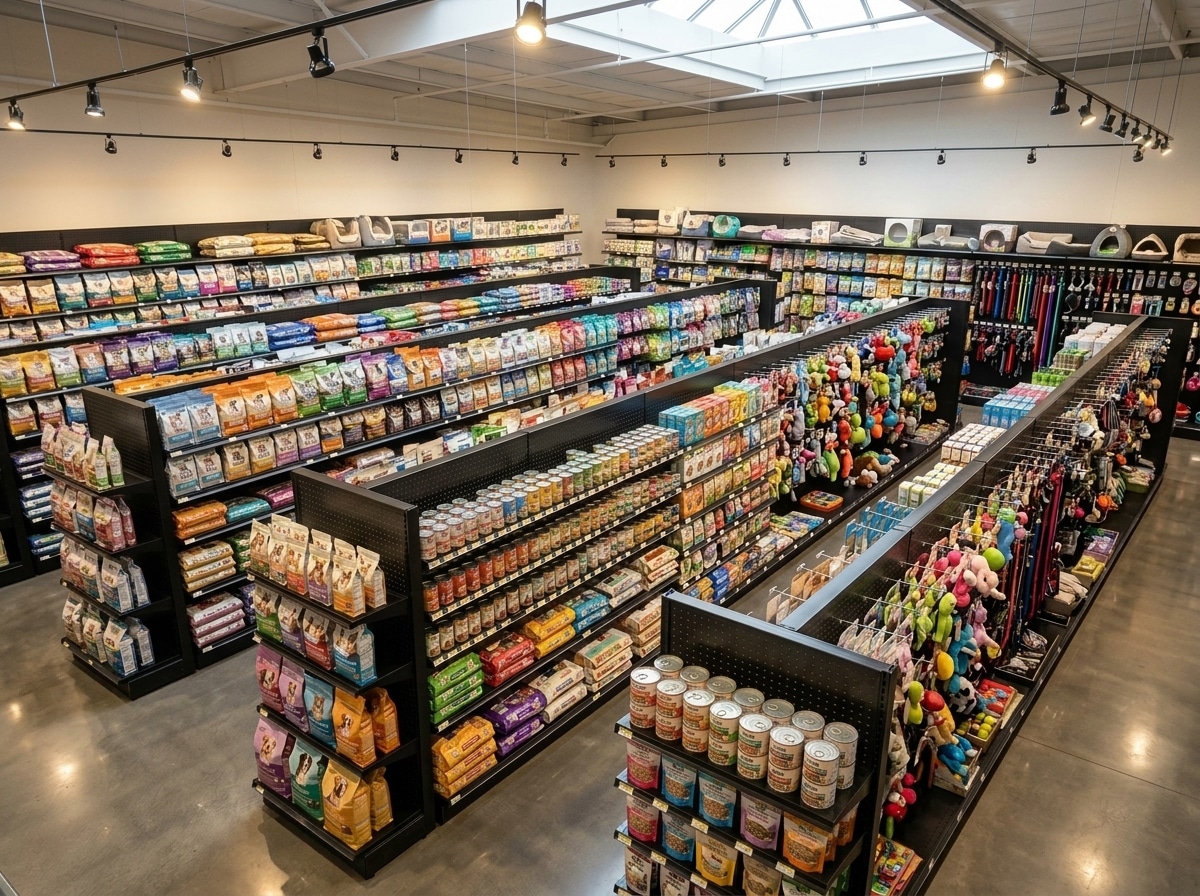
A pet supply store's fixture configuration needs to balance two things: the efficient display of a wide SKU range across multiple categories, and the creation of an inviting, community-feeling environment that reflects the store's love for animals. Customers who feel welcome and comfortable in a store browse longer, discover more products, and spend more per visit. DISPLAYARAMA's free 2D store layout service can help you plan your fixture configuration before you spend a dollar on shelving.
Gondola shelving organized by species — dog food, dog treats, dog accessories on one side; cat food, cat supplies, cat accessories on the other — is the proven layout standard for pet supply retail. This species-centric organization mirrors how customers think and shop, making it easier to navigate and increasing time in each section. Large-format food bags need shelving with adequate depth and height to support their weight, and bottom shelf positioning for heavy items is critical for customer safety and easy handling.
| Fixture / Component | Estimated Cost |
|---|---|
| Gondola Shelving (Aisle Runs + End Caps) | $5,000 – $20,000 |
| Heavy-Duty Wall Shelving (Food Bags, Litter) | $2,000 – $8,000 |
| Slatwall Panels (Accessories, Leashes, Small Items) | $1,500 – $5,000 |
| Display Cases (Premium Accessories, Health Products) | $1,000 – $5,000 |
| Refrigerator / Cooler (Raw Food, Fresh Treats) | $1,000 – $5,000 |
| Checkout Counter / Cash Wrap | $800 – $3,500 |
| Interior & Exterior Signage | $1,000 – $5,000 |
| Lighting Upgrades | $1,000 – $4,000 |
| Total Fixtures & Store Setup | $13,300 – $55,500 |
A small refrigerated unit for raw pet food and fresh-baked treats is a differentiating fixture investment that most big-box pet stores don't offer. The raw and freeze-dried pet food category is one of the fastest-growing premium segments, and the ability to offer fresh raw diet options is a significant draw for the premium pet owner segment. Budget $1,000–$5,000 for a quality glass-door cooler for raw and fresh products.
Display cases for premium accessories — high-end collars, orthopedic harnesses, GPS trackers, premium toys — support the price points these items command and protect them from shoplifting. A well-lit display case presenting a $150 GPS collar communicates its value far more effectively than the same collar hanging on a hook mid-aisle.
DISPLAYARAMA has been supplying retail fixtures to specialty stores since 1980. We carry gondola shelving, heavy-duty wall shelving, slatwall systems, display cases, checkout counters, and more — everything needed to build a pet supply store that's organized, shoppable, and built for the weight and variety demands of pet retail.
Our team can help you plan your layout and select the right fixture combination for your space and budget. Call us at 1-800-292-5227 or get your free layout plan below.
Get My Free Store Fixture Layout Plan →Technology, Grooming Setup & Operations
A pet supply store's POS system needs to handle the specific demands of the category: case-break pricing (selling individual cans from a case), weight-based pricing for bulk foods, supplier auto-reorder integration for fast-moving food SKUs, and customer loyalty tracking. Purpose-built pet retail platforms like eVetPractice or general specialty retail systems like Lightspeed handle these needs effectively. Budget $500–$2,000 for hardware and $79–$250/month for software.
If you add a grooming suite, the equipment investment is meaningful: professional grooming tubs (hydraulic tubs run $800–$2,500 each), dryers ($300–$1,500 each), grooming tables ($400–$1,500), clippers and blade sets ($200–$800), and an appointment booking system. A basic two-table grooming setup runs $5,000–$15,000 in equipment. Grooming is a high-margin, appointment-driven service that generates $50–$120+ per appointment and brings customers into the store 6–12 times per year — making it one of the highest-ROI investments a pet store operator can make.
51% of pet product buyers shop both online and in-store per APPA data, which underscores the importance of an omnichannel approach. A Shopify store integrated with your in-store inventory costs $500–$2,000 to set up and immediately enables recurring auto-ship subscriptions — the most powerful customer retention tool in pet retail, popularized by Chewy and now accessible to independents through platforms like Astro Loyalty and independent e-commerce setups.
| Technology / Grooming / Operations | Estimated Cost |
|---|---|
| POS System (Hardware + Setup) | $500 – $2,000 |
| POS Monthly Software Fee | $79 – $250/mo |
| Grooming Equipment (2-Station Setup) | $5,000 – $15,000 |
| Grooming Booking / Appointment Software | $50 – $150/mo |
| E-Commerce Website Setup | $500 – $2,500 |
| Staff Wages (Monthly — Small Store, 2–3 Staff) | $5,000 – $14,000/mo |
| Business Insurance (Annual) | $2,000 – $6,000 |
| Security System / Cameras | $1,000 – $4,000 |
| Marketing / Grand Opening | $2,000 – $8,000 |
| Utilities (Monthly Average) | $500 – $2,000/mo |
| First-Year Technology + Operations | $91,129 – $250,600+ |
Total Startup Cost Summary
When all categories are totaled, opening a pet supply store in 2026 requires $50,000–$80,000 for a lean specialty or boutique store and $100,000–$200,000 for a properly stocked mid-size store with quality fixtures and a grooming service. Full-service stores with grooming, training, and a premium retail floor can approach $250,000–$400,000.
| Expense Category | Estimated Range |
|---|---|
| Licenses, Permits & Business Formation | $900 – $5,050 |
| First Month's Rent + Security Deposit | $2,500 – $21,000 |
| Leasehold Improvements / Buildout | $10,000 – $50,000 |
| Opening Inventory | $25,500 – $73,000 |
| Fixtures & Store Setup | $13,300 – $55,500 |
| Technology, POS & Grooming Equipment | $5,500 – $17,500 |
| Working Capital Reserve (3–6 months) | $20,000 – $60,000 |
| Total Estimated Startup Investment | $77,700 – $282,050 |
Plan for 12–24 months to profitability. Pet stores build their loyal customer base gradually — most recurring food buyers take 2–3 months to convert from their existing store, and a grooming customer base takes time to establish through appointments and word-of-mouth. Having 3–6 months of operating expenses in reserve when you open protects you through the ramp-up period. The pet industry's recession-resistant nature means that once you build loyal customers, they stay.
How to Maximize Revenue
The pet supply stores that build durable, profitable businesses are not trying to out-price Chewy or out-stock PetSmart. They're winning on community, expertise, services, and the specific brands and products their neighborhood's pet owners can't get anywhere else. Here's how the best independent operators build loyal, growing customer bases.
Add Grooming to Generate Recurring Revenue
Grooming appointments generate $50–$120+ in high-margin revenue, bring customers in 6–12 times per year, and create a natural retail touch point every visit. A customer bringing their dog in for grooming is already in the store — they buy food, treats, and accessories while they wait. No marketing budget replicates this conversion efficiency.
Stock Premium Brands Exclusively
Premium and super-premium pet food is growing at 8–12% annually while economy segments stagnate. Customers who have made the switch to grain-free, raw, or human-grade pet food are deeply loyal to the stores that carry their brands — and those stores are rarely PetSmart or Chewy. Carry what they can't find elsewhere.
Build Vet Clinic Relationships
Veterinary clinics are natural referral partners — they see every pet owner in your trade area on a scheduled basis. Build relationships with local vets, offer to carry vet-recommended food and supplement brands, and cross-refer customers. A single vet recommendation carries more trust than months of marketing spend.
Launch an Auto-Ship Subscription
Chewy's growth was driven overwhelmingly by autoship customers who set a recurring food delivery and forget about it. Independent stores can replicate this with a local delivery or in-store pickup subscription program — pre-scheduled food orders with a small discount for commitment. Recurring subscribers are your most profitable, most loyal customers and the most protected from e-commerce competition.
Host Pet Community Events
Yappy hours, adoption events with local shelters, training demos, and breed meetups build the community identity that makes an independent pet store irreplaceable. These events generate social media content, drive new customer discovery, and strengthen the emotional connection existing customers feel with your store. A store that hosts adoption events brings in new pet owners — and new pet owners need everything.
Capitalize on the Gen Z Opportunity
Gen Z pet ownership grew 43.5% in a single year. This generation owns multiple pets, spends heavily on calming products, functional treats, and wellness-focused nutrition, and discovers brands through social media. Building a consistent TikTok and Instagram presence — product demos, pet content, store personality — reaches the generation that will drive the next decade of pet industry growth.
Why Your Fixtures Matter
In a pet supply store, your fixture configuration determines how much product a customer sees and how easy it is to find what they need — both of which directly affect average transaction value. A well-organized store with logical category flow, species-centric sections, and properly weighted shelving earns more per customer visit than an identical store with cluttered, overloaded, or poorly organized fixtures.
Pet supply customers often arrive with a primary purchase in mind — a specific food, a new toy, flea prevention — but impulse purchases of treats, accessories, and lifestyle products happen when the store environment invites browsing. End caps loaded with seasonal items, new arrivals, and value bundles generate disproportionate per-square-foot revenue. Prioritize these when planning your floor:
- Gondola shelving organized species-first — dog products on one side, cat products on the other — so customers navigate intuitively without asking for help
- Heavy-duty wall shelving for large-format food bags and litter, positioned at proper heights with heavy items on bottom shelves for customer safety and ease of handling
- Slatwall panels for accessories, leashes, and small-format products — flexible, labeled, and organized so customers can browse independently
- A cooler or refrigerator for raw food and fresh treats — a differentiated fixture that signals a premium, knowledgeable store positioning
- A professional checkout counter with impulse treats, travel accessories, and single-serve items — the last 30 seconds of every transaction are your highest-margin sales opportunity
DISPLAYARAMA has been outfitting specialty retail stores with professional-grade display fixtures since 1980. We carry gondola shelving, heavy-duty wall shelving, slatwall panels, display cases, checkout counters, and more — everything you need to build a pet supply store that's organized, shoppable, and built to handle the weight demands of the category.
Our team can help you plan your store layout and select the right combination of fixtures for your square footage and budget. Bulk pricing available for full store buildouts.
Get My Free Store Fixture Layout Plan →Ready to Fixture Your Pet Supply Store?
If you're opening a pet supply store and need to source shelving and fixtures, start with DISPLAYARAMA's free 2D store layout service — a no-cost resource where our team creates a professional floor plan with specific fixture recommendations for your space. It saves hours of guesswork and gives you a clear picture of your fixture investment before you commit. Request your free layout plan here.
Gondola Shelving
Double-sided freestanding gondola units for your store's interior aisles — organized species-first for natural navigation, built to handle the density of SKUs a pet supply floor requires.
Heavy-Duty Wall Shelving
Load-bearing perimeter wall shelving for large-format food bags, litter, and heavy pet supplies — engineered for the weight demands that standard retail shelving can't handle safely.
Slatwall Systems
Flexible slatwall panels for accessories, leashes, toys, and small-format products — organized by category, fully reconfigurable as your product mix and promotional calendar evolve.
Display Cases
Locking glass display cases for premium accessories, GPS collars, and high-value lifestyle products — secure presentation that supports premium price points and protects your highest-margin inventory.
Checkout Counters
Professional cash wrap counters built for pet retail transaction volume — organized for efficient checkout flow, with display space for impulse treats and accessories at the register.
Bulk Pricing Available
Outfitting a full store? DISPLAYARAMA offers bulk pricing on shelving and fixtures. The more you order, the more you save. Call 1-800-292-5227 for a custom quote.
DISPLAYARAMA's free 2D store layout service gives you a professional floor plan with specific fixture recommendations for your pet supply store — at no cost. It's designed to save you hours of guesswork and give you a clear picture of your fixture investment before you commit. We've been helping specialty retailers design their stores since 1980, and we offer bulk pricing for owners outfitting a full floor.
Submit your space dimensions and store type and we'll put together a custom layout plan with exactly the fixtures that will work for your pet supply store.
Get My Free Store Fixture Layout Plan →