

How Much Does It Cost To Open a Souvenir Shop?
Americans are traveling more than ever. In 2025, U.S. travelers collectively took approximately 2.47 billion domestic trips, spending over $1.3 trillion in the process — and a meaningful slice of that spending goes directly into souvenir and gift shops at every stop along the way. For entrepreneurs looking to build a retail business in a tourist destination, a well-positioned souvenir shop can be a genuinely profitable venture with relatively low barriers to entry compared to other retail categories.
But "how much does it cost to open a souvenir shop?" isn't a question with one clean answer. Startup costs vary significantly depending on your location, your store model, the depth of your inventory, and how much buildout work your space needs. A lean kiosk in a beach town is a fundamentally different investment than a 1,500-square-foot tourist flagship in a major city. According to industry data, startup costs for gift and souvenir shops typically land somewhere between $50,000 and $175,000 for a standard brick-and-mortar operation — though smaller setups can come in below that range and premium tourist-district locations can run well above it.
This guide breaks down every major cost category you need to budget for in 2026 — from licenses and rent to inventory, fixtures, and operations — so you can build a realistic financial plan before you sign a lease or place your first wholesale order.
What Kind of Souvenir Shop Are You Opening?
Before you calculate a single dollar figure, you need to settle one critical question: what type of souvenir shop are you building? The answer determines your location requirements, inventory strategy, and total startup investment more than almost any other variable. There are four distinct store models in this category, each with meaningfully different economics.
Tourist Kiosk or Market Booth
The most capital-efficient entry point into the souvenir business. A kiosk in a mall, boardwalk, pier, or outdoor market requires minimal buildout, a compact fixture footprint, and a tightly curated inventory. Startup costs typically run between $10,000 and $35,000. The tradeoff is lower revenue ceiling and high dependence on seasonal foot traffic.
Small Tourist-Strip Storefront (300–800 sq ft)
The most common entry point for independent souvenir shop owners. A compact storefront in a beach town, near a national park, or along a popular main street. Buildout is manageable, inventory depth is moderate, and the business can be run by one or two people. Startup costs generally range from $50,000 to $100,000.
Mid-Size Specialty Gift & Souvenir Store (800–1,500 sq ft)
A fuller retail experience with broader product categories — apparel, home goods, local art, custom merchandise, and consumables alongside the standard souvenir mix. This model targets both tourists and locals. Expect startup costs between $100,000 and $150,000.
Premium Tourist Flagship (1,500+ sq ft)
A destination store in a high-traffic tourist corridor — think busy city boardwalks, airport retail zones, theme park adjacencies, or nationally recognized tourist districts. Requires deep inventory, professional buildout, and significant fixture investment. Startup costs routinely exceed $150,000 to $200,000+, with premium locations commanding even more.
| Store Concept | Typical Size | Estimated Startup Range |
|---|---|---|
| Tourist Kiosk / Market Booth | 50–200 sq ft | $10,000 – $35,000 |
| Small Tourist-Strip Storefront | 300–800 sq ft | $50,000 – $100,000 |
| Mid-Size Gift & Souvenir Store | 800–1,500 sq ft | $100,000 – $150,000 |
| Premium Tourist Flagship | 1,500+ sq ft | $150,000 – $200,000+ |
Independent Operator Insight: For most first-time souvenir shop owners, the small tourist-strip storefront model offers the best balance of startup affordability and revenue potential. Starting at 500–800 square feet lets you test your location and product mix before committing to a larger footprint. You can always expand — it's much harder to downsize once you've signed a lease.
Licenses, Permits & Business Formation
The regulatory requirements for opening a souvenir shop are relatively straightforward compared to other retail categories. Gift, novelty, and souvenir retailers face minimal industry-specific licensing hurdles — the main requirements are standard business formation and resale documentation. That said, a few additional permits can open up higher-margin product categories worth considering.
Standard Business Formation
Most souvenir shop owners form an LLC (Limited Liability Company) to separate personal and business liability. LLC formation fees vary by state, generally ranging from $50 to $500, with some states charging an annual reporting or franchise tax on top. You'll also need a federal EIN (Employer Identification Number) from the IRS, which is free to obtain online.
Seller's Permit / Resale Certificate
A resale certificate or seller's permit is required in most states to purchase inventory wholesale without paying sales tax, and to collect sales tax from customers. In Florida, for example, this is obtained through the Department of Revenue at no cost. Application fees across other states typically range from $0 to $100.
Local Business License
Many municipalities require a general business license to operate commercially within city or county limits. Fees range from $50 to a few hundred dollars annually depending on location. Tourist-heavy municipalities sometimes have additional merchant registration requirements.
Liquor License (Optional but High-Value)
Local wines, craft spirits, and regional beers are among the highest-margin souvenir products available, and they sell consistently to tourists looking to bring something distinctive home. If you plan to stock any alcohol, you'll need a liquor license — a process that typically involves a background check, fingerprinting, and a more involved application. Costs and timelines vary significantly by state, ranging from a few hundred to several thousand dollars.
Signage Permit
If your location requires exterior signage (virtually all retail storefronts do), most municipalities require a separate sign permit. Budget $50 to $300 depending on jurisdiction.
| License / Permit | Estimated Cost |
|---|---|
| LLC Formation (state filing fee) | $50 – $500 |
| Federal EIN (IRS) | Free |
| Seller's Permit / Resale Certificate | $0 – $100 |
| Local Business License | $50 – $300 |
| Signage Permit | $50 – $300 |
| Liquor License (if applicable) | $300 – $3,000+ |
| Estimated Total (without liquor) | $150 – $1,200 |
Local tip: If you're opening near a major tourist destination, contact the local chamber of commerce early. Many tourist corridors have business districts with their own registration requirements, co-op marketing programs, and sometimes even expedited permitting pathways for storefronts in designated tourism zones.
Location, Rent & Buildout Costs
For a souvenir shop, location is not just important — it is arguably the single biggest determinant of whether your business survives or thrives. Unlike other retail categories where marketing can compensate for a weaker address, souvenir shops are almost entirely dependent on foot traffic from travelers. The right street, beach boardwalk, or tourist corridor will drive far more revenue than any advertising campaign. The wrong location, no matter how well-priced the lease, will cost you everything.
What Drives Souvenir Shop Foot Traffic
The most productive souvenir shop locations share a few characteristics: they're positioned where travelers have already committed to being present (they're not just "passing by" — they've traveled there), and they're in the direct path between major attractions and where visitors rest, eat, or park. Think ferry terminals, boardwalks adjacent to beaches, streets leading from cruise ship docks, national park entrance towns, popular city neighborhoods, and pedestrian zones near major landmarks.
Typical Store Size and Rent by Location Type
Most small-footprint souvenir shops operate between 500 and 1,000 square feet, which is enough space to merchandise a solid product mix without requiring excessive inventory investment. Commercial rent per square foot varies dramatically by market and location type. A storefront in a popular shopping center near a major highway might run $20 to $30 per square foot annually, while prime tourist districts in cities like Miami Beach, Key West, or Gatlinburg command $35 to $80 or more. High-tourist urban corridors — think Fisherman's Wharf in San Francisco or Nashville's Broadway — can push well above $100 per square foot.
| Location Type | Typical Store Size | Monthly Rent Range |
|---|---|---|
| Small-town tourist strip / beach town | 300–600 sq ft | $800 – $2,500/mo |
| Mid-tier tourist destination | 500–900 sq ft | $2,000 – $5,000/mo |
| Major tourist corridor / city | 700–1,200 sq ft | $4,000 – $10,000/mo |
| Mall kiosk | 100–250 sq ft | $2,000 – $6,000/mo |
| Airport / transportation hub | Varies | $6,000 – $20,000+/mo |
Lease Security Deposit and First Month
Most commercial landlords require a security deposit equal to one to three months' rent, plus first month's rent paid upfront. For a $2,500/month space, that means $5,000 to $10,000 in upfront lease costs before you've done any buildout work.
Buildout and Leasehold Improvements
Most commercial spaces are delivered as empty shells. You'll need to invest in flooring, lighting, painting, and any structural changes required to make the space functional and visually appealing. Industry data from general contractors puts average retail fitout costs at roughly $147 per square foot in central business districts, though simpler tourist-strip locations often come in lower. For a 600-square-foot souvenir shop with a clean, well-lit aesthetic, budget $15,000 to $40,000 for buildout depending on condition and scope.
Location strategy: When evaluating tourist corridors, ask landlords or neighboring businesses about seasonal fluctuations in foot traffic. A location that's busy in July and dead in January requires a very different financial model than one with year-round visitors. Florida, coastal Southeast, and desert Southwest destinations tend to have stronger off-season bases than New England or Midwest tourist towns.
Opening Inventory
Inventory is typically the largest single line item in a souvenir shop startup budget, and it's also where most first-time operators make their biggest mistakes. The instinct to "buy everything" and fill a shop floor is expensive and risky — slow-moving product ties up capital, clutters displays, and erodes margins through eventual markdowns. A disciplined opening inventory strategy starts with a curated core assortment and builds depth in categories that prove themselves through actual sales data.
The souvenir and gift industry carries generous gross margins — specialty gift and souvenir retailers typically achieve gross margins between 50% and 60% — which means there's real profit potential if you buy right. Wholesale pricing on popular souvenir categories ranges widely: a custom magnet may cost $1 to $3 wholesale and retail for $6 to $10; a quality T-shirt sourced through a screen printer may cost $8 to $12 and retail for $22 to $35. The math works well when inventory moves — the challenge is managing turnover and avoiding slow sellers.
Core Souvenir Merchandise
The backbone of most souvenir shops: magnets, keychains, postcards, shot glasses, ornaments, snow globes, and location-branded trinkets. These items have low per-unit cost, high turnover, and reliable impulse purchase rates. They also require minimal display real estate. A solid opening assortment of core souvenir SKUs for a 600-square-foot store typically costs $5,000 to $12,000 wholesale.
Apparel
T-shirts, sweatshirts, hats, and tote bags bearing local graphics and destination branding are consistently among the highest-revenue souvenir products. They carry strong margins and a high average ticket price. Opening apparel inventory for a modest selection — 8 to 15 SKUs across sizes — typically runs $8,000 to $18,000 depending on style count and quantity per SKU.
Drinkware
Mugs, tumblers, pint glasses, and custom water bottles are perennial top sellers in the souvenir category. Insulated drinkware in particular has seen growing demand as a premium souvenir item that customers actually use daily, keeping your destination top-of-mind. Budget $3,000 to $7,000 for an opening drinkware assortment.
Local & Artisan Products
Local honey, hot sauces, jams, candies, candles, art prints, and handmade crafts are increasingly important differentiators for independent souvenir shops competing against chain gift retailers. These products signal authenticity — something travelers, especially Millennials and Gen Z consumers, actively seek out. According to travel survey data, 58% of Millennials and Gen Z travelers specifically choose destinations and purchases that feel authentic to the local culture. Consignment or low-minimum arrangements with local artisans can reduce upfront cash outlay while building an inventory that large competitors can't replicate. Initial budget for local product sourcing: $3,000 to $8,000.
| Inventory Category | Opening Cost Range |
|---|---|
| Core Souvenir Merchandise (magnets, keychains, etc.) | $5,000 – $12,000 |
| Apparel (T-shirts, hats, sweatshirts) | $8,000 – $18,000 |
| Drinkware (mugs, tumblers, glasses) | $3,000 – $7,000 |
| Local & Artisan Products | $3,000 – $8,000 |
| Seasonal / Specialty Items | $2,000 – $5,000 |
| Total Opening Inventory | $21,000 – $50,000 |
Inventory discipline: Resist the temptation to fill your store completely on day one. Stock roughly 60–70% of capacity at opening, which leaves room to add proven sellers quickly and prevents you from being locked into slow-moving product for months. Track sell-through rates weekly from the start — the souvenir business rewards fast, data-driven restocking decisions.
Fixtures & Store Design
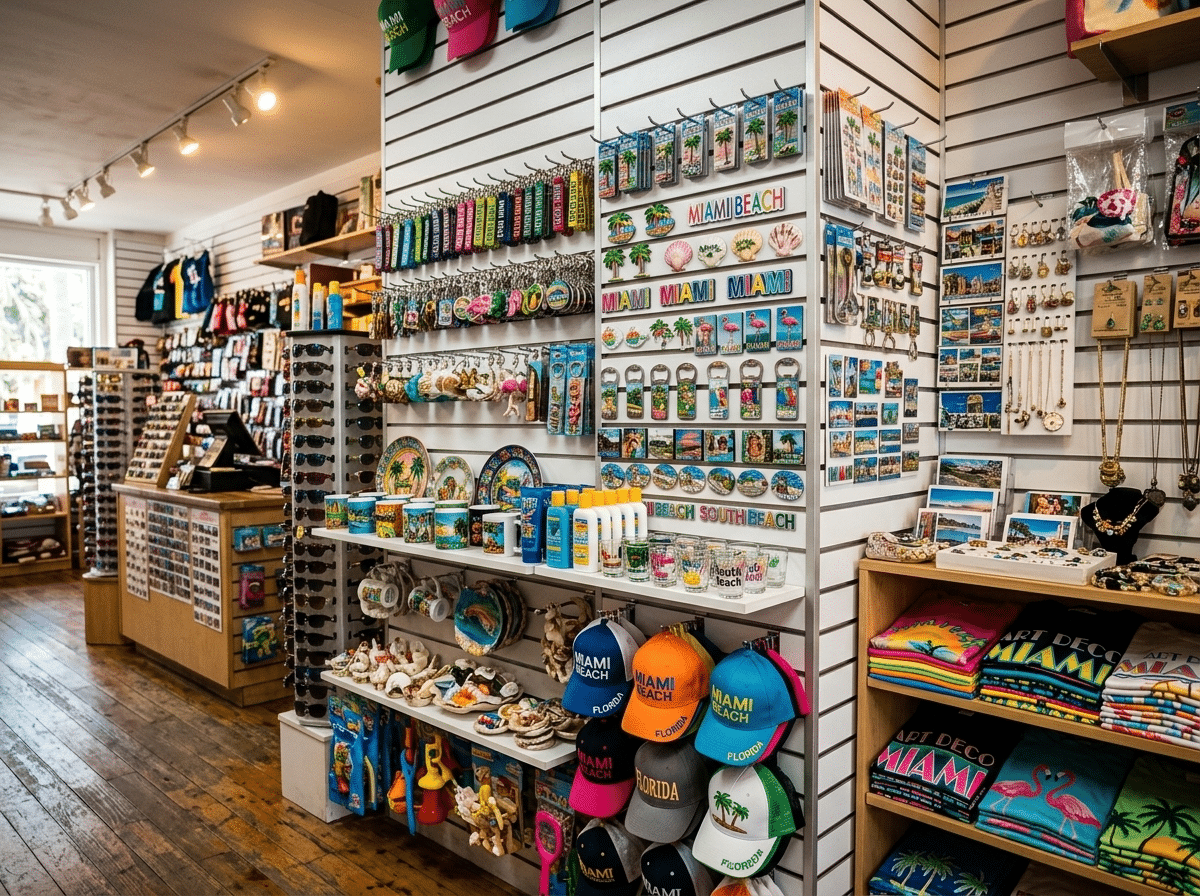
Your fixture environment determines how much merchandise you can display, how customers move through the store, and ultimately how much they buy. A well-designed souvenir shop uses its vertical and horizontal space efficiently to maximize the number of SKUs visible from any point on the floor — because souvenir shopping is largely an impulse-driven activity. Shoppers buy what catches their eye. The right fixtures make sure your merchandise is always catching eyes.
DISPLAYARAMA offers a free 2D store layout service that maps out the most effective fixture arrangement for your specific square footage and store concept — it's a useful starting point before you spend a dollar on fixtures or sign a commercial lease. For a standard small souvenir shop, a combination of slatwall panels, gondola shelving, spinning display racks, and a checkout counter with display case covers virtually every merchandise category effectively. Fixture investment for a 500–800 square foot store typically runs between $8,000 and $20,000 depending on fixture quality and quantity.
| Fixture Type | Estimated Cost Range |
|---|---|
| Slatwall Panels (walls + freestanding) | $1,500 – $5,000 |
| Gondola Shelving Units | $1,000 – $4,000 |
| Spinner Racks (postcards, keychains, etc.) | $500 – $2,000 |
| Checkout Counter & Display Case | $1,500 – $4,500 |
| Apparel Racks & Folding Tables | $800 – $2,500 |
| Signage & Branding Elements | $500 – $2,000 |
| Total Fixtures (500–800 sq ft store) | $5,800 – $20,000 |
DISPLAYARAMA has been supplying retail fixtures and display supplies to specialty stores since 1980. For souvenir shops specifically, we carry slatwall panels, gondola shelving, spinner racks, display cases, checkout counters, and everything else you need to build a high-density merchandise floor that drives impulse sales.
Our Grade A slatwall panels are built to hold heavier loads than the Grade C panels sold at big-box retailers — an important detail when you're hanging apparel, drinkware, and accessories at full capacity. Our team can help you plan the right fixture mix for your store size and budget. Call us at 1-800-292-5227 or get your free layout plan below.
Get My Free Store Fixture Layout Plan →Technology, Staffing & Operations
Once your store is designed and stocked, the operational infrastructure needs to be in place before you open the doors. For a souvenir shop, this layer of costs is relatively modest compared to more complex retail categories — but it's still real money, and cutting corners here creates problems that are painful to fix once you're open.
POS System
A modern cloud-based point-of-sale system is essential. For a souvenir shop, you need something that handles high transaction volume quickly (tourist shoppers rarely browse for long), tracks inventory across many SKUs, and ideally supports a simple e-commerce extension for online orders. Platforms like Square, Shopify POS, or Lightspeed are well-suited to this use case. Initial POS hardware typically costs $500 to $1,500 (terminal, card reader, receipt printer, cash drawer). Software runs $0 to $89 per month depending on the plan.
Website and Online Presence
Even a primarily walk-in souvenir shop benefits from a professional website — it helps tourists plan ahead, supports Google Maps visibility, and can support direct online sales for tourists who want to re-order gifts after their trip. Budget $500 to $2,000 for initial site development, plus $20 to $50 per month in ongoing hosting.
Staffing
A small souvenir shop can often be owner-operated for the first several months, especially with one or two part-time hires during peak season. Plan for at least 1–2 part-time employees during busy periods, at $13 to $18 per hour depending on your state's minimum wage. For a single-location store, annual staffing costs typically range from $20,000 to $45,000 once the business is running at capacity.
Insurance
You'll need general liability insurance and property insurance at minimum. Combined annual premiums for a small souvenir shop typically run $1,200 to $3,000 per year. If you carry high-value inventory or operate in a high-foot-traffic area, budget toward the higher end.
Marketing and Grand Opening
Initial marketing costs — signage, social media setup, Google Business Profile, print materials, and a modest grand opening promotion — typically run $1,000 to $3,000 for a first-location independent operator.
| Technology / Operations Item | Estimated Cost |
|---|---|
| POS Hardware | $500 – $1,500 |
| POS Software (first year) | $0 – $1,068 |
| Website (setup) | $500 – $2,000 |
| Business Insurance (annual) | $1,200 – $3,000 |
| Staffing (first 6 months, part-time) | $8,000 – $20,000 |
| Marketing & Grand Opening | $1,000 – $3,000 |
| Utilities Deposit & Setup | $500 – $1,500 |
| Miscellaneous / Contingency (10%) | $2,000 – $5,000 |
| Estimated Total Operations Setup | $13,700 – $37,068 |
Total Startup Cost Summary
When you add up every cost category — business formation, lease deposits, buildout, fixtures, opening inventory, technology, and operational setup — opening a souvenir shop in 2026 requires a realistic total investment of $50,000 on the lean end and $175,000 or more for a fully outfitted mid-size store in a strong tourist location. Neither figure includes working capital, which most advisors recommend carrying as 6 to 12 months of projected operating expenses. Securing that working capital buffer before you open gives you the runway to build sales volume without being forced to make desperate decisions under cash pressure.
| Cost Category | Lean | Mid-Range | Full Build |
|---|---|---|---|
| Business Formation & Licenses | $150 | $500 | $1,200 |
| Lease Deposit & First Month | $3,000 | $8,000 | $18,000 |
| Buildout & Leasehold Improvements | $5,000 | $20,000 | $40,000 |
| Fixtures & Store Design | $5,800 | $12,000 | $20,000 |
| Opening Inventory | $15,000 | $30,000 | $50,000 |
| Technology, Staffing & Operations | $10,000 | $20,000 | $37,000 |
| Estimated Total Startup Investment | ~$39,000 | ~$90,500 | ~$166,200 |
Profitability timeline: Most well-located souvenir shops begin covering monthly operating costs within 6 to 18 months of opening. The industry's gross margins of 50–60% are genuinely favorable, but turning those margins into net profit requires volume — which comes from location and consistent foot traffic. Stores that open in shoulder seasons before a peak tourist period often reach operational breakeven faster than those that open mid-summer and have to wait a full year for the next high season.
6 Ways to Maximize Revenue in Your Souvenir Shop
The difference between a souvenir shop that struggles and one that thrives rarely comes down to the quality of the merchandise alone. It comes down to how the store is merchandised, how it builds loyalty, and how smartly it manages its margins and inventory. Here are six proven strategies for independent souvenir shop owners.
Lead With Local Exclusivity
Tourists increasingly choose unique, locally sourced products over mass-produced generic souvenirs. Research shows 58% of Millennial and Gen Z travelers specifically seek out authentic local purchases. Stock items from regional artisans, local food producers, and area-specific custom merchandise that competitors and chain retailers simply cannot replicate.
Engineer Your Fixture Layout for Impulse
Souvenir buying is impulsive by nature. High-margin, low-cost items like magnets and keychains belong at eye level near the checkout and in high-dwell areas. Use spinner racks at the entry zone and slatwall panels to create dense, visually interesting walls that pull shoppers deeper into the store. Retail analytics consistently show that a well-planned layout can drive $300 to $500 in annual sales per square foot for specialty retailers.
Offer Custom Merchandise
Custom-printed T-shirts, mugs, magnets, and bags with your specific location's branding are among the highest-margin items a souvenir shop can carry. On-demand custom printing services have made it possible to offer a wide design variety without massive inventory commitments. Custom items also create a defensible differentiation that generic wholesale products can't match.
Rotate Seasonal Inventory Strategically
Seasonal decorations are the fastest-growing gift and souvenir subcategory, with an 8.61% annual growth rate projected through 2031 according to Mordor Intelligence. Dedicate a rotating section of your floor space to season-specific merchandise — holiday ornaments, themed decor, and limited-run items — to keep the store feeling fresh for repeat visitors and locals alike.
Build a Review and Social Media Presence
For a tourist-dependent business, Google Maps reviews and social media visibility directly impact foot traffic. Encourage satisfied customers to leave reviews at point of purchase. An Instagram-worthy fixture display or a photogenic shop corner gives customers a reason to post — which functions as free location marketing to their extended networks. Keep the store camera-ready at all times.
Partner With Local Hospitality Businesses
Hotels, bed-and-breakfasts, tour operators, and attractions are natural referral partners for souvenir shops. A simple cross-promotion arrangement — your shop's cards at the hotel front desk in exchange for display space for their brochures — can drive consistent referral traffic at essentially zero cost. Some shops develop wholesale relationships with local hotels for in-room gift amenities, which creates a B2B revenue stream that runs year-round.
Why Your Fixtures Are Revenue Infrastructure
In a souvenir shop, your fixtures aren't just shelving — they're the sales engine. Every square foot of floor and wall space is an opportunity to put merchandise in front of a buyer who is already in a spending mindset. Tourists on vacation spend more freely than they do at home, and they respond to visually rich, well-organized displays. A cluttered, poorly configured fixture environment suppresses sales even when the product mix is strong. A clean, intelligently merchandised floor pulls customers in and guides them through the full assortment.
The right fixture combination for a souvenir shop does several things simultaneously: it creates density without chaos, separates product categories clearly, puts high-margin impulse items in high-visibility positions, and gives the store a polished look that signals quality. These aren't aesthetic details — they're decisions that directly determine how much a customer spends per visit.
- Slatwall panels — maximizes wall space for hanging apparel, accessories, drinkware, and display hooks
- Gondola shelving — creates mid-floor product islands with accessible merchandise on both sides
- Spinner racks — essential for postcards, keychains, magnets, and other small impulse items
- Display cases at checkout — showcases high-value items like jewelry, crystals, and premium gifts
- Checkout counter — the final buying opportunity; the right counter with integrated display space adds measurable last-minute purchases
DISPLAYARAMA has been outfitting specialty retail stores — including gift shops, souvenir stores, and tourist destination boutiques — since 1980. We're based in Pompano Beach, FL, and we carry the full range of fixtures souvenir shops need: slatwall panels (Grade A rated, not the Grade C panels you'll find at big-box suppliers), gondola shelving, spinner racks, display cases, checkout counters, and more.
We also offer a free 2D store layout plan — send us your space dimensions and store concept, and our team will design a floor plan with specific fixture recommendations at no cost. We offer bulk pricing for owners outfitting a full floor. Call 1-800-292-5227 with any questions.
Get My Free Store Fixture Layout Plan →Outfit Your Souvenir Shop With DISPLAYARAMA
When you're ready to start planning your souvenir shop's fixture layout, DISPLAYARAMA's free 2D store layout service is the right place to begin. Submit your square footage, store shape, and the product categories you plan to carry, and our team will put together a custom floor plan with specific fixture recommendations — at no cost to you. Once you know what you need, we're ready to fill your order with quality fixtures built for commercial retail environments.
Slatwall Panels
Grade A rated slatwall panels for wall merchandising of apparel, accessories, drinkware, and hanging display hooks. Available in standard, white, black, and color finishes to match your store aesthetic.
Gondola Shelving
Double-sided floor gondolas create high-density product islands in the center of your shop floor. Ideal for locally sourced goods, packaged foods, candles, and home décor products.
Spinner Racks
Rotating spinner racks for postcards, keychains, magnets, and small impulse items. A staple fixture for any souvenir shop — compact, high-capacity, and highly effective at capturing impulse purchases.
Display Cases
Locking and open-top display cases for showcasing higher-value items: jewelry, crystals, premium gifts, and local artisan pieces. Doubles as a counter element near the checkout area.
Checkout Counters
Professional checkout counters with integrated display space for last-minute purchase items. The checkout zone is prime real estate for high-margin impulse buys — make it work for you.
Bulk Pricing Available
Outfitting a full souvenir shop? DISPLAYARAMA offers bulk pricing on fixtures for full-store orders. Call 1-800-292-5227 for a custom quote tailored to your specific store size and concept.
DISPLAYARAMA's free 2D store layout service gives you a professional floor plan with specific fixture recommendations for your souvenir shop — at no cost. It eliminates the guesswork of figuring out how to configure your floor space and tells you exactly which display fixtures will fit your location. We've been helping specialty retailers design their stores since 1980, and we offer bulk pricing for owners outfitting a full floor.
Submit your space dimensions and store type and we'll put together a custom layout plan with exactly the fixtures that will work for your souvenir shop.
Get My Free Store Fixture Layout Plan →