

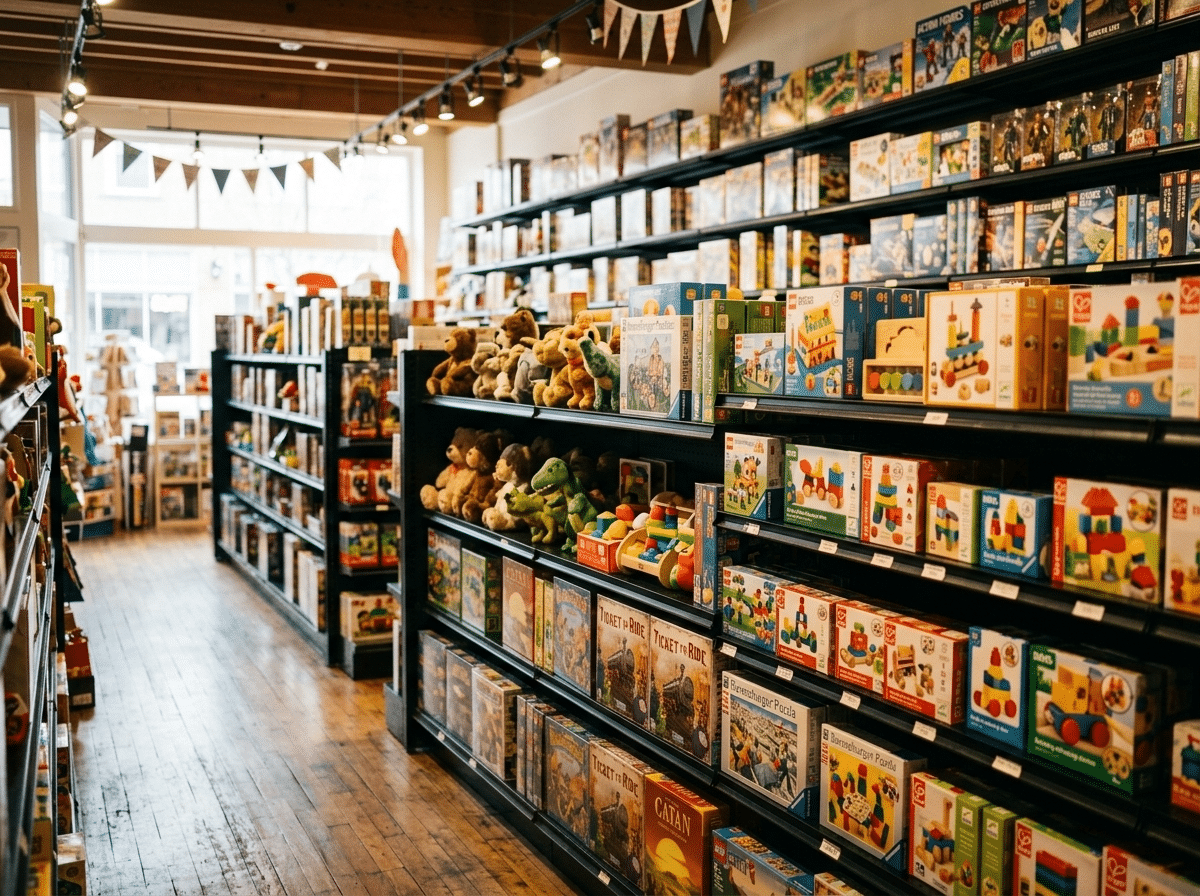
How Much Does It Cost To Open a Toy Store?
The U.S. toy market generated an estimated $41.68 billion in revenue in 2025 — and after two years of flat performance, industry data from Circana shows the market returned to meaningful growth, with dollar sales climbing 7% through the first three quarters of the year. Collectibles surged 33%, licensed products rose 14%, and a growing cohort of adult buyers known as "kidults" now account for roughly 17% of all U.S. toy sales, reshaping what a successful toy store looks like in 2026. This is a market with genuine momentum, and independent toy stores that understand how to differentiate from big-box retailers are finding a profitable lane.
But opening a toy store is one of the more capital-intensive specialty retail ventures you can pursue. The combination of a broad required inventory, meaningful seasonal concentration, and the need for an engaging in-store environment means your startup budget needs to be built carefully. Startup costs for a typical brick-and-mortar toy store range from $60,000 on the lean end to $250,000 or more for a well-stocked, well-designed store in a competitive market. The right number for your situation depends on your store model, location, inventory depth, and how much of your store you're building versus inheriting from a previous tenant.
This guide gives you a complete, research-backed breakdown of every major cost category — business formation, rent, inventory by product category, fixtures, operations, and staffing — so you can build a realistic financial plan and understand exactly what you're getting into before you sign anything.
What Kind of Toy Store Are You Opening?
Before you touch a spreadsheet, you need to decide which toy store model you're building. This decision dictates nearly every cost that follows — your real estate needs, your inventory depth and mix, your fixture requirements, and your go-to-market positioning against the Targets and Amazons of the world. There are four distinct approaches, each with fundamentally different economics.
General Toy Store (Mass Assortment)
A broad-assortment store carrying major brands — Lego, Mattel, Hasbro, Funko — across multiple age groups and play categories. High SKU count, moderate to low per-unit margins on name-brand goods, and direct competition with online and big-box retail. This model requires the largest inventory investment to stock effectively. Startup costs typically fall between $120,000 and $250,000. Success depends heavily on having a location advantage that mass retailers can't match, plus a curated mix of exclusives or hard-to-find items that Amazon doesn't stock.
Specialty / Niche Toy Store
A store with a defined focus — educational and STEM toys, eco-friendly and sustainable toys, wooden and Montessori toys, science kits, hobby and construction sets, or a specific age demographic like infants and toddlers. Narrower SKU count but higher margins on specialty items (educational toys and STEM kits can yield 45–60% gross margins), stronger differentiation from mass retail, and a more loyal customer base. Startup costs range from $60,000 to $150,000 depending on store size and location.
Collectibles & Hobby Store
Trading cards, action figures, limited-edition collectibles, anime merchandise, tabletop games, and model kits. The fastest-growing segment of the U.S. toy market in 2025, with collectible toy sales up 33% year-over-year according to Circana. Collectibles carry some of the highest margins in retail — 50% to 100% on limited and rare pieces. A well-run collectibles store can operate profitably at a smaller footprint. Startup costs typically range from $50,000 to $130,000, depending heavily on opening inventory quality.
Play-Experience Toy Store
A hybrid retail and experience model that combines a curated toy selection with in-store play areas, toy demonstration stations, birthday party packages, and events. This model commands higher engagement and loyalty but requires more square footage, additional liability considerations, and more complex operations. Startup costs run $150,000 to $300,000+, with the experience infrastructure adding meaningful capital requirements. Play-experience stores perform exceptionally well in family-heavy suburban markets where there is no equivalent alternative.
| Store Concept | Typical Size | Estimated Startup Range |
|---|---|---|
| General / Mass-Assortment Toy Store | 1,500–3,000 sq ft | $120,000 – $250,000 |
| Specialty / Niche Toy Store | 800–1,500 sq ft | $60,000 – $150,000 |
| Collectibles & Hobby Store | 600–1,200 sq ft | $50,000 – $130,000 |
| Play-Experience Store | 1,500–3,500 sq ft | $150,000 – $300,000+ |
Strategic insight for independents: The most durable independent toy stores in 2026 are those that have carved out a defensible niche. You do not want to compete on breadth with Amazon or on price with Walmart. A specialty, collectibles, or play-experience model gives you a reason to exist that mass retail cannot easily replicate. Independents that lean into staff expertise, hands-on play, local community, and curated assortment consistently outperform those trying to be a mini-version of a big-box toy store.
Licenses, Permits & Business Formation
Toy stores face a relatively standard regulatory environment compared to categories like food service, firearms, or alcohol. The primary licensing requirements are standard business formation documents, sales tax registration, and a local business license. The one toy-specific regulatory layer worth knowing: the Consumer Product Safety Improvement Act (CPSIA) sets mandatory safety and labeling standards for toys sold to children under 12 in the United States. As a retailer (not a manufacturer), your primary obligation is to source from compliant suppliers — but awareness of these standards affects how you vet wholesale vendors.
Business Entity Formation
Most toy store owners form an LLC to protect personal assets from business liability. State filing fees typically run between $50 and $500, with some states charging annual renewal fees. You'll also obtain a federal EIN (Employer Identification Number) from the IRS at no cost, which is required for payroll and business banking.
Seller's Permit / Sales Tax Registration
Required in most states to collect sales tax from customers and purchase inventory wholesale without paying sales tax upfront. Application fees range from $0 to $100. In states like Florida, the registration is free through the Department of Revenue. This is a non-negotiable step before placing your first wholesale order.
Local Business License
Cities and counties typically require a general business license to operate commercially. Fees range from $50 to several hundred dollars annually, depending on your municipality and store revenue tier. Tourist-adjacent and commercial district locations sometimes have additional merchant registration requirements.
Zoning Verification
Before signing a lease on any commercial space, confirm that retail toy sales are permitted under the local zoning code for that specific address. If you plan to incorporate a play area or host birthday events, verify that these uses are permitted as well — some mixed-use zones restrict event-based retail. Zoning consultation is typically free through your local planning office.
Signage Permit
Exterior signage requires a permit in most municipalities. Budget $50 to $300 depending on jurisdiction and sign type. Some shopping centers and commercial districts have additional signage guidelines that must be followed alongside the city permit.
| License / Permit | Estimated Cost |
|---|---|
| LLC Formation (state filing fee) | $50 – $500 |
| Federal EIN (IRS) | Free |
| Seller's Permit / Sales Tax Registration | $0 – $100 |
| Local Business License | $50 – $300 |
| Signage Permit | $50 – $300 |
| Zoning Verification / Consultation | Free – $200 |
| Estimated Total Licensing & Formation | $150 – $1,400 |
Toy safety compliance note: While the CPSIA applies to manufacturers and importers, retailers are responsible for not knowingly selling non-compliant products. When sourcing from domestic wholesale distributors, request documentation that products meet CPSIA testing and labeling requirements. Reputable wholesalers for major brands will have this documentation readily available — and this diligence also protects you from recall-related liability exposure.
Location, Rent & Buildout Costs
Location matters for a toy store, but toy purchases are less impulsive than many other retail categories — parents and gift-givers often have a destination in mind when they walk in. This means a toy store can perform well in a slightly off-the-beaten-path location if it has strong community awareness, a loyal repeat customer base, and clear visibility. That said, family neighborhoods, suburban strip centers near grocery anchors, and high-foot-traffic lifestyle centers all produce strong results for toy retailers.
Ideal Location Characteristics
The most productive toy store locations share common demographic factors: a dense population of households with children under 12, proximity to schools or family activity centers, and reasonable parking access. Family-focused suburban shopping centers perform reliably. Tight urban neighborhoods with high density of young families can also work well. The worst locations for independent toy stores are those that put them in direct proximity to a Target or Walmart without a meaningful differentiation strategy — those fights are difficult to win on product overlap alone.
Typical Store Size and Rent by Format
A well-configured independent toy store for a specialty or collectibles model typically operates between 800 and 1,500 square feet — enough floor space to merchandise an engaging assortment without requiring inventory volume that strains cash flow. General assortment stores and play-experience models require more square footage in the 1,500–3,000 square foot range. Commercial lease rates vary widely by market: suburban strip centers in mid-size U.S. cities typically run $18 to $30 per square foot annually, while lifestyle and urban retail districts command $30 to $60 or more.
| Location Type | Typical Size | Monthly Rent Range |
|---|---|---|
| Suburban strip center (non-anchor inline) | 800–1,500 sq ft | $1,500 – $4,000/mo |
| Lifestyle center / urban main street | 1,000–2,000 sq ft | $3,000 – $8,000/mo |
| Regional mall (inline) | 1,000–2,500 sq ft | $4,000 – $10,000/mo |
| Freestanding / community center | 1,500–3,000 sq ft | $2,000 – $6,000/mo |
| Small-town or neighborhood retail | 600–1,200 sq ft | $800 – $2,500/mo |
Lease Deposit and Upfront Costs
Standard commercial leases require a security deposit of one to three months' rent plus first month's rent at signing. On a $3,000/month space, that means $6,000 to $12,000 in upfront lease obligations before a single fixture goes up. Negotiate your deposit when possible — strong personal credit and a well-prepared business plan give you leverage to reduce the security deposit requirement from three months to one.
Buildout and Leasehold Improvements
Toy stores require a more intentional buildout than many retail categories because the in-store environment is part of the product experience. Bright, themed, and well-organized environments drive engagement and dwell time — both of which directly impact purchase rates and basket sizes. A functional toy store buildout covering fresh paint, lighting upgrades, flooring, and basic carpentry typically runs $15,000 to $45,000 depending on the store's starting condition and the level of thematic investment. Play-experience stores with dedicated party rooms or interactive zones will run higher.
Lease negotiation tip: Many commercial landlords, particularly in suburban strip centers, will offer a Tenant Improvement (TI) allowance — a cash contribution toward your buildout in exchange for a longer lease commitment. In 2026, TI allowances of $20 to $40 per square foot are common in markets where vacancy rates are moderate. A 1,000-square-foot space could yield a $20,000–$40,000 landlord contribution toward your buildout — dramatically reducing your out-of-pocket construction costs if you're willing to sign a 3–5 year lease.
Opening Inventory
Inventory is the largest single cost in a toy store startup — typically representing 40% to 60% of total opening capital. And it's the area where the most first-time toy store owners run into trouble. The toy industry is highly seasonal, with an estimated 60–70% of annual sales concentrated in the Q4 holiday season (October through December). This means your opening inventory strategy needs to account not just for what fills your shelves on day one, but how aggressively you'll need to stock up ahead of your first holiday season — and how you'll manage cash flow during the leaner January-through-August period.
Gross margins across toy categories vary significantly. Standard branded toys from Mattel, Hasbro, or LEGO typically yield gross margins of 35–45% due to competitive pricing pressure and manufacturer MAP (Minimum Advertised Price) policies. Educational toys, STEM kits, and specialty items can reach 45–60%. Collectibles and limited-edition pieces can push 50–100% margins. Building your opening inventory mix toward higher-margin categories reduces the revenue volume you need to reach profitability.
Core Branded Toys
Action figures, dolls, building sets (LEGO), vehicles, board games, and licensed products tied to entertainment franchises. These drive traffic and establish credibility but carry the most competitive pricing environment. Opening assortment for a 1,000–1,500 square foot specialty or general store: $20,000 to $45,000. Many wholesalers offer volume discounts starting at $10,000 quarterly orders for independent retailers.
Educational & STEM Toys
Science kits, robotics sets, coding toys, art and craft supplies, developmental puzzles, and Montessori-aligned learning tools. Educational toys account for approximately 22.8% of the global toy market and are the fastest-growing major segment at a projected 6.6% CAGR through 2031. Parents pay a premium for perceived developmental value, making this the single highest-margin category most independent toy stores can build around. Opening assortment: $8,000 to $20,000.
Collectibles & Trading Cards
The fastest-growing segment in U.S. toy retail in 2025, up 33% year-over-year according to Circana. Sports trading cards, Pokémon, anime collectibles, limited-edition action figures, and mystery boxes appeal strongly to the expanding adult collector demographic — the "kidult" segment now accounts for 17.3% of total U.S. toy sales. Collectibles carry some of the strongest margins in retail. Opening assortment depending on focus: $5,000 to $25,000.
Infant, Toddler & Preschool Toys
Soft toys, stacking toys, activity centers, push-and-pull toys, and sensory play products for the 0–5 age group. This is a reliable year-round category with strong gift-purchase patterns around baby showers, birthdays, and holidays. The segment representing children up to 5 years held the largest market share by age group in the U.S. in 2025. Opening assortment: $5,000 to $12,000.
Outdoor, Active & Plush
Outdoor sports toys, active play equipment, and plush stuffed animals round out a well-stocked toy store. Plush toys deliver solid 30–50% gross margins and carry year-round demand, with licensed character plush performing particularly well around media release windows. Opening assortment: $4,000 to $10,000.
| Inventory Category | Typical Gross Margin | Opening Cost Range |
|---|---|---|
| Core Branded Toys (Mattel, Hasbro, LEGO) | 35–45% | $20,000 – $45,000 |
| Educational & STEM Toys | 45–60% | $8,000 – $20,000 |
| Collectibles & Trading Cards | 50–100% | $5,000 – $25,000 |
| Infant, Toddler & Preschool Toys | 40–50% | $5,000 – $12,000 |
| Outdoor, Active & Plush | 30–50% | $4,000 – $10,000 |
| Total Opening Inventory | — | $42,000 – $112,000 |
Seasonal inventory planning: With 60–70% of annual toy sales occurring in Q4, your cash flow management must account for a significant pre-holiday restocking cycle every September and October. Budget for a Q4 inventory surge of 2–3x your baseline monthly purchase volume. Establishing credit terms with your distributors (net-30 or net-60 payment terms) before your first holiday season dramatically improves your ability to stock aggressively without depleting all of your cash reserves at once.
Fixtures & Store Design
The physical environment of a toy store is a meaningful driver of sales performance. Research consistently shows that toy stores achieve between $300 and $500 per square foot annually for well-merchandised specialty operations — and the fixture layout is one of the primary variables that determines where on that range your store lands. A well-organized toy store uses themed zones by age group and category, creates natural traffic flow through high-margin product areas, and incorporates hands-on demonstration stations where appropriate. The right fixtures make all of this structurally possible.
DISPLAYARAMA's free 2D store layout service is a practical first step for any toy store owner mapping out a new space — it translates your square footage and store concept into a specific floor plan with fixture recommendations before you commit any capital. For a standard 1,000–1,500 square foot toy store, a combination of slatwall panels, gondola shelving, display cases, and a checkout counter covers the full product mix effectively. Total fixture investment for that footprint typically runs $8,000 to $25,000 depending on configuration and finish quality.
| Fixture Type | Estimated Cost Range |
|---|---|
| Slatwall Panels (wall-mounted + freestanding) | $2,000 – $6,000 |
| Gondola Shelving Units (double-sided) | $2,000 – $7,000 |
| Display Cases (collectibles, high-value items) | $1,500 – $5,000 |
| Checkout Counter & POS Area | $1,500 – $4,500 |
| Spinner Racks & Peg Hook Displays | $500 – $2,000 |
| Signage, Labels & Theming Elements | $800 – $2,500 |
| Total Fixtures (1,000–1,500 sq ft store) | $8,300 – $27,000 |
DISPLAYARAMA has been outfitting specialty retail stores since 1980. For toy stores specifically, we carry everything from Grade A slatwall panels and gondola shelving to display cases and checkout counters — the fixtures that create organized, engaging, high-density product environments that drive more purchases per visit.
Our Grade A slatwall panels hold heavier loads than the Grade C panels found at big-box retailers — critical when you're hanging boxed toys, accessories, and display hooks at full capacity. Use our free 2D store layout service to get a custom floor plan with specific fixture recommendations for your store size. Call 1-800-292-5227 with any questions.
Get My Free Store Fixture Layout Plan →Technology, Staffing & Operations
A toy store's operational infrastructure needs to be more sophisticated than many small retail categories because of the sheer SKU count and the critical importance of holiday season inventory management. Getting these systems in place before you open — not after you're buried in Q4 — separates toy stores that survive their first year from those that don't.
POS System with Inventory Management
A toy store may carry 500 to 2,000+ SKUs depending on its model, which makes a capable POS system with real-time inventory tracking, reorder alerts, and sales analytics by category essential — not optional. Platforms like Lightspeed, Square for Retail, or Shopify POS are well-suited to toy stores. POS hardware (terminal, receipt printer, cash drawer, barcode scanner) typically runs $500 to $2,000. Software costs $0 to $89 per month depending on the plan and feature set.
Website and E-Commerce
Even primarily in-store toy retailers need a functional e-commerce presence in 2026. In 2023, 65% of sales among the top 1,000 U.S. toy and hobby retailers occurred online, according to industry data — the market has fundamentally shifted toward hybrid retail. A well-built toy store website with e-commerce functionality supports online gift purchasing (a major driver in the toy category), local click-and-collect, and national reach on specialty or hard-to-find items. Budget $1,500 to $4,000 for initial site development, plus $30 to $80 per month for ongoing hosting and platform fees.
Staffing
Toy stores operate most profitably with knowledgeable staff who can make personalized recommendations — this is a key differentiator from online shopping. For a 1,000–1,500 square foot specialty store, plan for one to two part-time employees at opening, scaling to three to four during peak holiday season. At $14–$18 per hour, first-year staffing costs (owner plus part-time support) typically run $25,000 to $55,000. Hiring staff with genuine toy knowledge or enthusiasm pays outsized dividends in conversion rates and average transaction value.
Business Insurance
A toy store requires general liability, property, and product liability coverage. Product liability is particularly important given the nature of the merchandise — even when selling compliant products, toy stores face exposure to injury claims. Combined annual insurance premiums for a small toy store typically run $2,000 to $4,500 per year. Higher-end play-experience stores with party rooms will pay toward the top of this range.
Marketing and Community Building
Effective toy store marketing in 2026 centers on social media (Instagram and Facebook for parenting demographics), in-store events, and local community partnerships with schools and family organizations. Industry benchmarks suggest budgeting 5–10% of gross sales (typically $1,000–$3,000 per month once open) for marketing and customer acquisition. Grand opening costs — signage, print materials, launch promotion — typically run an additional $1,500 to $3,500.
| Technology / Operations Item | Estimated Cost |
|---|---|
| POS Hardware (terminal, scanner, printer, drawer) | $500 – $2,000 |
| POS Software (first year) | $0 – $1,068 |
| Website with E-Commerce (setup) | $1,500 – $4,000 |
| Business Insurance (annual) | $2,000 – $4,500 |
| Staffing (first 6–8 months) | $12,000 – $30,000 |
| Marketing & Grand Opening | $1,500 – $3,500 |
| Utilities Deposit & Setup | $500 – $1,500 |
| Miscellaneous / Contingency (10%) | $2,500 – $6,000 |
| Estimated Total Operations Setup | $20,500 – $52,568 |
Total Startup Cost Summary
When every cost category is combined — formation, lease deposits, buildout, fixtures, opening inventory, and operational setup — opening a toy store in 2026 requires a realistic investment of approximately $60,000 for a lean specialty store in a lower-cost market, $120,000 to $175,000 for a well-stocked mid-size storefront, and $200,000 or more for a full-service general or play-experience store in a prime location. These figures represent pre-opening capital only; working capital to fund operations through the first holiday season typically adds another $30,000 to $80,000 depending on your monthly burn rate and how quickly you reach breakeven. The most common failure mode for new toy stores is undercapitalization — running out of cash before the first Q4 holiday season can generate the revenue surge that makes the business viable.
| Cost Category | Lean Build | Mid-Range | Full Build |
|---|---|---|---|
| Business Formation & Licenses | $150 | $600 | $1,400 |
| Lease Deposit & First Month | $3,000 | $9,000 | $20,000 |
| Buildout & Leasehold Improvements | $8,000 | $25,000 | $50,000 |
| Fixtures & Store Design | $8,300 | $16,000 | $27,000 |
| Opening Inventory | $28,000 | $65,000 | $112,000 |
| Technology, Staffing & Operations | $15,000 | $30,000 | $52,000 |
| Estimated Total Startup Investment | ~$62,000 | ~$145,600 | ~$262,400 |
Breakeven timeline: Well-executed toy stores in solid locations typically reach monthly operational breakeven within 12 to 24 months. The holiday season is the critical catalyst — a strong first Q4 can generate enough revenue to cover 60–70% of your annual operating costs in a single quarter. Operators who enter the holiday season underprepared — with insufficient inventory depth or inadequate marketing — often struggle through a full second year before generating meaningful returns. Plan your Q4 inventory build as seriously as you plan your opening day.
6 Revenue Strategies for Independent Toy Stores
Independent toy stores that thrive in 2026 have found ways to deliver something that mass retail and online platforms structurally cannot: human expertise, community connection, hands-on play, and a curated experience. The following six strategies are the ones that consistently separate profitable independent toy stores from those that struggle to compete.
Lead With High-Margin Category Mix
Not all toy categories are created equal. Licensed electronics from major brands deliver 20–30% gross margins. Educational games, STEM kits, and specialty collectibles can yield 50–75%. Structure your floor plan and buying budget to dedicate disproportionate shelf space to higher-margin categories — they're also the products where your staff's expertise adds the most sales value versus a self-service big-box environment.
Capture the Kidult Segment
Adults now represent one of the fastest-growing customer segments in U.S. toy retail, with the 18+ demographic growing 12% in early 2025 according to industry data. Collectibles, premium construction sets (LEGO adult series), nostalgia-driven products, and trading cards all attract adult buyers who spend more per transaction and are less price-sensitive than gift-buyers shopping for children. A dedicated "collector's corner" or adult section signals to this customer that your store is for them too.
Build a Birthday Party Program
Birthday parties are a recurring, predictable revenue stream that toy stores are uniquely positioned to offer. A structured party package — hosted in-store, with a curated activity, a party space, and a small gift selection — generates booking revenue, same-day product sales, and introduces new families to the store in the context of a memorable experience. Even a simple package at $150–$250 generates meaningful ancillary revenue and creates loyal long-term customers.
Run Toy Demos and In-Store Events
Toy stores have a built-in experiential advantage over online retail: children can touch and try products before purchasing. Weekly play events, demo stations for new arrivals, and special "unboxing days" for hot licensed releases give families reasons to visit your store repeatedly, not just on birthdays and holidays. Dwell time in-store correlates directly with basket size — the longer families spend engaging with your product, the more they buy.
Partner With Local Schools and Organizations
Local elementary schools, daycares, PTAs, and family organizations are natural referral networks for a well-run toy store. Offer school fundraiser programs where a percentage of purchases from school families is donated back to the school. Partner with local youth sports leagues as a gift and award supplier. These relationships generate consistent referral traffic and establish your store as a community institution — a positioning that no Amazon algorithm can replicate.
Optimize Inventory Turns, Not Just SKU Count
Toy store profitability depends on inventory rotation speed — the industry benchmark is 3.5 to 4 turns per year, with at least 60% of SKUs moving within 90 days. Track sell-through by category weekly. Items that haven't moved in 90 days should be aggressively promoted or returned to vendor if terms allow. Every dollar tied up in slow-moving inventory is a dollar not available to stock the fast-turning products that drive your cash flow — especially critical heading into Q4.
Why Your Fixtures Drive Sales Per Square Foot
A toy store's fixture environment is its primary merchandising tool. The goal isn't just to organize product — it's to create an environment where children pull their parents toward things they want, where gift-buyers can efficiently navigate by age or category, and where every square foot of floor and wall space is generating revenue rather than sitting idle. Well-configured specialty toy stores consistently achieve $300 to $500 in annual sales per square foot. Poorly configured stores — with dead corners, inaccessible shelving, or unclear category organization — routinely underperform that benchmark by 30–40%.
The right fixture combination for a toy store needs to balance high-density product capacity with an open, browsable floor plan that accommodates strollers and small children. Category-specific zones — an educational corner, a LEGO section, a collectibles case — are most effective when each zone has its own visual identity, which requires fixtures that can accommodate signage, specialized displays, and themed branding without requiring a complete buildout renovation to change.
- Gondola shelving — creates double-sided merchandise islands on the floor for boxed toys, building sets, and games
- Slatwall panels — maximizes wall space for hanging accessories, small toys, and packaged goods; easily reconfigured for seasonal resets
- Locking display cases — essential for collectibles, trading cards, and high-value items that benefit from protected, curated presentation
- Spinner and peg hook racks — compact, high-density display for small accessories, blind bags, trading card packs, and impulse items near checkout
- Checkout counter with display space — the final buying opportunity before the customer exits; premium placement for small, high-margin impulse items
DISPLAYARAMA has been supplying retail fixtures and display supplies to specialty retailers since 1980 out of Pompano Beach, FL. We carry the full range of fixtures toy stores need: Grade A slatwall panels, gondola shelving, display cases, checkout counters, spinner racks, and more — all built for the demands of a high-SKU commercial retail environment.
Our Grade A slatwall panels are built to spec that big-box alternatives don't match — stronger aluminum inserts, tighter tolerances, and better load capacity for hanging heavier boxed toys and accessories. Tell us your square footage and store concept, and we'll put together a free 2D layout plan at no cost. Call us at 1-800-292-5227.
Get My Free Store Fixture Layout Plan →Outfit Your Toy Store With DISPLAYARAMA
When you're ready to start planning your toy store's layout and fixture investment, DISPLAYARAMA's free 2D store layout service is where to begin. Send us your floor plan dimensions and store concept, and our team will design a custom fixture layout with specific product recommendations — at no cost to you. Once you have your layout, we're ready to fulfill your full fixture order with commercial-grade products built for retail environments.
Gondola Shelving
Double-sided floor gondolas for creating high-density product islands. Essential for boxed toys, building sets, board games, and themed category zones throughout your sales floor.
Slatwall Panels
Grade A rated slatwall panels for wall merchandising of packaged toys, accessories, and hanging displays. Far stronger than Grade C panels — critical when carrying heavier boxed merchandise at full capacity.
Display Cases
Locking and open-top display cases for collectibles, trading cards, action figures, and premium items that benefit from secure, curated presentation with high visibility.
Spinner Racks & Peg Displays
Compact rotating racks and peg hook displays for blind bags, small accessories, trading card packs, and impulse items. High capacity in a small footprint — ideal near checkout zones.
Checkout Counters
Professional checkout counters with integrated display space for last-minute purchase items. The checkout zone drives a meaningful percentage of transaction value — design it to work for you.
Bulk Pricing Available
Outfitting a full toy store? DISPLAYARAMA offers bulk pricing on fixtures for full-store orders. Call 1-800-292-5227 for a custom quote based on your specific store size and fixture needs.
DISPLAYARAMA's free 2D store layout service gives you a professional floor plan with specific fixture recommendations for your toy store — at no cost. It eliminates the guesswork of configuring a high-SKU retail floor and tells you exactly which fixtures will work best for your space and product mix. We've been helping specialty retailers design their stores since 1980, and we offer bulk pricing for owners outfitting a full floor.
Submit your space dimensions and store concept and we'll put together a custom layout plan with exactly the fixtures that will work for your toy store.
Get My Free Store Fixture Layout Plan →